Constancia Norbeth Nziku
2026 VOL. 13, No. 3
Abstract: This systematic review examines Virtual Internationalisation (VI) in Higher Education (HE) by highlighting its role as a driver of pedagogical innovation. Although VI is expanding rapidly, prevailing studies remain fragmented, focusing on mobility alternatives or technological tools without synthesising how VI reshapes pedagogical innovation and academic teaching approaches. This review addresses this lacuna by systematically focusing on how academics comprehensively integrate online technological techniques to enhance pedagogical innovation, and the potential challenges that jeopardise the implementation of VI. By using the PRISMA framework, the study analysed literature retrieved from Web of Science Direct, Scopus, ERIC, Emerald Insights and JSTOR databases, whereby 411 studies and 31 articles were included in the final sample. The findings indicate that academics enhance pedagogical innovation by integrating online technological techniques through Collaborative Online International Learning (COIL), Virtual Exchange (VE), global classrooms, and Generative Artificial Intelligence (GeAI). However, implementation is constrained by technological issues, institutional policies and infrastructure, socio-cultural factors and language, equity and inclusion, quality assurance and sustainability challenges. The review concludes that the integration of digital technology approaches into HE signifies a profound pedagogical transformative shift. It is recommended that HE policies should prioritise investment in digital infrastructure, equitable internet access, and continuous professional development to strengthen VI and pedagogical innovation.
Keywords: digital technology, higher education, pedagogical innovation, virtual internationalisation
Virtual Internationalisation (VI) has emerged as a strategic approach for advancing higher education (HE) internationalisation through Information and Communication Technologies (ICT) and online learning (Hackett et al., 2023; Rahman et al., 2025; Salomão & Junior, 2026; Ubaldo et al., 2026). It enables students to participate in international and intercultural learning without physical mobility, thereby broadening access to global educational experiences while strengthening institutional competitiveness in an increasingly interconnected HE landscape (Hackett et al., 2023; Martins et al., 2024; O’Dowd, 2023).
VI integrates international and intercultural dimensions into teaching, learning, curricula, and academic collaboration through digital technologies, allowing HE institutions to adapt pedagogical practices to changing modes of knowledge production and delivery (Bruhn-Zass, 2023). Unlike cross-border education, which focuses on the international provision of educational services, and open distance and online learning, which essentially emphasise approaches of educational delivery, VI characterises a broader pedagogical and strategic approach to embedding internationalisation within institutional practices through digital technologies (Gou et al, 2026; O’Dowd, 2023). Consequently, internationalisation has transformed from physical mobility to promote intercultural competence and global citizenship for an interconnected world (Bruhn-Zass, 2023; Dietrich & Besana, 2024).
The increasing utilisation of VI connotes broader transformations in HE triggered by digitalisation. More than 70% of universities globally participate in distance learning due to visa restrictions, the rising costs of studying abroad, and climate change concerns (Altbach & de Wit, 2018; International Association of Universities [IAU], 2024; McCowan, 2023). Digitalisation has therefore perpetuated non-physical internationalisation by enhancing international programmes and learning experiences for students who are unable to engage in physical mobility (Dietrich & Besana, 2024; Gou et al., 2026).
Scholars conceptualise VI as an approach involving virtual mobility, VE, telecollaboration, global learning networks, and Collaborative Online International Learning (COIL) (Bruhn-Zass, 2023; Ramírez-Montoya & Rozo-García, 2025). Among these approaches, COIL is widely acknowledged as one of the most effective approaches of virtual mobility because it fosters collaborative online projects, experiential learning, course sharing, and intercultural participation among students from various countries (Boustar, 2024; Hackett et al., 2024; Helm, 2024; Ramírez-Montoya & Rozo-García, 2025).
Despite the rapid growth of research on VI, significant conceptual, empirical, and methodological gaps remain. Existing studies predominantly emphasise international collaboration and student mobility, with comparatively limited attention paid to how VI transforms pedagogical innovation, teaching practices, curriculum design, assessment approaches, and academic development (Hackett et al., 2023; Ubaldo et al., 2026). Addressing these gaps is essential for understanding the broader contribution of VI to the future of HE and the digital transformation of internationalisation
Thus, the current study explores how virtual teaching methods are transforming cross-border education and triggering innovation in pedagogy. This systematic review aims to: first, establish how academics comprehensively integrate online technological techniques to enhance pedagogical innovation; and, second, highlight the potential challenges that impede dissemination of knowledge through VI.
All over the world, HE institutions are increasingly adopting virtual platforms as a response to globalisation and the pressure to leverage ICT. This evolution has been triggered by numerous environmental, financial and logistical factors that hinder effective accessibility of knowledge and intercultural engagement (Rahman et al., 2025; Salomão & Junior, 2026; UNESCO, 2023). Digital technologies reshape HE particularly in the context of internationalisation through online classrooms, virtual campuses and virtual mobility thereby broadening opportunities for international collaboration and faculty/students’ mobility (Boustar, 2024; Dietrich & Besana, 2024; Gou et al., 2026).
In addition, VI has been triggered by, among other significant factors, the consequences of Covid-19 (Liu & Gao, 2022). The pandemic accelerated online international collaboration, such as COIL. The impact of Covid-19 cultivated virtual inclusion, where the majority of scholars and students from different countries obtained knowledge through online means. During the pandemic, research collaboration and academic networking also shifted online making global scholarly exchange more accessible (Liu & Gao, 2022; Miranda & Chamorro-Mera, 2024). This makes VI an inclusive and equitable approach to global learning.
Furthermore, Covid-19 accelerated inclusive education through innovative pedagogical models of facilitating knowledge. This offset the limitations of traditional international programmes, which exclude local and international students due to financial constraints, family responsibilities, disability and visa issues (Liu & Gao, 2022; O’Dowd, 2023). Despite the extensive study of VI, there has been limited systematic synthesis on how VI contributes to pedagogical innovation in HE. Existing studies are mainly descriptive and fragmented, with inadequate theoretical integration and limited attention to equity, quality assurance and accessibility. The current study addresses these gaps by systematically reviewing the existing literature to examine how academics comprehensively integrate online technological techniques to foster pedagogical innovation and identify the potential challenges that hinder dissemination of knowledge through VI.
Existing research reviews on VI show that the concept has evolved from a technology-supported approach to HE internationalisation into a comprehensive pedagogical model that fosters global learning, international collaboration, and intercultural engagement without requiring physical mobility. Studies reviewed have consistently indicated VI as entailing related practices such as VE, COIL, internationalisation at home and online international learning. For instance, systematic reviews by Ramírez-Montoya and Rozo-García (2025) and Hackett et al. (2023) underline that VI offers opportunities for academics and students to engage in cross-border academic experiences through digital platforms, thereby reducing financial, geographical, and institutional constraints associated with traditional internationalisation. These reviews further disclose that VI significantly contributes to the development of digital literacy, global awareness, intercultural competence, and collaborative learning skills among students. The literature also underlines that the rapid expansion of digital technologies, particularly after the Covid-19 pandemic, accelerated the adoption of VI as universities sought alternative approaches to maintain academic mobility, international partnerships, and knowledge exchange during periods when physical movement was restricted (Liu & Gao, 2022; UNESCO, 2023).
However, reviews of existing research also highlight several conceptual, methodological, and practical limitations that require further investigation. Although previous reviews examined the implementation of virtual mobility, COIL, and online international collaborations, limited attention has been given to how VI systematically promotes pedagogical innovation, including changes in curriculum design, assessment strategies, teaching approaches, and academic practices. Studies by Dietrich and Besana (2024), Hackett et al. (2024), and Bruhn-Zass (2023) suggest that VI significantly transforms HE by promoting collaborative, student-centred, and interculturally responsive learning environments, however, limitations related to inadequate technological infrastructure, digital inequality, quality assurance, limited academic digital competencies, sustainability and institutional readiness remain pending. Furthermore, the existing literature concentrates mainly on developed HE contexts, therefore limiting knowledge on how VI operates within developing countries, where unequal access to digital technologies and resource hinderances may influence implementation outcomes. Thus, a comprehensive systematic review is imperative to synthesise existing evidence on the role of VI in developing pedagogical innovation, identify limitations to its effective adoption, and provide insights for policymakers and HE institutions aiming to develop inclusive and sustainable models of internationalisation.
This systematic literature review was informed by Galvan and Galvan (2017) and the PRISMA 2020 guidelines. Galvan and Galvan’s framework guided the methodological stages of the literature review, including selecting data sources, creating review questions, generating search strings, extracting data, and establishing inclusion and exclusion criteria. PRISMA 2020 helped to generate a standardised reporting framework that ensured transparency in identification and screening to obtain eligible sources for the current study. The framework further helped the study to map research trends, identify research gaps and establish evidence-based implications for pedagogical innovation.
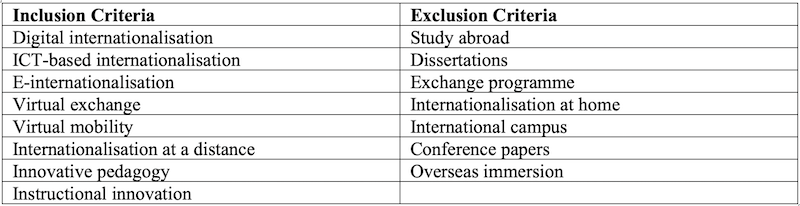
The researcher selected research parameters, inclusion and exclusion criteria and the databases. The researcher also added position papers and, reports and finally, analysed the selected papers systematically. Various steps were employed to obtain viable and relevant papers to review and respond to the problems under study. Five reputable, eminent and scholarly databases, namely JSTOR, Science Direct, ERIC, Scopus and EmeraldInsight, were consulted to screen publications ranging chronologically from 2016 to 2026 to capture current and up-to-date development related to VI and pedagogical innovation. In order to minimise bias, the researcher utilised a comprehensive search approach whereby search terms were generated based on trial searches to enhance relevance and inclusivity. The search terminologies suitable for each database were established. Conjunctions such as AND and OR were employed to combine the terminologies to ensure inclusion of various perspectives. To foster comprehensive coverage of pertinent literature, search terms were extended to include synonyms of words and related concepts such as digital internationalisation, ICT-based internationalisation, E-internationalisation, VE, virtual mobility and Internationalisation at a distance. Furthermore, the phrase pedagogical innovation was extended to include related words such as innovative pedagogy and instructional innovation. Studies from different cultural and geographical contexts were considered for fair presentation across regions, thereby reducing biases which could have jeopardised the quality of the study.
The researcher tailored inclusion and exclusion criteria to reduce selection bias (Table 1), to focus on relevance to research problems; maintain relevant literature, methodological rigour; and enhance transparency and replicability. Two peers reviewed and screened the publications by titles and, abstracts, followed by full-article assessment. The identified inconsistencies were resolved through consultation with other researchers to enhance relevance and consistency. Furthermore, conference papers were excluded to avoid quality queries due to inadequate peer review, restricted accessibility, insufficient reporting, potential publication biases and the latent risk of defective data (Mukhtarkyzy et al., 2025).
Table 1: Inclusion and Exclusion Criteria
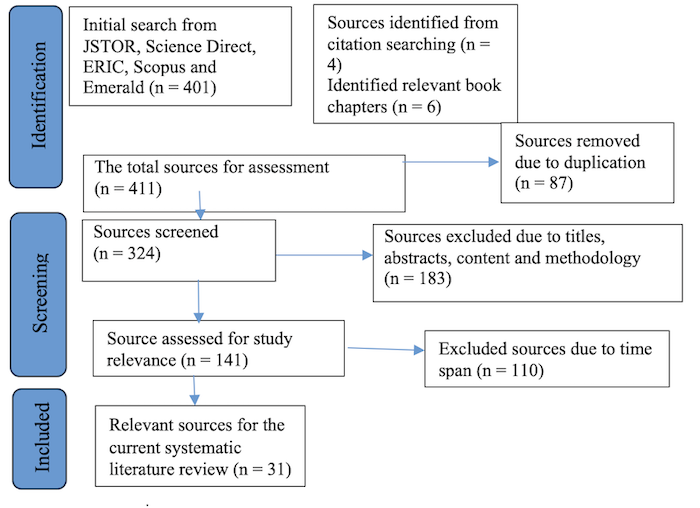
To ensure transparency of the findings, registration was made through the Registry of Open Data (ROD) website: https://registry.opendata.aws/. The methodological framework followed the PRISMA standards to enhance the credibility of the systematic review as indicated in Figure 1. To anticipate potential biases, peer assessment was employed with tailored inclusion and exclusion criteria as shown in Table 1. Some 411 articles were screened in accordance with the specified inclusion and exclusion criteria. To ensure that the inclusion criteria were consistently and accurately applied, the retrieved studies were imported into Rayyan for systematic screening and selection (Ouzzani et al., 2016). Consequently, 87 duplicates were deleted. The abstracts of the remaining publications (324) were scrutinised based on the tailored inclusion criteria. If the publication had no abstract, the researcher skimmed the content by using the words “virtual internationalisation” and then decided whether or not to include the publication. As some 183 publications were not suitable for this study due to unsuitable titles, abstracts, content and methodology or non-use of VE/internationalisation. These sources were excluded and, therefore, 141 publications remained for the study. A rigorous re-scrutiny of the time span also excluded 110 publications, which were considered peripheral to the research objectives. Eventually, 31 publications were considered the most relevant to the identified primary research objectives.
The reviewed literature revealed the following findings as categorised according to the RQs: (1) how academics comprehensively integrate online technological techniques to enhance pedagogical innovation; and (2) the potential challenges that impede the dissemination of knowledge through VI.
The findings from the reviewed literature revealed five major themes on how academics integrate online technological techniques to enhance pedagogical innovation. The themes included COIL, VE and global classrooms, multimedia assignments and digital storytelling, Generative Artificial Intelligence (GeAI) and adaptive learning, and interdisciplinary and intercultural curriculum design.
As regards COIL, the reviewed literature revealed that it is the most widely practised approach of VI, allowing academics and students from various countries to participate through co-teaching and cross-border learning activities (O’Dowd, 2023; Ramírez-Montoya & Rozo-García, 2025; Salomão & Junior, 2026). Unlike traditional virtual mobility or VE, which primarily emphasises digital mobility, collaborative inquiry and curriculum co-design, COIL integrates project-based learning, making it a more inclusive and sustainable approach to internationalisation (Boustar, 2024; Gou et al., 2026: Hackett et al., 2024; Helm, 2024). Notwithstanding, the effectiveness of COIL remains questionable. Existing evidence mainly depends on self-reported outcomes rather than robust longitudinal evaluations of learning outcomes (Hackett et al., 2023; McCowan, 2023). Furthermore, viewing COIL as similar to VI oversimplifies VI, which involves VE, virtual mobility, networked learning, and telecollaboration (Gou et al., 2026; Hackett et al., 2024; Ramírez-Montoya & Rozo-García, 2025). Its effectiveness hinges on institutional readiness, equitable digital infrastructure, and curriculum integration, which remain persistent weaknesses in less resourceful HE systems.
With reference to VE and global classrooms, academics and students across various countries are connected through online platforms, video conferencing, and learning management systems to enhance participative learning and intercultural engagement (Gou et al., 2026; O’Dowd, 2023; Salomão & Junior, 2026). However, studies doubt their inherent effectiveness, arguing that meaningful implementation needs institutional commitment, equitable partnerships, and pedagogies that address linguistic, cultural, and power inequalities (Ampadu et al., 2026; Salomão & Junior, 2026; Ubaldo et al., 2026). Thus, while VE can enhance curriculum and competence intercultural internationalisation, its realisation is contextual indicating that digital technologies alone do not warrant meaningful and equitable internationalisation.
In relation to multimedia assignments and digital storytelling, academics increasingly utilise them to foster VI by promoting collaborative knowledge construction, critical reflection, and intercultural communication through digital media (Boustar, 2024; Hackett et al., 2024; Helm, 2024; O’Dowd, 2023). However, their effectiveness depends on academics’ digital competence, institutional technological capacity, and equitable access to digital resources, which remain major challenges in resource-constrained HE, especially in developing countries (Gou et al., 2026; Hackett et al., 2024; Salomão & Junior, 2026; Ubaldo et al., 2026; ). Thus, multimedia assignments and digital storytelling should be understood as pedagogical approaches embedded within broader VI frameworks, such as VE, COIL, and globally networked learning platforms, rather than as an independent approach to internationalisation. GeAI and adaptive learning technologies increasingly support VI by enabling personalised learning, intelligent tutoring, learning analytics, timely academic support, multilingual communication, and across digitally mediated learning avenues (Rahman et al., 2025; UNESCO, 2025). Nevertheless, literature underlines that GeAI is not inherently transformative. Its success depends on planned pedagogy that complements human interaction. Moreover, persistent barriers, such as algorithmic bias, data privacy, unequal digital access, and limited GeAI literacy, constrain its implementation, underpinning that GeAI should be regarded as an enabling technology rather than a pedagogical approach of VI.
Digital technologies facilitate interdisciplinary and intercultural curriculum redesign by enabling academics to co-create globally relevant curricula across institutions (Liang, 2024; Salomão & Junior, 2026). However, technology alone cannot internationalise curricula; its effectiveness depends on academics’ digital pedagogical competence, institutional support, and equitable partnerships (Gou et al., 2026; Martins et al., 2024; UNESCO, 2025). Without these conditions, digital technologies are more likely to reinforce existing teaching practices than to transform curriculum and learning. As Mishra and Panda (2020) stress, while technology can significantly foster access to and the quality of learning, its realisation depends on the established comprehensive policies and sustainable development frameworks.
Despite the highlighted potentials associated with VI, numerous challenges hinder effective dissemination of knowledge through VI, particularly in developing countries. These challenges range from technology skills and pedagogy, institutional policies and infrastructure, socio-cultural factors and language. Other challenges include equity and inclusion, as well as quality assurance and sustainability.
Technological Challenges
Unequal digital infrastructure represents a significant hinderance to VI, particularly in HE institutions across the Global South. Despite increasing opportunities for international collaboration, limited internet connectivity, unreliable electricity supply, insufficient technical support and obsolete technologies continue to limit engagement (Rohullah et al., 2025; Singun, 2026). However, digital technologies can foster Global North-South inequalities when access and institutional investment remain unequal (Gou et al., 2026; Rohullah et al., 2025; UNESCO, 2025). These findings rather suggest that equal establishment of digital infrastructure is imperative for participation and inclusive VI.
Skills and Pedagogical Gaps
Inadequate digital competence and resistance to pedagogical engagement continue to hinder VI, particularly in the Global South. The existing literature underscores that these hinderances are more institutional than individual, and that inadequate professional development, limited funding, heavy academic workloads, and weak institutional support hamper academics’ capacity to integrate digital and intercultural pedagogies effectively (Singun, 2025; UNESCO, 2025). Furthermore, persistent dependence on traditional teaching approaches and research-oriented institutional practices often daunts pedagogical innovation, hindering the transformative potential of VI despite advances in digital technologies (Gou et al., 2026; Kane & Dahlvig, 2022). Digital transformation should therefore go hand in hand with equipping academics with digital skills to successfully benefit from digital technology and innovation.
Institutional Policies and Infrastructure Constraints
Weak governance, rigid curricula, fragmented policies, and inadequate digital investment continue to plague institutional VI initiatives, widening the gap between institutional goals and practice (Ampadu et al., 2026; Singun, 2025; UNESCO, 2025). More critically, the main challenge is not technological scarcity but is rather institutional in nature, reflected in weak governance, inadequate strategic leadership, and failure to embed VI within institutional policy, quality assurance systems and the curriculum. Consequently, VI remains fragmented, inequitable, and largely reliant on individual academic initiatives, limiting its holistic transformative and sustainable impact. HE institutions therefore should establish durable digital infrastructure, strong strategic leadership and governance, embrace digital internationalisation and make it a core mission of HE institutions to harness the benefits of digital revolution.
Socio-Cultural and Language Challenges
Intercultural and multilingual barriers remain significant constraints to VI, reflecting not only differences in intercultural competence and language proficiency but also institutional failures to create inclusive, multilingual, and culturally responsive digital learning environments (Cherewka, 2023; Piñón, 2025; Salomão & Junior, 2026). Despite major commitments to inclusive internationalisation, many HE institutions continue to privilege dominant languages and pedagogical traditions, perpetuating unequal participation and existing global power asymmetries (Rohullah et al., 2025; UNESCO, 2025). Although GeAI translation reduces linguistic barriers it cannot redress the social and intercultural dynamics that shape meaningful international learning. Consequently, without comprehensive multilingual policies, inclusive curricula, and sustained institutional support, VI has the potential to exacerbate, rather than alleviate, global educational inequalities.
Equity and Inclusion Constraints
Although VI aims at democratising global learning, it can also promote educational inequalities when equity and inclusion are not integrated in institutional policies and practice (UNESCO, 2025). Students from under-resourced HE institutions continue to face barriers to equal participation, highlighting that the key challenge lies not in digital access alone but in institutional initiatives to equitable and inclusive internationalisation (Piñón, 2025; Rohullah et al., 2025). More importantly, the success of VI should be evaluated not by the expansion of digital connectivity alone, but by its capacity to achieve equitable participation and meaningful international learning for all students.
Quality Assurance and Sustainability Concerns
Ensuring the quality and sustainability of VI remains a potential challenge, as prevailing institutional funding, quality assurance systems, and assessment frameworks have not kept pace with the demands of virtual learning (Emmanuel, 2025; Ubaldo et al., 2026; UNESCO, 2025). Scholars argue that lack of aligned standards, internationally sustainable governance, and long-term institutional investment lead to VI initiatives that are donor-dependent, difficult to sustain, and fragmented, hence undermining their credibility and educational impact (Ampadu et al., 2026; Gou et al., 2026; Ubaldo et al., 2026). Thus, this jeopardises the effective integration of VI initiatives into strategic planning and institutional quality assurance systems.
The reviewed literature demonstrates that pedagogical innovation in VI extends beyond the adoption of digital technologies to incorporate the deliberate integration of VE, COIL, global classrooms, adaptive learning, GeAI, interdisciplinary curriculum design, and multimedia to promote meaningful intercultural and international learning. Nevertheless, a critical analysis indicates that many of the existing studies continue to conceptualise these technologies as pedagogical strategies rather than examining the curricular, institutional, and governance conditions that support their sustainable integration (Ampadu et al., 2026; Hackett et al., 2023; Liang, 2024; Martins et al., 2024; Rahman et al., 2025). Furthermore, the literature continues to consider a pandemic-driven perspective, conceptualising VI primarily as an emergency response rather than a strategic and transformative approach to HE internationalisation (Rahman et al., 2025; Salomão & Junior, 2026; Ubaldo, 2026). Consequently, limited attention has been devoted to how VI can be institutionalised as a long-term pedagogical approach that systematically integrates digital innovation, curriculum internationalisation, intercultural learning, and institutional strategy. By synthesising the recent literature of different settings, this review addresses this gap by repositioning VI as both a sustainable pedagogical and institutional strategy rather than a temporary technological response to emergency.
Despite the considerable pedagogical opportunities associated with VI, the reviewed literature consistently indicated that its implementation was jeopardised by deeply embedded institutional, structural, and systemic barriers rather than isolated technological challenges (Ampadu et al., 2026; Cherewka, 2023; Piñón, 2025; Ubaldo et al., 2026). Pending challenges, including limited digital expertise, insufficient digital infrastructure, weak policy frameworks, fragmented institutional support, resistance to pedagogical change, language barriers, digital inequalities, funding constraints, and inadequate quality assurance mechanisms, continue to plague the sustainable and equitable implementation of VI, particularly in developing countries where resources are scarce and, hence, affect HE systems (Emmanuel, 2025; Piñón, 2025; Rohullah et al., 2025; Singun, 2025; Ubaldo et al., 2026; UNESCO, 2025). Critically, these challenges extend beyond technological barriers to reflect profound institutional and governance weaknesses, where fragmented leadership, inadequate strategic coordination, and the absence of comprehensive policy, quality assurance integration and curriculum continue to weaken the institutionalisation and long-term sustainability of VI (Salomão & Junior, 2026; Singun, 2025). Consequently, the continued initiatives on digital technologies as a fundamental panacea obscure the more essential institutional and organisational transformation needed to ensure pedagogical innovation. The findings therefore suggest that digital platforms are imperative but not adequate for effective VI. Its realisation eventually depends on sustained investment, inclusive pedagogical design, institutional preparedness, and academics’ expertise to facilitate effective learning. Without such systemic transformation, VI is likely to remain fragmented, to disproportionately benefit developed well-resourced HE institutions, and to increase rather than decrease existing disparities in global HE, thereby restraining its potential as a sustainable approach for pedagogical innovation and internationalisation.
VI characterises a transformative approach to HE by extending global academic engagement beyond physical mobility through digitally mediated teaching, learning, and collaboration. Its effectiveness, however, depends not only on technology but also on intentional pedagogical design, digital competence, supportive policies, institutional commitment, and equitable access. Despite its significance in enhancing internationalisation and pedagogical innovation, VI is hindered by technological, interconnected institutional, socio-cultural, and quality assurance barriers. These challenges reinforce one another, and prevent meaningful engagement and educational quality. Without collective measures, strategic governance, and continued institutional investment, VI may reinforce structural inequalities rather than eliminating them.
Based on the reviewed literature, the current study recommends that HE policies should emphasise investment in digital infrastructure, equitable access to a reliable internet connection, robust institutional ICT policies, and ongoing professional development to enhance VI and foster pedagogical innovation. Universities should integrate online technologies into curriculum design; promote COIL, virtual exchange, GeAI, and inclusive digital pedagogies while establishing quality assurance frameworks for virtual learning. In addition, professional development programmes should be given priority to equip academics with the knowledge, skills, intercultural pedagogical competencies, and digital literacy required to effectively integrate digital tools into teaching practices, foster inclusive and diverse learning environments, and enhance students’ engagement and participation in VI. For open and distance learning, universities should adopt learner-centred, flexible, and technology-enhanced teaching approaches that improve accessibility, intercultural collaboration, and student engagement through robust learning management systems and AI-supported learning environments. Future research should examine the long-term impact of VI on student learning outcomes, academic performance, intercultural competence, and graduate employability, particularly in developing countries. Comparative studies across different institutional contexts, disciplines, and regions, as well as investigations into digital inclusion, and sustainable models for VI and open distance learning would further advance the evidence base for policy and practice.
Ampadu, E., Lundborg, S., & Geschwind, L. (2026). Bridging local and global practices: Examining internationalisation strategies in higher education. Higher Education Quarterly, 80(3), e70120. https://doi.org/10.1111/hequ.70120
Altbach, P.G., & de Wit, H. (2018). Are we facing a fundamental challenge to higher education internationalisation? International Higher Education, 93, 2–4. https://doi.org/10.6017/ihe.0.93.10414
Boustar, R. (2024). Internationalisation of higher education: Critical examination of virtual intercultural exchange models at Moroccan universities. Higher Education Research, 9(6), 154–160. https://doi.org/10.11648/j.her.20240906.12
Bruhn-Zass, E. (2023). Virtual internationalisation as a concept for campus-based and online and distance higher education. In O. Zawacki-Richter & I. Jung (Eds.), Handbook of open, distance and digital education (pp. 371–387). Springer. https://doi.org/10.1007/978-981-19-2080-6_23
Cherewka, A. (2023). Using multilingual approaches to support English language acquisition. Enhancing Access for Refugees and New Americans Project. World Education. https://lincs.ed.gov/sites/default/files/EARNMultilingualSpotlight.pdf
Dietrich, A., & Besana, G. (2024). Defining digital internationalisation. In T. Woodman, M. Whatley, & C.R. Glass (Eds.), Digital internationalisation in higher education (pp. 15–28). Routledge.
Emmanuel, M. (2025). Assessment integrity and academic standards online. ResearchGate. https://www.researchgate.net/publication/391427908_Assessment_Integrity_and_Academic_Standards_Online
Galvan, J.L., & Galvan, M.C. (2017). Writing literature reviews: A guide for students of the social and behavioral sciences (7th ed.). Routledge. https://doi.org/10.4324/9781315229386
Gou, M., Gao, A., & Li, J. (2026). Model innovation in the virtual internationalization of higher education: Conceptual connotations and practical directions of collaborative online international learning. Education Science, 42(2), 90–96. https://jykx.lnnu.edu.cn/EN/Y2026/V42/I2/90
Hackett, S., Dawson, M., Janssen, J., & van Tartwijk, J. (2024). Defining collaborative online international learning (COIL) and distinguishing it from virtual exchange. TechTrends, 68(6), 1078-1094. https://doi.org/10.1007/s11528-024
Hackett, S., Janssen, J., Beach, P., Perreault, M., Beelen, J., & van Tartwijk, J. (2023). The effectiveness of Collaborative Online International Learning (COIL) on intercultural competence development in higher education. International Journal of Educational Technology in Higher Education, 20(1), 5. https://doi.org/10.1186/s41239-022-00373-3
Helm, F. (2024). Intercultural communication in virtual exchange. Cambridge University Press. https://doi.org/10.1017/9781009385589
IAU. (2024). Internationalisation of higher education: Current trends and future scenarios. https://www.iau-aiu.net/ IMG/pdf/2024_internationalisation_survey_report_digital.pdf
Kane, R.T., & Dahlvig, J.E. (2022). Traditional faculty resistance to online higher education. American Journal of Qualitative Research, 6(2), 1–16. https://doi.org/10.29333/ajqr/12125
Liang, S. (2024). Advancing internationalisation in the formal curriculum: Content integration and inclusive design. Tertiary Education and Management, 28(1). https://doi.org/10.1177/10283153241262461
Liu, J., & Gao, Y. (2022). Higher education internationalisation at the crossroads: Effects of the coronavirus pandemic. Tertiary Education and Management, 28(1), 1–15. https://doi.org/10.1007/s11233-021-09082-4
Martins, C.E., Martins, S.J., & Risner, M.E. (2024). Beyond borders: Building capacity and enhancing institutional resources for U.S.–Mexico virtual exchange initiatives. Journal of Virtual Exchange, 7. https://doi.org/10.21827/jve.7.41464
McCowan, T. (2023). Internationalisation and climate impacts of higher education: Towards an analytical framework. Journal of Studies in International Education, 27(4), 567–585. https://doi.org/10.1177/10283153231164843
Miranda, F.J., & Chamorro-Mera, A. (2024). Virtual teams in the university: A critical literature review and a research agenda. Marketing and Management of Innovations, 15(1), 151–165. https://doi.org/10.21272/mmi.2024.1-11
Mishra, S., & Panda, S. (Eds.). (2020). Technology-enabled learning: Policy, pedagogy and practice. Commonwealth of Learning.
Mukhtarkyzy, K., Smagulova L., Tokzhigitova A., Serikbayeva N., Sayakov O.,Turkmenbayev A., & Assilbayeva, R. (2025). A systematic review of the utility of assistive technologies for SEND students in schools. Frontiers in Education. https://doi.org/10.3389/feduc.2025.1523797
O’Dowd, R. (2023). Issues of equity and inclusion in virtual exchange. Language Teaching, 58(1), 44–56. https://doi.org/10.1017/S026144482300040X
Ouzzani, M., Hammady, H., Fedorowicz, Z., & Elmagarmid, A. (2016). Rayyan—a web and mobile app for systematic reviews. Systematic Reviews, 5(5) 210. https://doi.org/10.1186/s13643-016-0384-4
Piñón, L. (2025). AI as a tool for inclusive bilingual education. IDRA Newsletter. https://www.idra.org/resource-center/ai-as-a-tool-for-inclusive-bilingual-education/
Rahman, M.K., Ismail, N.A., Hossain, M.A., & Hossen, M.S. (2025). Students’ mindset to adopt AI chatbots for effectiveness of online learning in higher education. Future Business Journal, 11, Article 30. https://doi.org/10.1186/s43093-025-00459-0
Ramírez-Montoya, M.S., & Rozo-García, H. (2025). Technologies and strategies in collaborative online international learning: A systematic literature mapping. Smart Learning Environments, 12, Article 63. https://doi.org/10.1186/s40561-025-00409
Rohullah, Y., Jawad, G., & Omar, Y. (2025). Digital divides and bridges: Equity implications of edtech in ESL education. Frontiers in Education, 10. https://doi.org/10.3389/feduc.2025.1590828
Salomão, A.C.B., & Junior, J.C.F. (2026). Virtual exchange as a strategy to foster global learning and internationalisation of the curriculum. New Directions for Teaching and Learning, 2026(186), 111–118. https://doi.org/10.1002/tl.70027
Singun, A.J. (2025). Unveiling the barriers to digital transformation in higher education: A comprehensive review. Higher Education Transformation Journal, 7(2), 45–67. https://doi.org/10.1007/s44217-025-00430
Ubaldo, E.F., Martinez, P.A.M., & Ubaldo, M.Y.D.M. (2026). Building university frontline capacity: A virtual internationalization at home initiative to enhance professional staff’s email skills for international engagement in a Global South context. rEFLections, 33(1), 555–577. https://doi.org/10.61508/refl.v33i1.289014
UNESCO. (2023). Putting digital transformation at the heart of higher education systems. UNESCO. https://www.unesco.org/en/articles/putting-digital-transformation-heart-he-systems
Author Notes
Constancia Norbeth Nziku, PhD is a Lecturer in the Department of Educational Foundations, Management and Lifelong Learning (EFMLL) at Dar es Salaam University College of Education (DUCE), Tanzania. Her research interests include teacher retention, educational policy, educational leadership and management, and the internationalisation of higher education. She has experience in supervising and mentoring undergraduate and postgraduate students and has published several scholarly articles in her areas of research interest. Email: nzikuconstancia@gmail.com (https://orcid.org/0000-0003-1481-1480)
Cite as: Nziku, C.N. (2026). Virtual internationalisation in higher education: A systematic review and pedagogical innovation. Journal of Learning for Development, 13(3), 574-586.
DOI: https://doi.org/10.56059/y99p0r70