
Nurul Latifatul Inayati, Triono Ali Mustofa, Siti Rosilawati Ramlan, Nur Rizqi Febriandika, Fadhilla Nangroe Anggraini and Annas Fajar Rohmani
2026 VOL. 13, No. 4
Abstract: In the digital era, the demand for creativity in language education is steadily increasing; however, Arabic language instruction at the university level continues to rely heavily on rote memorisation, leaving limited room for exploration or innovation. This study explores the integration of Wayground, a game-based learning platform, into Arabic language learning as a strategy to enhance students’ creative thinking—particularly in the domains of fluency, flexibility, and elaboration. Adopting a qualitative descriptive research design, data were gathered through classroom observations, student-produced documents, written reflections, and in-depth interviews involving learners from Universitas Muhammadiyah Surakarta (Indonesia) and Universiti Sains Islam Malaysia. The findings indicate that Wayground’s open-ended question feature encourages students to articulate diverse perspectives, apply linguistic structures contextually, and formulate detailed, logically organised responses. Nonetheless, reflective awareness for response revision remains underdeveloped. Importantly, the study demonstrates that the success of gamified tools like Wayground hinges not only on technological affordances but also on deliberate pedagogical strategies such as formative feedback and metacognitive scaffolding. The research offers an innovative empirical framework for designing creativity-oriented gamified tasks in Arabic language instruction. These insights are particularly significant for Open and Distance e-Learning (ODeL) environments, where digital tools can be purposefully leveraged to foster higher-order thinking and creative expression beyond conventional engagement.
Keywords: game-based learning, student engagement, language pedagogy, higher-order thinking, instructional technology
Creative thinking is an important higher-education competency because students must generate ideas, adapt to unfamiliar situations, and communicate meaningfully (Kholid et al., 2024). In Arabic language education, however, teaching that prioritises memorisation and grammatical accuracy can provide limited opportunities for exploratory language production (Ritonga et al., 2021). This challenge is relevant to Open and Distance Learning (ODL), where digital learning activities must support more than participation and content recall. From a Learning for Development (L4D) perspective, opportunities to practise higher-order thinking may also contribute to transferable learning skills.
Gamified platforms provide interactive tasks that can encourage language use, yet engagement alone does not establish that students demonstrate creative thinking (Al Mubarok et al., 2025; Almelhes, 2024). This study examines university students’ responses to open-ended Arabic tasks using Wayground (formerly Quizizz). The instructional context is Wayground-supported learning; the principal analytical constructs are fluency, flexibility, and elaboration (Alajaji & Alshwiah, 2021; Arjunaidi & Azid, 2022). Fluency concerns generating varied ideas, flexibility concerns adapting responses to task contexts, and elaboration concerns developing explanations and refining ideas (Wahyudi et al., 2020). Constructivist learning theory frames responses as active meaning-making, while self-determination theory highlights the relevance of autonomy and engagement in task participation (Rahmawati & Mustofa, 2024). These perspectives guide the interpretation of students’ responses rather than a causal test of the platform’s effectiveness (Suprojo et al., 2025). The study draws on learning activities involving undergraduates at Universitas Muhammadiyah Surakarta, Indonesia, and Universiti Sains Islam Malaysia.
Creative thinking encompasses generating, evaluating, and improving ideas; the OECD (2024) distinguishes generating diverse and creative ideas from evaluating and improving them. In language tasks, these processes may appear when learners express different perspectives, adapt expressions to communicative situations, and expand or revise written responses (Bratel et al., 2023). Wahyudi et al. (2020) identify fluency, flexibility, and elaboration as dimensions relevant to educational assessments of creative thinking. For the present study, these three dimensions organise the examination of Arabic written responses. Arabic higher education has also been encouraged to adopt more active language-learning approaches (Deviana & Mubaarokah, 2021). However, grammatical appropriateness and participation should not be assumed to represent all dimensions of creative thinking.
Evidence supports the educational relevance of gamified language activities, although prior studies have often emphasised outcomes other than students’ creative response processes (Abdul Halim et al., 2020). Abdul Ghani and Wan Daud (2023) examined digital game-based learning for Arabic communication; Zhang and Crawford (2024) investigated motivation in Quizizz-based English formative assessment; and Hernanz et al. (2024) examined motivation and performance in university Quizizz use. Ameen’s (2026) systematic review likewise identified benefits for vocabulary learning, motivation, and engagement among adult English learners, while noting the importance of learning context. In Arabic education, A’yuni et al. (2022) described a creative Arabic learning model using Quizizz, whereas Nawati et al. (2026) developed and evaluated a Quizizz-based higher-order thinking assessment instrument for Arabic grammar instruction. These contributions show that while gamification and creativity-oriented Arabic tasks are not new in themselves, a more specific examination of the responses students produce remains valuable.
Open-ended digital tasks permit learners to express ideas beyond fixed answer options, but opportunities for feedback do not guarantee that learners will revise their work. Le and Tran (2024) found that university learners’ engagement with Quizizz feedback was varied and multidimensional. This suggests the importance of examining not only students’ initial responses but also the extent to which they elaborate and reflect on their answers (Capinding, 2022; Dermawan et al., 2025; Putra & Ayyaisy, 2025). For ODL-relevant pedagogy, such evidence can inform the design of prompts and feedback activities without presuming broader developmental effects.
Existing research documents the role of gamification in Arabic communication, language-learning motivation, and assessment design (Deviana & Mubaarokah, 2021; Nawati et al., 2026). Nevertheless, comparatively less attention has been devoted to qualitative evidence showing how fluency, flexibility, and elaboration appear together in university students’ open-ended Arabic responses. In particular, the connections between generating perspectives, adapting language to context, extending explanations, and reflecting on responses require closer examination (Santos et al., 2023). This study addresses that gap by analysing Wayground-generated Arabic responses alongside observations, student reflections, and interviews from two universities. Its intended contribution is a dimension-specific account of students’ demonstrated creative-thinking processes and their limitations, with practical relevance to the design of gamified Arabic tasks in ODL-related settings. It does not claim to measure causal improvements in creativity or direct L4D outcomes.
This study pursued three research objectives:
This study employed a qualitative descriptive methodology to examine how creative thinking was manifested in Wayground-supported Arabic language tasks. The analysis addressed RO1 (fluency), RO2 (flexibility), and RO3 (elaboration) through students’ written responses and accounts of their learning experiences. Limited frequency counts and percentages were used to describe recurring patterns, not to test causal effects or make statistical generalisations.
The participants were 90 undergraduate Arabic language students from four intact classes: two at Universitas Muhammadiyah Surakarta (UMS), Indonesia, and two at Universiti Sains Islam Malaysia (USIM). The institutions and classes were purposively selected as technology-supported higher education settings. Participant selection considered prior experience with Wayground, availability, internet access, and willingness to participate. The sample was context-specific rather than statistically representative.
Data were collected using an observation protocol, open-ended Arabic language tasks on Wayground, student-produced documents, written reflections, and semi-structured interviews. Tasks involved vocabulary improvisation, sentence construction, and responses to everyday situations. A coding rubric specified seven creative-thinking indicators across three dimensions (Table 1). Three experts in educational technology and Arabic language education assessed the instruments for clarity, content relevance, and alignment with the research objectives. Their feedback informed revisions to task instructions and rubric descriptions. To strengthen coding consistency, a second coder independently reviewed a subset of data, and differences in coding were discussed until agreement was reached.
Table 1: Creative Thinking Indicators
Data collection took place over four consecutive weeks, with one Wayground-supported session of approximately 90 minutes each week. Sessions followed three stages: instructor briefing and task orientation; individual or small-group completion of open-ended Arabic tasks; and guided feedback and reflection. Instructors facilitated participation without prescribing students’ answers. Researchers recorded observations and retrieved written outputs from Wayground. Students completed brief reflections after each session, and a purposively selected subset took part in semi-structured interviews. Interviews were audio-recorded, transcribed verbatim, and anonymised.
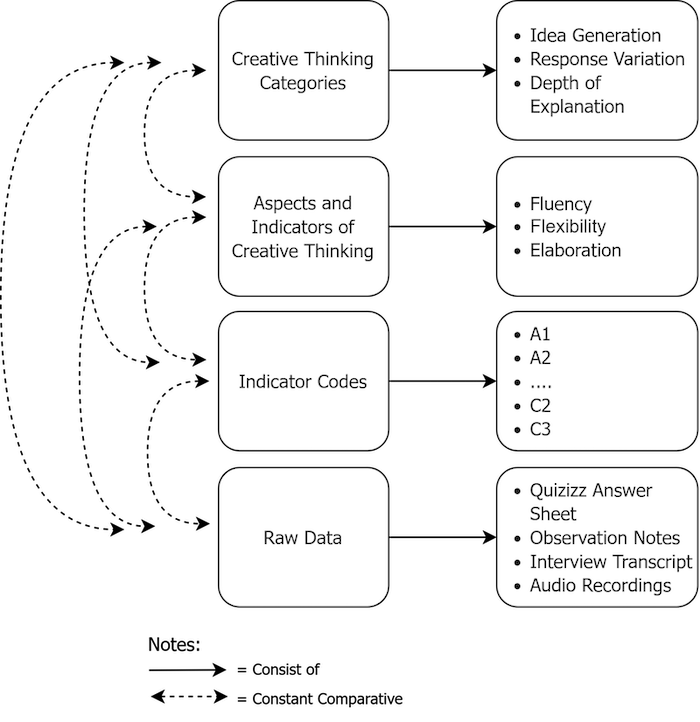
Data analysis followed the Constant Comparative Procedure (Figure 1). First, student outputs, observation notes, reflections, and interview transcripts were segmented into meaning units. Second, units were coded using indicators A1–C3, while allowing additional patterns to emerge from the data. Third, coded material was compared across participants, sources, and instructional contexts to identify common patterns and differences. Codes and interpretations were refined iteratively. Triangulation involved comparing written responses with observations, reflections, and interviews. Counts of coded responses were used only to indicate the prevalence of observed patterns.
This study was conducted in accordance with established ethical guidelines for educational research. Permission was obtained from the relevant academic authorities at UMS and USIM before data collection. All participants were informed of the study’s purpose, procedures, voluntary nature, and their right to withdraw without academic consequences. Informed consent was obtained before participation, and no incentives were offered. Student responses, observation records, and interview transcripts were anonymised to protect confidentiality. Data were stored securely and used exclusively for research purposes. The activities were embedded in regular instructional sessions and posed minimal anticipated risk to participants.
Students expressed different personal perspectives when responding to an open-ended prompt about happiness. One wrote, “Happiness is when I see my mother smile.” In an interview, the student explained, “When answering this question, I immediately recalled a small moment with my mother, so I wrote what was most meaningful to me.” Another described happiness as “reading the Qur’an before sunrise” and associated the response with a personally meaningful spiritual practice. These accounts illustrate how learners drew on distinct experiences when constructing Arabic responses.
The responses also differed in their level of expression. For example, “Happiness lies in simplicity” offered a concise statement, whereas “Happiness is living in a peaceful place with those I love” provided a more developed description. The thematic distribution (Figure 2) showed that family relationships were the most frequent category (38%), followed by social relationships (22%), spiritual activities (19%), private activities (16%), and general or unspecified responses (6%).

These patterns provide evidence of varied perspectives across the collected responses. However, some answers were brief, repetitive, or insufficiently developed. Thus, the data reveal diversity in the group’s ideas while also indicating that fluency was not equally evident in all responses.
Flexibility was examined through contextual understanding (B1) and the use of appropriate Arabic expressions (B2). In a prompt asking students to respond to an ill teacher, one student wrote, “May Allah grant you healing and health, dear teacher.” The student explained, “I imagined actually seeing my teacher unwell, and this is the kind of prayer I would typically say.” The response addressed the situation and included a respectful form of address. Another student provided a longer expression: “I ask Allah to grant you a swift recovery and to make your illness an expiation for your sins.” Both responses reflected contextual appropriateness, although they drew on familiar expressions.
As shown in Figure 3, 84% of responses were classified as correct for contextual understanding (B1), while 76% were classified as correct for appropriate language use (B2). The corresponding proportions classified as incorrect were 16% and 24%, respectively.
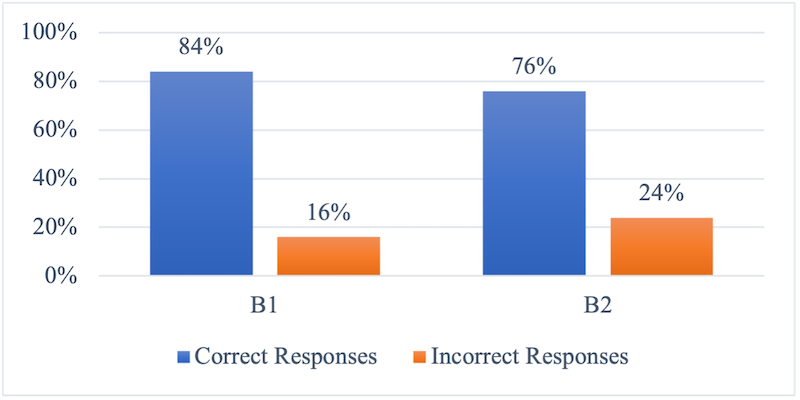
The qualitative responses indicate that students could select expressions suited to a social situation and, in some instances, extend them to convey respect or empathy. Nevertheless, other responses were limited to short formulaic expressions. The combination of appropriate contextual responses and reliance on established phrases shows uneven variation in students’ Arabic language production.
Elaboration was examined through descriptive expansion (C1), logical explanation (C2), and reflection or revision (C3). In response to a question about Friday activities, a student wrote, “I enjoy reading the Qur’an on Fridays because it gives me indescribable peace and spiritual comfort.” The explanation supplied a reason and an emotional description, illustrating C1. Another student wrote, “I prefer to take a shower and then wear clean clothes for Friday prayer because it reflects respect and cleanliness.” This response linked sequential actions to an explicit justification, illustrating C2.
Evidence of C3 appeared in an interview statement: “I deleted the beginning part and rewrote it because I felt it wasn’t clear enough.” The statement indicated that at least some students considered clarity when revising their responses. Nonetheless, not all students demonstrated this practice.
Figure 4 shows that 68% of students demonstrated C1 and 54% demonstrated C2, whereas 41% demonstrated C3. The proportions not demonstrating these indicators were 32%, 46%, and 59%, respectively. Consequently, descriptive expansion was more frequently observed than logical explanation or reflective revision. Some responses remained unchanged or were modified only superficially, making sustained revision the least frequently demonstrated aspect of elaboration.
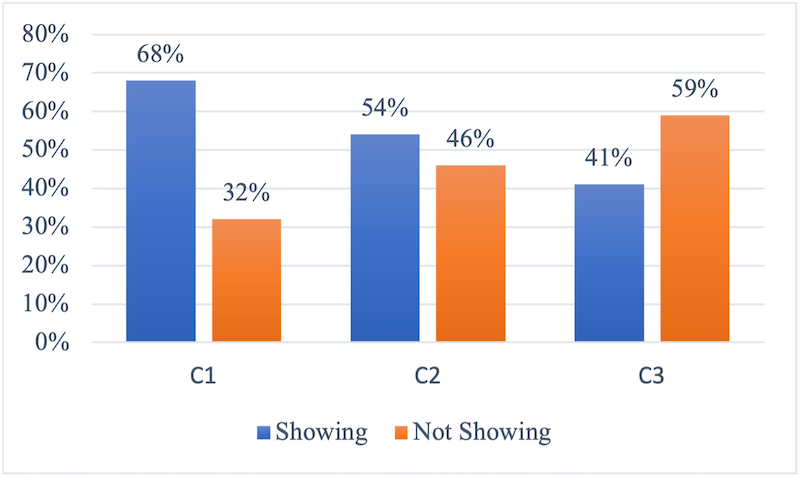
The present study examined how fluency, flexibility, and elaboration were manifested in university students’ Arabic responses during Wayground-supported learning activities. Three findings emerged. First, students expressed varied perspectives on familiar experiences, particularly family, social relationships, and religious practices (RO1). Second, most responses were judged contextually appropriate (B1: 84%) and linguistically suitable (B2: 76%), although some relied on conventional expressions (RO2). Third, descriptive expansion (C1: 68%) was more frequently observed than logical explanation (C2: 54%) or reflective revision (C3: 41%) (RO3). Taken together, the findings distinguish students’ capacity to produce relevant responses from their less consistently demonstrated capacity to extend and refine them. This distinction is the study’s principal contribution to understanding creative language production in gamified Arabic tasks. From a constructivist perspective, learners drew on experience to construct meaning; however, motivation and autonomy were not directly assessed, so the findings cannot verify self-determination mechanisms.
Responses about happiness drew on family relationships (38%), social relationships (22%), and spiritual activities (19%), showing that students used personal and culturally meaningful experiences as resources for written expression. In relation to RO1, these responses demonstrate thematic diversity across the dataset and illustrate how open-ended tasks can make learners’ perspectives visible (Pratiwi et al., 2024). However, diversity between students should not be interpreted as evidence that every student independently generated multiple ideas (Campos et al., 2023). Some responses were short or repetitive, and the findings therefore support a contextualised account of idea generation rather than an overall improvement in fluency.
Abdul Ghani and Wan Daud (2023) established the benefits of digital game-based learning for Arabic communication performance, while Zhang and Crawford (2024) examined motivation in gamified language assessment. Ameen’s (2026) systematic review likewise emphasised the benefits of gamification for adult language learners, while recognising the importance of instructional context. The present study adds a different level of evidence: the content of students’ actual Arabic responses illustrates what they chose to express, not simply whether gamified activities support communication or engagement. For Arabic instructors, familiar experiences may provide accessible starting points, but prompts should also invite alternative viewpoints to broaden opportunities for idea generation.
The high proportions of contextually appropriate responses under B1 and B2 indicate that students generally understood social prompts and selected suitable Arabic expressions. Responses to an ill teacher, for example, demonstrated sensitivity to the communicative situation and appropriate forms of respect. Yet several students used familiar prayers or brief formulaic expressions. Consequently, linguistic appropriateness was more consistently visible than clear departures from habitual language use (Ritonga et al., 2021; Sarppa Raje & Tamilselvi, 2024). This distinction matters because responding correctly to a context does not, by itself, establish the generation of alternative linguistic strategies.
Hernanz et al. (2024) reported differences in students’ learning experiences with Quizizz across university contexts, and recent Arabic-language research has addressed creativity-oriented task development and gamified assessment design. The present findings extend this literature by examining how learners actually formulate contextual responses. They suggest that task design should distinguish accuracy and social appropriateness from opportunities to demonstrate variation (Capinding, 2022; Ülker & Yangın Ekşi, 2026). Accordingly, instructors could ask students to provide several appropriate responses to the same situation, explain their choices, and adapt expressions for different audiences (Guzmán et al., 2024; Hernanz et al., 2024; Utari et al., 2025). These are pedagogical implications of the observed patterns, not interventions tested in this study.
The clearest imbalance concerned elaboration. Although 68% of students demonstrated descriptive expansion and 54% offered logical explanations, only 41% were classified as showing reflective revision. Students could therefore add personal details or reasons more readily than they demonstrated reconsideration of initial responses. Interview evidence included an account of rewriting for clarity, but such practice was not consistently observed. The findings highlight the difference between producing a longer answer and actively evaluating or improving it (Cai et al., 2023).
This pattern relates to the OECD’s (2024) distinction between generating ideas and evaluating or improving them. It also complements Le and Tran’s (2024) finding that university students’ engagement with feedback on Quizizz is complex but not necessarily extensive. In the present context, the availability of an open-ended response feature did not ensure that students engaged in substantive revision. The additional insight is therefore not that the platform automatically develops creativity, but that observable dimensions of creative language production may be uneven within the same learning activity (Karunarathne & Calma, 2024; Yang et al., 2024; Zhang & Hyland, 2023). Instructors may need to make response review an explicit stage, using prompts that ask learners to clarify meaning, strengthen explanations, or improve an initial formulation.
The findings have practical implications for university Arabic instruction. Wayground-supported tasks can be organised into a sequence: generate responses from different perspectives, adapt them to specific social contexts, provide explanations, and revisit an initial answer after feedback (Araújo & de Sousa, 2021; Handoko et al., 2021; Raju et al., 2021; Zuhriyah & Pratolo, 2020). Assessment should distinguish the range of ideas, contextual appropriateness, quality of explanation, and evidence of revision rather than relying solely on completion or correctness (Nisa et al., 2024). Such sequencing follows directly from the comparatively limited demonstrations of flexibility and reflective elaboration.
For ODL providers, the implication is principally pedagogical. Digital platforms can provide space for written production and feedback, but educators require guidance in constructing open-ended prompts and facilitating revision (Dermawan et al., 2025; Husna et al., 2026; Pratiwi & Waluyo, 2023). Institutions could incorporate creativity-oriented task design and formative feedback into lecturer development and course-quality guidelines (Afif & Musyaffa, 2025; Bratel et al., 2023). These recommendations are consistent with the contextual sensitivity identified by Ameen (2026) and the distinction between motivational engagement and cognitive outcomes suggested by Zhang and Crawford (2024). They do not imply that this study directly measured equitable access, scalability, employability, or other L4D outcomes. Rather, the findings identify a practical route by which technology-supported Arabic courses may offer more deliberate opportunities for higher-order language use.
The study involved approximately 90 students from four classes at two universities over four weeks. Its purposive sample, descriptive coding, and lack of baseline or comparison measurements do not permit causal claims about gains in creativity or generalisation to all Arabic learners. Moreover, evidence of revision included student accounts, and the available reporting does not establish a complete record of changes to every response. Future studies could retain successive drafts, examine individual-level variation across multiple prompts, and investigate how structured feedback influences revision over time. Comparative research across course formats and institutions could also clarify which pedagogical conditions support fluency, flexibility, and elaboration most effectively.
Overall, the study contributes a response-focused account of creative thinking in gamified Arabic learning: generating contextually meaningful expressions was more evident than systematically diversifying and refining them. Its central implication is that technology should be accompanied by purposeful task design and opportunities for reflective improvement.
Acknowledgments: This research was financially supported by Universitas Muhammadiyah Surakarta (UMS), Indonesia, through the Hibah Integratif Tri Dharma (HIT) Research Grant for the 2024/2025 academic year, under Research Contract No. 05.10/A.6-II/FAI/1/2025. The authors gratefully acknowledge the Faculty of Islamic Studies, Universitas Muhammadiyah Surakarta, for its institutional support, and extend their appreciation to Universiti Sains Islam Malaysia (USIM) and all participating students for their contributions to this research.
A’yuni, Q., Hilmi, D., Benedik, S.L., & Ahmed, B.M.B. (2022). Creative Arabic learning based on Quizizz: Model and impact. An Nabighoh, 24(1), 47–64. https://doi.org/10.32332/an-nabighoh.v24i1.4537
Abdul Ghani, M.T., & Wan Daud, W.A.A. (2023). The impact of digital game-based learning towards Arabic language communication. Jurnal Komunikasi: Malaysian Journal of Communication, 39(1), 407–424. https://doi.org/10.17576/JKMJC-2023-3901-23
Abdul Halim, M.S.A., Hashim, H., & Yunus, M.M. (2020). Pupils’ motivation and perceptions on ESL lessons through online quiz-games. Journal of Education and E-Learning Research, 7(3), 229–234. https://doi.org/10.20448/journal.509.2020.73.229.234
Afif, F.N.H., & Musyaffa, Z.H. (2025). Inclusive digital technology and Islamic education: Promoting social equity for persons with disabilities in the digital age. Multicultural Islamic Education Review, 3(1), 25–34. https://doi.org/10.23917/mier.v3i1.9913
Al Mubarok, F.U., Rohmani, A.F., Al Manfaluthi, L.Z., & Al Farisi, M.S. (2025). Bibliometric analysis of game-based mobile learning in higher education: Trends and gaps. Journal of Learning for Development, 12(3), 501–518. https://doi.org/10.56059/jl4d.v12i3.2011
Alajaji, D.A., & Alshwiah, A.A. (2021). Effect of combining gamification and a scavenger hunt on pre-service teachers’ perceptions and achievement. Journal of Information Technology Education: Research, 20, 283–308. https://doi.org/10.28945/4809
Almelhes, S.A. (2024). Gamification for teaching the Arabic language to non-native speakers: A systematic literature review. Frontiers in Education, 9. https://doi.org/10.3389/feduc.2024.1371955
Ameen, F. (2026). Individual and group competitive digital gamification in ESL adult classrooms: A systematic review of effects on vocabulary retention, motivation, and engagement. Smart Learning Environments, 13(1). https://doi.org/10.1186/s40561-026-00447-z
Araújo, N.M.S., & de Sousa, K.F. (2021). Quizizz in English as second language classes: A brief analysis. Ilha do Desterro, 74(3), 161–182. https://doi.org/10.5007/2175-8026.2021.E80734
Arjunaidi, A.J., & Azid, N. (2022). The implementation of an inductive model on science students’ critical thinking skills during online learning. International Journal of Information and Education Technology, 12(9), 858–865. https://doi.org/10.18178/ijiet.2022.12.9.1694
Bratel, O., Kostiuk, M., Okhrimenko, I., & Nanivska, L. (2023). Student-centered online assessment in foreign language classes. World Journal of English Language, 13(1), 185–194. https://doi.org/10.5430/wjel.v13n1p185
Cai, Z., Gui, Y., Mao, P., Wang, Z., Hao, X., Fan, X., & Tai, R.H. (2023). The effect of feedback on academic achievement in technology-rich learning environments (TREs): A meta-analytic review. Educational Research Review, 39. https://doi.org/10.1016/j.edurev.2023.100521
Campos, B., Duarte, J.C., Gomes, G., Marques, L., Gadelha, B., & Conte, T. (2023). A problem analysis in game-based student response system from UX elements perspective. In J. Filipe, M. Smialek, A. Brodsky, & S. Hammoudi (Eds.), International Conference on Enterprise Information Systems, ICEIS — Proceedings (Vol. 2, pp. 328–335). Science and Technology Press. https://doi.org/10.5220/0011992900003467
Capinding, A.T. (2022). Utilization of ‘Quizizz’ a game-based assessment: An instructional strategy in secondary education Science 10. European Journal of Educational Research, 11(4), 1959–1967. https://doi.org/10.12973/eu-jer.11.4.1959
Dermawan, D.D., Wuryandani, W., Herwin, H., Ikhsan, M.H., Giwangsa, S.F., Murron, F.S., Agusman, D.D., & Fadli, R. (2025). The development of HOTS assessment via mobile web based Quizziz app. TEM Journal, 14(1), 129–138. https://doi.org/10.18421/TEM141-12
Deviana, A.D., & Mubaarokah, L. (2021). Brainstorming and metaphor patterns in Creativity, Insya Hurr, through online learning on Instagram hashtags. Izdihar: Journal of Arabic Language Teaching, Linguistics, and Literature, 4(1), 27–42. https://doi.org/10.22219/jiz.v4i1.15810
Guzmán, D.E., Rengifo, C.F., Guzmán, J.D., & Garcia Cena, C.E. (2024). Virtual reality games for cognitive rehabilitation of older adults: A review of adaptive games, domains and techniques. Virtual Reality, 28(2). https://doi.org/10.1007/s10055-024-00968-3
Handoko, W., Mizkat, E., Nasution, A., Hambali, & Eska, J. (2021). Gamification in learning using Quizizz application as assessment tools. Journal of Physics: Conference Series, 1783(1). IOP Publishing Ltd. https://doi.org/10.1088/1742-6596/1783/1/012111
Hernanz, V., Latorre-Cosculluela, C., Suárez, C., & Lanchares-Sancho, E. (2024). Revitalising learning in three university contexts: Unleashing the power of the Quizizz app to increase self-efficacy, intrinsic motivation, satisfaction and performance. Education and Information Technologies, 29(17), 23917–23935. https://doi.org/10.1007/s10639-024-12779-9
Husna, S.F.N., Prasanti, R.R., Amaliah, N., Husniyah, F.N., & Qameer, N. (2026). Assessing digital technology integration in Islamic religious education: A CIPP Model evaluation. Islamic Pedagogy Evaluation Journal, 1(1 SE-Articles), 17–32.
Karunarathne, W., & Calma, A. (2024). Assessing creative thinking skills in higher education: Deficits and improvements. Studies in Higher Education, 49(1), 157–177. https://doi.org/10.1080/03075079.2023.2225532
Kholid, M.N., Mahmudah, M.H., Ishartono, N., Putra, F.G., & Forthmann, B. (2024). Classification of students’ creative thinking for non-routine mathematical problems. Cogent Education, 11(1). https://doi.org/10.1080/2331186X.2024.2394738
Le, M.T.T., & Tran, K.V. (2024). University students’ engagement with feedback in a quiz platform: A case study of Quizizz. Journal of University Teaching and Learning Practice, 21(10). https://doi.org/10.53761/4rbt5151
Nawati, D.E., Jumhur, & Nurani, Q. (2026). Development and evaluation of a higher-order thinking Nahwu assessment instrument. EDUCATIONE: Journal of Education Research and Review, 4(2), 1027–1036. https://doi.org/10.59397/edu.v4i2.250
Nisa, K., Suprapto, N., Amiruddin, M.Z., Sari, E.P.D.N., & Athiah, B.D. (2024). Ethnoscience-Quizizz test to measure problem-solving skills: A Rasch analysis. International Journal of Evaluation and Research in Education, 13(6), 4247–4255. https://doi.org/10.11591/ijere.v13i6.28075
OECD. (2024). PISA 2022 results (Volume III): Creative minds, Creative schools. OECD Publishing. https://doi.org/10.1787/765ee8c2-en
Pratiwi, D.I., Fitriati, S.W., Yuliasri, I., & Waluyo, B. (2024). Flipped classroom with gamified technology and paper-based method for teaching vocabulary. Asian-Pacific Journal of Second and Foreign Language Education, 9(1). https://doi.org/10.1186/s40862-023-00222-4
Pratiwi, D.I., & Waluyo, B. (2023). Autonomous learning and the use of digital technologies in online English classrooms in higher education. Contemporary Educational Technology, 15(2). https://doi.org/10.30935/cedtech/13094
Putra, D.H.A., & Ayyaisy, H.I. (2025). Optimizing digital technology in progressive Islamic education to enhance public literacy and combat hoaxes. Multicultural Islamic Education Review, 3(1), 63–74. https://doi.org/10.23917/mier.v3i1.9915
Rahmawati, P., & Mustofa, T.A. (2024). Integration of ICT To improve student learning achievement in Islamic education. Iseedu: Journal of Islamic Educational Thoughts and Practices, 8(1), 111–118. https://doi.org/10.23917/iseedu.v8i1.8854
Raju, R., Bhat, S., Bhat, S., D’Souza, R., & Singh, A.B. (2021). Effective usage of gamification techniques to boost student engagement. Journal of Engineering Education Transformations, 34(Special Issue), 713–717. https://doi.org/10.16920/jeet/2021/v34i0/157171
Ritonga, M., Widodo, H., Munirah, M., & Nurdianto, T. (2021). Arabic language learning reconstruction as a response to strengthen Al-Islam studies at higher education. International Journal of Evaluation and Research in Education (IJERE), 10(1), 355–363. https://doi.org/10.11591/ijere.v10i1.20747
Santos, J.M., Bantog, D.D.J., & del Rosario, V.R. (2023). Development of game-based assessment tools (GBAT) using Quizizz application for technology and livelihood education (TLE) subject. Kasetsart Journal of Social Sciences, 44(3), 867–876. https://doi.org/10.34044/j.kjss.2023.44.3.24
Sarppa Raje, M., & Tamilselvi, A. (2024). Gamified formative assessments for enhanced engagement of engineering English learners. Journal of Engineering Education Transformations, 37(Spl2), 500–507. https://doi.org/10.16920/jeet/2024/v37is2/24080
Suprojo, D.S., Sutama, S., Fauziati, E., & Markhamah, M. (2025). Increasing students’ higher-order thinking skills: The power of project-based STEM in Ethnomathematics learning. International Journal of Innovative Research and Scientific Studies, 8(3), 1933–1943. https://doi.org/10.53894/ijirss.v8i3.6903
Ülker, D., & Yangın Ekşi, G. (2026). Gamification in English language teaching and learning: A systematic review of studies. Journal of Language Teaching and Learning, 16(2), 67–79. https://doi.org/10.66887/jltl.v16i3.1073
Utari, V.T., Maryani, I., Hasanah, E., Suyatno, S., Mardati, A., Bastian, N., Karimi, A., & Reotutor, M.A.C. (2025). Exploring the intersection of TPACK and professional competence: A study on differentiated instruction development within Indonesia’s Merdeka curriculum. Indonesian Journal on Learning and Advanced Education (IJOLAE), 7(1), 136–153. https://doi.org/10.23917/ijolae.v7i1.23450
Wahyudi, W., Waluya, S.B., Suyitno, H., & Isnarto, I. (2020). The impact of 3CM model within blended learning to enhance students’ creative thinking ability. Journal of Technology and Science Education, 10(1), 32-46. https://doi.org/10.3926/jotse.588
Yang, H., Gao, C., & Shen, H. (2024). Learner interaction with, and response to, AI-programmed automated writing evaluation feedback in EFL writing: An exploratory study. Education and Information Technologies, 29(4), 3837–3858. https://doi.org/10.1007/s10639-023-11991-3
Zhang, Z., & Crawford, J. (2024). EFL learners’ motivation in a gamified formative assessment: The case of Quizizz. Education and Information Technologies, 29(5), 6217–6239. https://doi.org/10.1007/s10639-023-12034-7
Zhang, Z., & Hyland, K. (2023). Student engagement with peer feedback in L2 writing: Insights from reflective journaling and revising practices. Assessing Writing, 58. https://doi.org/10.1016/j.asw.2023.100784
Zuhriyah, S., & Pratolo, B. (2020). Exploring students’ views in the use of Quizizz as an assessment tool in English as a foreign language (EFL) class. Universal Journal of Educational Research, 8(11), 5312–5317. https://doi.org/10.13189/ujer.2020.081132
Author Notes
Nurul Latifatul Inayati is a lecturer and researcher in the Department of Islamic Religious Education, Faculty of Islamic Studies, Universitas Muhammadiyah Surakarta (UMS), Indonesia. Her research interests include Islamic education, Arabic language teaching, educational technology, and innovative pedagogical approaches. Email: nl122@ums.ac.id (https://orcid.org/0000-0001-6301-1522)
Triono Ali Mustofa is a lecturer and researcher in the Department of Islamic Religious Education, Faculty of Islamic Studies, Universitas Muhammadiyah Surakarta (UMS), Indonesia. His research interests focus on Islamic education, instructional innovation, technology-enhanced learning, and teacher professional development. Email: tam345@ums.ac.id (https://orcid.org/0009-0002-6804-8003)
Siti Rosilawati Ramlan is a Senior Lecturer at the Faculty of Major Language Studies, Universiti Sains Islam Malaysia (USIM), Malaysia. Her research interests include teaching Arabic as a second language, curriculum development, language pedagogy, gamification, and technology-enhanced Arabic language learning. Email: rosilawati@usim.edu.my (https://orcid.org/0000-0002-2602-2692)
Nur Rizqi Febriandika is a lecturer and researcher in the Department of Islamic Economic Law, Faculty of Islamic Studies, Universitas Muhammadiyah Surakarta (UMS), Indonesia. His research interests include Islamic economics, Islamic business, digital technology, marketing research, and consumer behaviour. Email: nrf232@ums.ac.id (https://orcid.org/0000-0001-9063-6990)
Fadhilla Nangroe Anggraini is a graduate of the Master’s Programme in Islamic Religious Education at Universitas Muhammadiyah Surakarta (UMS), Indonesia. Her academic interests include Islamic education, digital learning, gamification, educational innovation, and technology-supported instructional practices. Email: fna74122@student.ums.ac.id (https://orcid.org/0009-0008-8148-4700)
Annas Fajar Rohmani holds a Master’s degree in Islamic Education from Universitas Muhammadiyah Surakarta (UMS), Indonesia. His research interests include Islamic education, religious moderation, educational technology, and the integration of digital learning approaches in higher education. Email: annasfrohmani86@gmail.com (https://orcid.org/0009-0006-0668-8389)
Cite as: Inayati, N.L., Mustofa, T.A., Ramlan, S.R., Febriandika, N.R., Anggraini, F.N., & Rohmani, A.F. (2026). Interactive learning in Arabic through game-based tools to boost creative thinking for university students. Journal of Learning for Development, 13(4), 636-648.
DOI: https://doi.org/10.56059/avm5e344