Abigail A. Aryeh-Adjei, Johnny Andoh-Arthur, Samuel Afotey Anang and Alvin Isaac Amoah
2026 VOL. 13, No. 3
Abstract: This study explored how students’ experiences within social media-based digital communities support postgraduate students at the University of Ghana, where academic pressure and social isolation are common. Through semi-structured interviews with 18 students active on WhatsApp, Telegram, and LinkedIn, the research found that these platforms offer academic, informational, technical, and emotional support via resource sharing, collaborative problem-solving, networking, and peer encouragement. Participants reported improved research engagement, skill development, and reduced loneliness, particularly in relation to thesis writing, proposals, exams, and academic networking. Although limited to one institution and focused mainly on research-related activities, the findings highlight the value of low-cost, accessible digital peer networks in resource-constrained settings. The study contributes to Open and Distance Learning (ODL) by demonstrating how such communities can enhance learner retention, connectedness, and well-being, offering practical insights for strengthening informal support systems in higher education beyond the Ghanaian context.
Keywords: digital communities, postgraduate students, informal support systems, academic engagement, psychological well-being, higher education in Africa
Postgraduate study is academically demanding and often characterised by research uncertainty, social isolation, limited supervisory interaction, and psychological stress. While universities provide formal support through supervision and academic advising, these mechanisms frequently fail to meet students’ broader academic, informational, technical, and emotional needs. Consequently, postgraduate students increasingly rely on digital communities, including WhatsApp, Telegram, LinkedIn, and other online platforms, as informal sources of support that complement institutional learning environments.
Digital communities provide opportunities for peer learning, collaborative problem-solving, information exchange, networking, and emotional encouragement. Previous studies have shown that participation in such communities enhances academic engagement, belonging, collaboration, and psychological well-being. These outcomes correspond to the principal variables examined in this study: digital communities (independent variable), informal support, academic engagement and psychological well-being (dependent variables).
This study was guided by the Academic Communities of Engagement (ACE) framework (Borup et al., 2020), which explains how engagement develops through interactions within formal institutional communities and informal personal communities. Within this framework, digital communities function as informal support systems that promote cognitive, behavioural, and affective engagement through academic collaboration, resource sharing, and peer interaction. The framework therefore provides an appropriate lens for examining how digital communities influence postgraduate students’ academic engagement and psychological well-being.
Recent studies demonstrate that digital communities facilitate knowledge sharing, academic collaboration, professional networking, and emotional support, thereby improving student engagement and persistence (Borup et al., 2020; Huang et al., 2023; Lister et al., 2024; Spring et al., 2024). However, existing evidence is dominated by studies conducted in North America, Europe, and Asia, with comparatively limited empirical evidence from African higher education, particularly regarding postgraduate students.
Within Ghana, previous research has largely focused on technology adoption, distance education, and digital inclusion rather than examining how postgraduate students utilise digital communities as informal support systems. Consequently, little is known about the forms of support these communities provide or how they influence students’ academic engagement and psychological well-being. Addressing this gap is important because postgraduate learners frequently experience research-related isolation and limited access to timely academic and psychosocial support.
Accordingly, this study explored how digital communities functioned as informal support systems for postgraduate students at the University of Ghana. Specifically, it sought to:
The findings contribute to the growing literature on digital learner support, while offering practical implications for higher education institutions and Open and Distance Learning systems seeking to strengthen accessible and sustainable learner support mechanisms.
This study adopted a qualitative descriptive research design to explore how digital communities function as informal support systems for postgraduate students at the University of Ghana. A qualitative descriptive approach was appropriate because the study sought to obtain rich, straightforward accounts of participants’ experiences without imposing highly interpretive theoretical explanations (Doyle et al., 2020; Sandelowski, 2000). The design enabled an in-depth understanding of how postgraduate students engage with digital communities and how these interactions shape their academic engagement and psychological well-being.
The study population comprised postgraduate students enrolled at the University of Ghana who actively participated in digital communities for academic or social support. Purposive criterion sampling was employed to recruit information-rich participants who met two inclusion criteria: (i) current enrolment in a postgraduate programme at the University of Ghana, and (ii) active participation in at least one digital community, such as WhatsApp, Telegram, LinkedIn, Microsoft Teams, or Google Meet, within the previous three months. Active participation referred to regularly seeking or providing academic support, sharing resources, or engaging in discussions.
Eighteen postgraduate students participated in the study. The sample included master’s and doctoral students from diverse disciplines, including Adult Education and Human Resource Studies, Human Resource Development, Financial Risk Management, Development Education, Psychology, and Education. Participants represented different stages of postgraduate study, including coursework, proposal development, data collection, and thesis writing, thereby providing diverse perspectives on digital community engagement. Data collection continued until thematic saturation was achieved at the eighteenth interview, when no substantially new information emerged (Hennink & Kaiser, 2022).
Data were collected using a semi-structured interview guide designed around the study objectives and informed by the Academic Communities of Engagement (ACE) framework. The interview questions explored the types of digital communities participants used, the forms of support received, and the perceived influence of these communities on academic engagement and psychological well-being. The semi-structured format enabled consistency across interviews while allowing participants to elaborate on their experiences.
In qualitative research, trustworthiness is established through credibility, dependability, confirmability, and transferability rather than statistical measures of reliability and validity. To enhance credibility, member checking was undertaken by allowing participants to clarify aspects of their responses where necessary. Peer debriefing was also conducted to strengthen the consistency of coding and interpretation. Dependability and confirmability were enhanced through the maintenance of an audit trail documenting methodological and analytical decisions, while reflexive journaling was used to acknowledge and minimise potential researcher bias. Thick descriptions of the research context and participants were provided to support the transferability of the findings (Haq et al., 2023; Noble & Smith, 2025).
Participants were recruited through departmental WhatsApp groups, Telegram forums, academic discussion platforms, and peer referrals. After obtaining informed consent, semi-structured interviews were conducted via telephone and WhatsApp calls. Each interview lasted approximately 30-40 minutes and was audio-recorded with the participants’ permission.
Audio recordings were transcribed verbatim and analysed using Braun and Clarke’s (2006, 2022) reflexive thematic analysis. Analysis followed six stages: familiarisation with the data, initial coding, theme development, theme review, theme definition and naming, and report writing. Coding was primarily inductive, allowing themes to emerge from participants’ narratives while remaining conceptually informed by the ACE framework. The analysis generated three overarching themes relating to the types of digital communities used, the forms of support provided, and their influence on academic engagement and psychological well-being.
Ethical approval was obtained before data collection commenced. Participants provided informed consent and were assured of confidentiality and anonymity. Pseudonyms were used throughout the analysis and reporting, audio recordings were stored securely, and no identifiable information relating to participants or their digital communities was disclosed. The lead researcher's positionality as a postgraduate educator was acknowledged through continuous reflexive journaling to minimise potential bias.
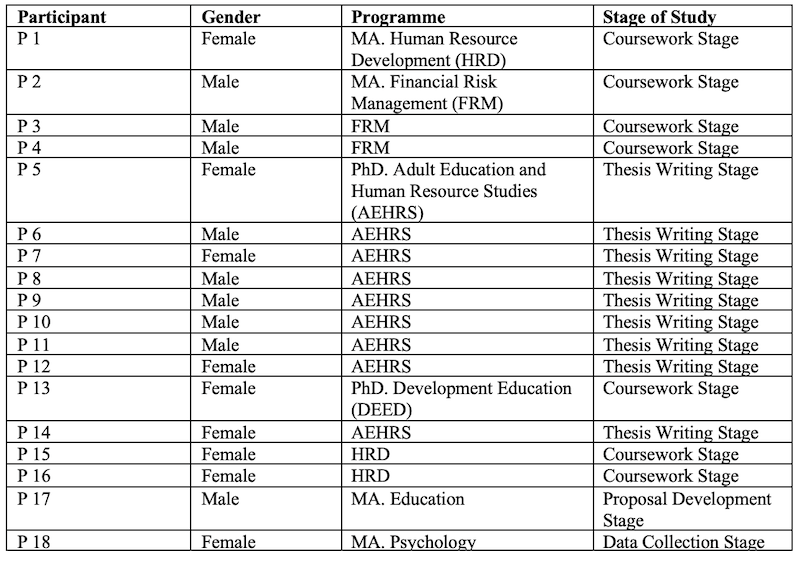
Table 1 presents the demographic and academic profile of the participants.
Table 1: Profile of Participants
Participants reported engaging in a diverse range of digital communities for academic communication, collaboration and professional networking. These communities were grouped into four categories.
Instant Messaging Platforms
WhatsApp and Telegram were the most frequently mentioned platforms. Participants explained that these platforms supported day-to-day academic discussions, sharing learning resources, disseminating announcements and obtaining immediate peer support:
I use mostly WhatsApp and Telegram ... (P 10)
Several participants described WhatsApp as the primary communication platform because of its accessibility and widespread adoption within postgraduate programmes.
Video Conferencing Platforms
Participants also relied on Microsoft Teams and Google Meet to participate in virtual meetings, research discussions and collaborative learning:
The platform that I mostly use is Microsoft Teams. I became involved in these digital communities at the workplace. (P 3)
Unlike instant messaging platforms, these tools enabled synchronous engagement during seminars, proposal discussions and group meetings.
Social Networking Communities
Participants identified Facebook and LinkedIn as valuable communities for academic networking, professional development and accessing research opportunities:
Also, I am on Facebook group which deals with research methodology issues. (P 5)
Discussion Forums
Several participants additionally referred to online discussion forums that facilitated scholarly discussions, methodological support and professional interaction:
I use WhatsApp, Telegram, online forum and LinkedIn Professional network. (P 12)
The findings indicate that postgraduate students participate in multiple digital communities simultaneously, selecting different platforms according to communication needs, collaboration and professional networking.
Participants described digital communities as important informal support systems that provided academic, informational, emotional, collaborative, and technical support throughout their postgraduate studies.
Academic Support
Academic support was the most frequently reported benefit. Participants explained that digital communities facilitated research guidance, clarification of difficult concepts, access to learning resources, and assistance with assignments and thesis-related activities:
I was struggling with data analysis for my thesis, particularly with using NVivo. I joined a postgraduate WhatsApp group where a senior lecturer shared step-by-step tutorials and even offered a Zoom walkthrough. (P 12)
This finding suggests that digital communities complement formal supervision by providing timely peer and expert support during research.
Informational Support
Participants indicated that digital communities served as important channels for sharing information on conferences, scholarships, seminars, deadlines, and departmental announcements. Access to timely information enabled students to navigate their programmes more effectively and participate in academic opportunities beyond the classroom.
Emotional, Collaborative and Technical Support
Participants also valued digital communities for the emotional encouragement, collaboration, and technical assistance they provided during demanding stages of postgraduate study:
Before our comprehensive examinations, I reached out to my colleagues on WhatsApp and we practised our presentations together, which helped to calm me down. (P 7)
Beyond emotional reassurance, participants described these communities as spaces for collaborative problem-solving, peer learning, and technical support, particularly in using research software and digital learning tools. Collectively, these forms of support strengthened students’ confidence and enhanced their academic experiences.
The findings indicate that digital communities extend beyond communication platforms to provide multidimensional support that complements formal institutional services.
Participants reported that participation in digital communities positively influenced both their academic engagement and psychological well-being.
Academic Engagement
Participants explained that digital communities improved access to learning resources, research guidance, peer feedback, and professional opportunities. These interactions enhanced examination preparation, thesis writing, research productivity, and the development of research and digital skills. The findings indicate that digital communities promote active participation, collaboration, and continuous knowledge sharing throughout postgraduate study.
Psychological Well-being
Participants consistently described digital communities as important sources of belonging, motivation, and emotional support:
The sense of belonging and support from these groups motivates me, reduces isolation, and strengthens my resilience throughout my academic journey. (P 13)
Participants reported that interactions with peers reduced feelings of isolation, increased confidence, and strengthened resilience during challenging stages of their studies. These findings suggest that digital communities support not only academic success but also students’ emotional well-being.
These reports demonstrate that digital communities function as informal learning ecosystems by simultaneously enhancing academic engagement and psychological well-being among postgraduate students.
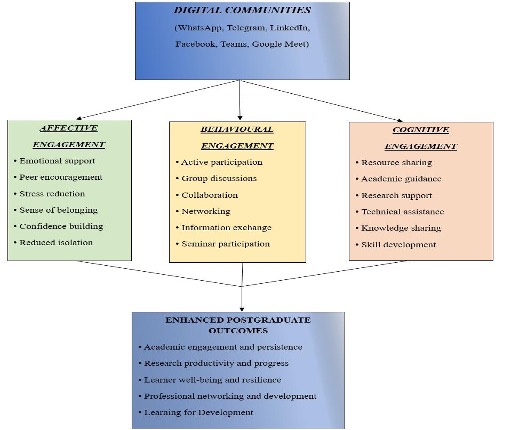
Figure 1 illustrates how the support functions provided through digital communities align with the affective, behavioural, and cognitive dimensions of the ACE framework. The figure demonstrates the ways in which academic, informational, technical, collaborative, and emotional support contribute to learner engagement and positive postgraduate outcomes.
This study examined how digital communities function as informal support systems for postgraduate students at the University of Ghana. Consistent with the ACE framework (Borup et al., 2020), the findings demonstrate that informal digital communities extend learning beyond institutional structures by providing cognitive, behavioural, and affective support. While previous studies have highlighted the educational value of digital communities (Huang et al., 2023; Lister et al., 2024; Spring et al., 2024), this study shows that, within a resource-constrained African university, these communities have evolved beyond communication platforms into informal learning infrastructures that sustain postgraduate learning and well-being.
The findings indicate that postgraduate students engage with multiple digital platforms including WhatsApp, Telegram, Microsoft Teams, Google Meet, Facebook, LinkedIn, and online discussion forums, to meet different academic and professional needs. This supports earlier studies showing that students increasingly combine several digital platforms for collaboration and networking (Berry, 2017; Elom et al., 2025; Lee et al., 2023). However, unlike much of the existing literature, which primarily examines digital platforms within formal teaching and learning environments, this study demonstrates that postgraduate students deliberately construct informal support networks that operate independently of institutional systems. These communities provide continuous access to peer expertise, research guidance, and professional opportunities that formal supervisory structures alone might not consistently offer.
The study further found that digital communities provide multidimensional support, including academic, informational, emotional, collaborative, and technical assistance. These findings corroborate previous research demonstrating that digital communities facilitate knowledge sharing, peer mentoring, and collaborative learning (Borup et al., 2020; Huang et al., 2023; Le et al., 2024). However, this study extends existing knowledge by illustrating how these different forms of support interact to address the complex realities of postgraduate education. Rather than functioning as isolated benefits, academic guidance, emotional encouragement, information sharing, and technical assistance operate simultaneously, enabling students to navigate research challenges while maintaining motivation and social connectedness.
An important contribution of this study is the identification of digital communities as informal learning infrastructures within postgraduate education. Existing research has generally portrayed platforms such as WhatsApp and Telegram as communication or collaboration tools (Elom et al., 2025; Lee et al., 2023). In contrast, the present findings demonstrate that these communities constitute self-organised ecosystems through which postgraduate students exchange expertise, solve methodological problems, develop research skills, access professional networks, and sustain emotional well-being. This perspective broadens current understanding of digital communities by highlighting their strategic role in supporting learner persistence, particularly in contexts where supervisory time, institutional resources, and formal learner-support services could be limited.
The findings also reinforce the relevance of the ACE framework by demonstrating that engagement extends beyond formal course communities. Participants described experiences that reflected cognitive engagement through research support and knowledge sharing, behavioural engagement through active collaboration and participation, and affective engagement through belonging, confidence, and emotional encouragement. At the same time, the study suggests that ACE could be extended to better recognise the contribution of student-led digital communities that develop independently of institutional learning environments. This represents a theoretical contribution by illustrating how informal peer networks complement formal academic support to enhance postgraduate learning.
The findings have important implications for higher education policy and practice in Ghana and similar contexts. Universities should recognise student-led digital communities as complementary learner-support mechanisms rather than informal activities operating outside institutional concern. Instead of replacing these communities with formal institutional platforms, universities should strengthen students’ digital participation by promoting digital literacy, facilitating responsible online engagement, and supporting discipline-based peer learning networks. Such approaches might improve learner engagement, research productivity, and student retention while preserving the autonomy that makes these communities effective.
The findings are equally relevant for ODL, where learner isolation remains a persistent challenge. Digital communities provide low-cost opportunities for sustained peer interaction, collaborative learning, academic guidance, and emotional support beyond formal course delivery. ODL institutions should therefore integrate structured peer-learning opportunities into programme design, while respecting the informal and student-driven nature of these communities. Any institutional engagement should be guided by ethical principles of informed consent, privacy, transparency, and voluntary participation to avoid undermining trust within peer networks.
Although this study provides evidence from the University of Ghana, its implications extend to higher education institutions across the Global South, where limited resources often constrain formal learner-support systems. The findings demonstrate that readily available digital technologies can strengthen inclusion, connectedness, and learner success without requiring substantial institutional investment.
Future research should examine how digital communities function across different academic disciplines, institutional contexts, and modes of study, particularly within fully online and ODL programmes. Comparative studies involving multiple universities and mixed-methods research could further strengthen understanding of how informal digital communities influence postgraduate learning, persistence, and academic success across diverse educational settings.
Berry, S. (2017). Student support networks in online doctoral programs: Exploring nested communities. International Journal of Doctoral Studies, 12, 33-48. https://doi.org/10.28945/3676
Borup, J., Graham, C.R., West, R.E., Archambault, L., & Spring, K.J. (2020). Academic communities of engagement: An expansive lens for examining support structures in blended and online learning. Educational Technology Research and Development, 68(2), 807-832. https://doi.org/10.1007/s11423-020-09744-x
Braun, V., & Clarke, V. (2019). Reflecting on reflexive thematic analysis. Qualitative Research in Sport, Exercise and Health, 11(4), 589-597. https://doi.org/10.1080/2159676X.2019.1628806
Doyle, L., McCabe, C., Keogh, B., Brady, A., & McCann M. (2020). An overview of the qualitative descriptive design within nursing research. Journal of Research in Nursing, 25(5), 443-455. https://doi.org/10.1177/1744987119880234
Elom, C.O., Ayerakwa, H.M., Ibrahim-Olesin, S., Defor, E.W., Uwaleke, C.C., & Onyeneke, R.U. (2025). Determinants of WhatsApp and Telegram usage for learning support in Nigerian universities. Frontiers in Education, 10, 1581514. https://doi.org/10.3389/feduc.2025.1581514
Haq, Z. U., Rasheed, R., Rashid, A., & Akhter, S. (2023). Criteria for assessing and ensuring trustworthiness in qualitative research. International Journal of Business Reflections, 4(2). https://doi.org/10.56249/ijbr.03.01.44
Hennink, M., & Kaiser, B.N. (2022). Sample sizes for saturation in qualitative research. Social Science & Medicine, 292, 114523. https://doi.org/10.1016/j.socscimed.2021.114523
Huang, X., Li, H., Huang, L., & Jiang, T. (2023). Development and innovation of online education based on digital knowledge-sharing communities. BMC Psychology, 11(1), 337. https://doi.org/10.1186/s40359-023-01337-6
Le, H-G., Sok, S., & Heng, K. (2024). The benefits of peer mentoring in higher education: Findings from a systematic review. Journal of Learning Development in Higher Education, 31. https://doi.org/10.47408/jldhe.vi31.1159
Lee, C., Chern, H., & Azmir, D. (2023). WhatsApp Use in a higher education learning environment: Perspective of students of a Malaysian private university on academic performance and team effectiveness. Education Sciences, 13(3). https://doi.org/10.3390/educsci13030244
Lister, K., Riva, E., Hartley, A., Waterhouse, P., Moller, N., Downes, L., Coughlan, T., Kukulska-Hulme, A., McPherson, E., Macdonald, I., Jones-Tinsley, S., Brown, C., & Tudor, R. (2024). Positive digital practices. Journal of Interactive Media in Education, 1(5).
Noble, H., & Smith, J. (2025). Ensuring validity and reliability. Evidence-Based Nursing, 28(4). https://doi.org/10.1136/ebnurs-2024-104232
Sandelowski, M. (2000). Whatever happened to qualitative description? Research in Nursing & Health, 23, 334-340. https://doi.org/10.1002/1098-240X(200008)23:4<334::AID-NUR9>3.0.CO;2-G
Spring, K.J., Graham, C.R., Hanny, C.N., Tuiloma, S., & Badar, K. (2024). Academic communities of engagement. Journal of Computing in Higher Education, 36(3), 702-726. https://doi.org/10.1007/s12528-023-09373-2
Author Notes
Abigail A. Aryeh-Adjei is a Senior Lecturer in the Department of Adult Education and Human Resource Studies, School of Continuing and Distance Education, University of Ghana. She holds a PhD in Community Development and Management from China Agricultural University, an MPhil in Agricultural Extension, and a BSc in Crop Science from the University of Ghana. Her research focuses on adult education, community development, technology-enabled teaching and learning, sustainable education, and educational policy and leadership. She has published widely on digital learning, university-community engagement, and educational technology in African contexts and has led and collaborated on research projects. Email: aaryeh-adjei@ug.edu.gh (https://orcid.org/0000-0003-0767-9100)
Johnny Andoh-Arthur is an Associate Professor of Social and Community Psychology, and the Examinations Officer at the Department of Psychology, University of Ghana where he teaches courses both at the undergraduate and graduate levels. He researches the mental health of men and young persons and also on social cognition, culture, religion and health. He has published about 60 scientific papers as book chapters and peer-reviewed journal articles and has presented his works at local and international conferences. He obtained both his PhD (Health Science) and MPhil (Human Development) from the Norwegian University of Science and Technology (NTNU), Trondheim, Norway. He obtained his bachelor’s degree in Psychology with Political Science (First Class Honors) from the University of Ghana. He is a Licensed Community Psychologist with the Ghana Psychological Council. Email: jandoh-arthur@ug.edu.gh (https://orcid.org/0000-0002-7036-1835)
Samuel Afotey Anang is a Senior Lecturer at the University of Energy and Natural Resources and lectures at the Department of Agricultural and Resource Economics. He holds a bachelor’s degree in agriculture, a master’s in Agricultural Extension and a PhD in Agricultural Economics and Management. He currently lectures in various courses in agricultural economics and community development and does research in the same fields. Email: samuel.anang@uenr.edu.gh (https://orcid.org/0000-0002-5170-1099)
Alvin Isaac Amoah is a Lecturer in Agricultural Extension at the University of Ghana, Legon, with over 20 years of experience in teaching, research, consultancy, and agricultural development. He holds a PhD, MPhil, and BSc in Agricultural Extension from the University of Ghana. His expertise spans agricultural extension, rural development, youth entrepreneurship, gender inclusion, sustainable livelihoods, agricultural value chains, and climate-smart agriculture. He teaches courses in development communication, extension methods, rural livelihoods, food security, and participatory rural development, while supervising graduate and undergraduate research. He has led and contributed to numerous agricultural development projects, including farmer training programmes on good agricultural practices and improved crop technologies. He has collaborated with organisations such as AGRA and IFDC, to conduct research on agricultural value chains, fertiliser systems, gender dynamics, and agricultural policy impacts. Beyond academia, he has facilitated capacity-building programmes and workshops across Ghana and West Africa on gender and agriculture, value chain development, e-extension, agribusiness, and entrepreneurship. He also serves as a trainer and manager with the Leventis Foundation Farmers’ Training Programme at the University of Ghana, mentoring young people in agribusiness and entrepreneurship. Email: iaamoah@ug.edu.gh (https://orcid.org/0009-0000-2245-2970)
Cite as: Aryeh-Adjei, A.A., Andoh-Arthur, J., Anang, S.A., & Amoah, A.I. (2026). Digital communities as informal support systems for postgraduate students: Insights from the University of Ghana. Journal of Learning for Development, 13(3), 563-573.
DOI: https://doi.org/10.56059/n7rtk887