Meriem Harabi and Hatem Ghrab
2026 VOL. 13, No. 3
Abstract: Artificial intelligence (AI) is increasingly positioned as a catalyst for research development in the Global South, yet empirical evidence on how researchers themselves engage with it remains scarce, particularly in Maghrebian contexts where the literature has concentrated on teaching and student support rather than scholarly practice. This study addresses that gap through a mixed-methods design that examined AI adoption, its epistemological implications, and its institutional-ethical conditions among 100 researchers in Tunisian higher education. Data were collected via a structured online questionnaire combining closed-ended items (analysed descriptively using SPSS [Version 27]) and open-ended items (analysed through Braun and Clarke’s six-phase thematic analysis), interpreted through strategic-applicative, philosophical-systemic, and socio-technical-ethical lenses. Results show that AI use is widespread but discipline-shaped: engineering and exact-science researchers favour modelling and simulation, while humanities and social-science researchers favour translation and synthesis. Half of the respondents (50%) identified declining creativity and critical thinking as the principal obstacle to use, positioning epistemic rather than technical concerns at the centre of adoption. Strong normative support for transparency (80% favouring attribution of AI-generated content) coexists with a marked demand for institutional guidance, revealing a behavioural-normative asymmetry between cautious use (65% occasional) and ethical expectation. These findings indicate that AI’s developmental value is conditional: access alone does not translate into epistemic autonomy unless accompanied by discipline-sensitive literacy, contextually grounded tools, and explicit governance. The study contributes an empirically grounded account of AI’s dual promise and peril in a Global South research system, with implications for research policy, AI literacy, and Open and Distance Learning practice.
Keywords: scientific research, higher education, AI literacy, socio-technical systems, Global South
Artificial intelligence (AI) is reshaping higher education and research. AI now supports information retrieval, data analysis, scientific writing, and decision-making across universities. Governments treat AI as a strategic resource for innovation, but adoption carries risk: recent studies point to over-reliance on generative tools, declining critical engagement, ethical uncertainty, and algorithmic bias (UNESCO, 2021; Verboom et al., 2025; Yang & Peters, 2026). In Tunisia, constrained research capacity and uneven institutional readiness sharpen these risks, making AI adoption a question of equity and research development, not just technology (Selwyn, 2019; Zawacki-Richter et al., 2019).
Yet most existing research concentrates on teaching and student support while leaving researchers unexamined. Evidence from North Africa remains especially scarce, with published work concentrated in Europe, North America, and East Asia (Eubanks, 2018; Selwyn, 2019). The present study addresses this gap directly, offering mixed-methods evidence — quantitative patterns combined with qualitative accounts — from Tunisian universities.
Three complementary lenses structured the analysis: the strategic-applicative lens examined adoption patterns and their contribution to research productivity; the philosophical-systemic lens explored how AI shapes knowledge production, critical thinking, and epistemic autonomy, and the socio-technical-ethical lens considered how institutional support and governance shape responsible use. We connect technological adoption to developmental and ethical outcomes, structuring the study’s four variables: patterns of use, perceived benefits, cognitive and institutional challenges, and attitudes toward responsible practice.
Three objectives follow from this framework. The study examined how Tunisian researchers use AI throughout the research process; it investigated the perceived cognitive and epistemological implications of this use; and it identified the institutional and ethical conditions needed for responsible integration. As a secondary line of inquiry, these findings are considered for their relevance to Open and Distance Learning (ODL), where similar tensions around ethical responsibility, critical thinking, and responsible AI use already shape learner support and institutional practice (Adewale et al., 2024; Agersnap et al., 2025; Hamidon et al., 2025; Rugube et al., 2024).
Three focused research questions guided the inquiry:
RQ1. How do Tunisian researchers utilise AI tools across the different stages of the research process?
RQ2. What are the epistemological and cognitive implications of AI integration for researchers, specifically regarding changes in critical thinking, creativity, and knowledge production?
RQ3. What social, institutional, and ethical factors shape the responsible and effective use of AI in Tunisian research environments?
This study drew on three complementary theoretical lenses: the strategic-applicative, the philosophical-systemic, and the socio-technical-ethical. They form a deliberate analytical sequence — from macro-level adoption patterns, through epistemological shifts, to institutional and ethical conditions. Together they support a multi-layered reading of AI in a Tunisian research environment (Selwyn, 2019; Williamson, 2017).
The strategic-applicative lens concerns the practical implementation of AI in research settings — adaptive tools, automation, and data-driven work (Achariya, 2025; Saman et al., 2025; Zawacki-Richter et al., 2019). In this study, it informed the first research question: how AI is adopted across disciplines and research stages.
The philosophical-systemic lens addresses AI’s deeper epistemological implications — how it reshapes knowledge production, authorship, and intellectual autonomy (Connell, 2007; Kotsis, 2025; Mignolo, 2011). It underpins the second research question, examining whether efficiency gains come at the cost of epistemic independence, a tension especially salient in Global South contexts (Kraemer-Mbula et al., 2020; UNESCO, 2021).
The socio-technical-ethical lens focuses on institutional and human conditions — trust, governance, and organisational support shaping responsible AI use (Jellani & Abubakar, 2025; Verboom et al., 2025; Zuo et al., 2025). It guided the third research question, linking institutional capacity and ethical governance to responsible adoption in the Tunisian context.
Together, these three perspectives provide a coherent framework for analysing AI adoption in Tunisian research institutions. The strategic lens explains patterns of AI use, the philosophical lens examines their implications for knowledge production, and the socio-technical lens explores the institutional and ethical conditions that influence responsible implementation. This integrated framework therefore guided the organisation of the analysis and provides the basis for interpreting the quantitative and qualitative findings reported in the subsequent sections.
This study employed a mixed-methods design to investigate how Artificial Intelligence (AI) is shaping research practices in Tunisian higher education. The quantitative component examined patterns of AI use, perceived benefits, and perceived challenges through structured questionnaire items. In contrast, the qualitative component explored participants’ experiences, concerns, and expectations using open-ended responses. Integrating numerical trends with participants’ narratives enabled a more comprehensive understanding of AI adoption than either method could provide independently (Creswell & Plano Clark, 2018).
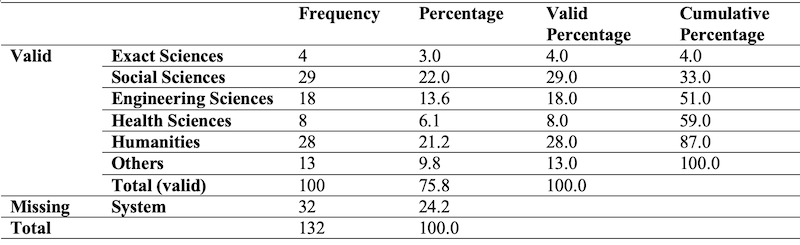
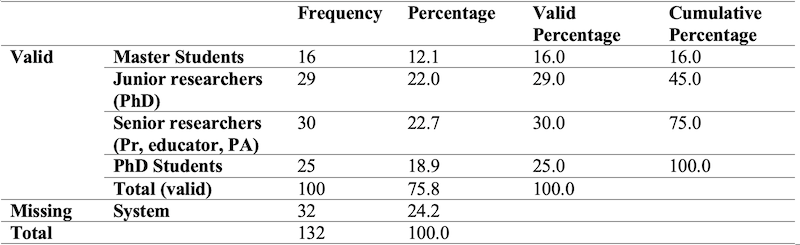
The target population consisted of researchers affiliated with Tunisian higher education and research institutions. A convenience sampling strategy was adopted because the study sought responses from researchers across different academic disciplines, institutional affiliations, and career stages who were actively engaged in research. A total of 100 valid questionnaires were analysed (Table 1). Participants represented a diverse academic profile, including doctoral researchers, early-career academics, and senior faculty members from multiple disciplinary fields (Table 2). Although convenience sampling limits statistical generalisability, it is appropriate for exploratory studies examining emerging phenomena such as AI adoption.
Table 1: Population Sample with Scientific Domains
Table 2: Population Sample with Career Stage
Data were collected using a structured online questionnaire comprising both closed-ended and open-ended questions. The closed-ended items collected information on participants’ demographic characteristics, AI usage patterns, perceived benefits, challenges, and attitudes towards AI integration. Responses were primarily measured using categorical and Likert-type scales. The open-ended questions invited participants to describe their experiences with AI, identify perceived opportunities and risks, and propose recommendations for improving AI integration. These qualitative responses provided contextual explanations for the quantitative findings and allowed the identification of themes that could not be captured through a structured survey. To strengthen content validity, the questionnaire was developed from the contemporary literature on AI in higher education and research, and reviewed before dissemination to ensure clarity and relevance.
Data were collected electronically during the study period using an online questionnaire distributed through academic and professional networks. Participation was voluntary, and respondents were informed of the purpose of the study and that their responses would be treated confidentially.
Quantitative data were analysed using descriptive statistics, including frequencies and percentages, to identify patterns of AI adoption and researchers’ perceptions using SPSS (Version 27). The qualitative responses were analysed using thematic analysis following the six-phase framework proposed by Braun and Clarke (2006): familiarisation with the data, initial coding, theme development, theme review, theme definition, and reporting. The qualitative themes were subsequently integrated with the quantitative findings during interpretation to explain observed patterns, strengthen the credibility of the results, and provide a richer understanding of AI adoption in the Tunisian research context.
Participants were informed about the purpose of the study and assured that their responses would be anonymous and confidential. Completion of the questionnaire was taken to constitute informed consent. No identifying information was collected. All data were stored securely and used solely for academic purposes.
The results are organised according to the three research questions. For each research question, quantitative findings from the closed-ended questionnaire items are presented first, followed by qualitative findings derived from the open-ended responses.
Quantitative Results
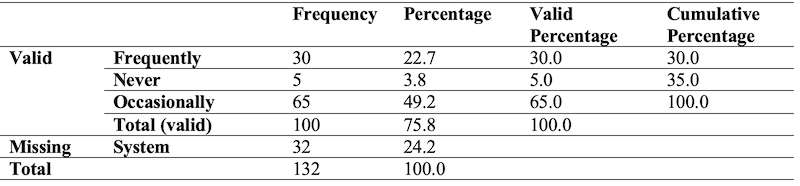
AI use was widespread but predominantly occasional among the respondents. Of the 100 valid responses, 65% reported using AI occasionally, 30% frequently, and 5% never. Thus, AI was already incorporated into the research practices of most respondents, although systematic use was not the dominant pattern (Table 3).
Table 3: The Frequency of AI Use by Tunisian Researchers
The reported uses varied across disciplinary domains. Researchers in engineering and exact sciences primarily identified modelling and simulation as their main use, with data analysis as a secondary application. Researchers in humanities and social sciences primarily identified automatic translation, followed by trend identification. Across domains, data collection and analysis and quality correction in scientific writing were also prominent uses (Table 4).
Table 4: Primary AI Use Cases by Research Domain

Table 5: AI as a Facilitator of the Redaction Process
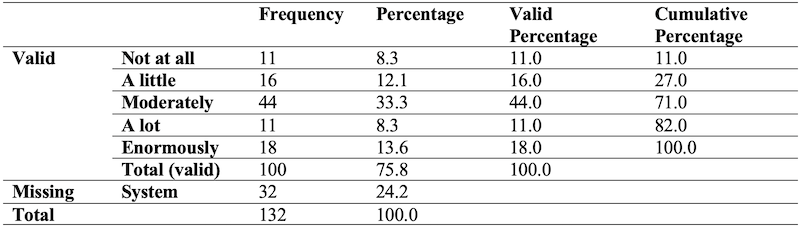
Table 6: General Use of AI in Scientific Writing
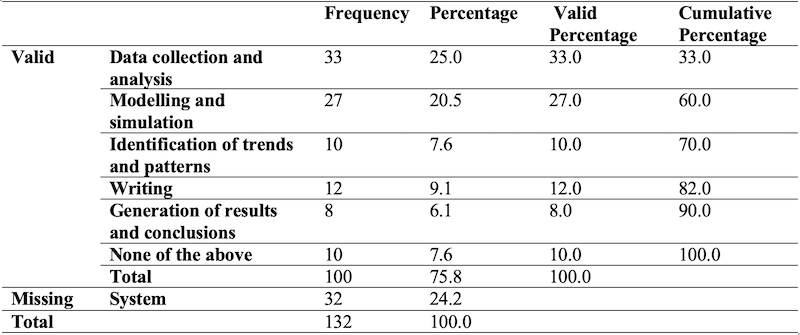
Table 7: Benefits of Using AI in Scientific Writing
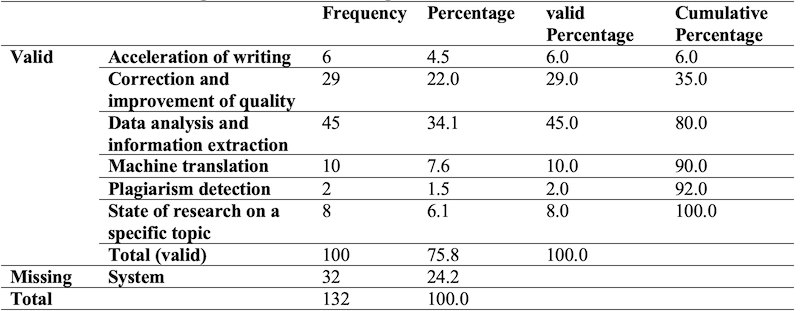
Qualitative Thematic Findings
The open-ended responses complemented these quantitative patterns by describing AI primarily as a supporting resource for specific research tasks, rather than as a substitute for the researchers’ own work. The inductive analysis identified three closely related themes for RQ1: task-specific research assistance, accelerated access to scientific information, and language and writing support (Table 8).
Table 8: Inductively Derived Qualitative Themes for RQ1
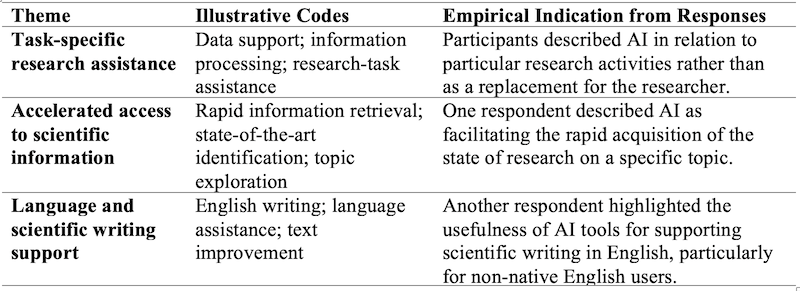
The qualitative responses therefore provide contextual explanations for the quantitative prominence of data analysis, information extraction, writing support, and translation. Rather than indicating a single mode of AI adoption, the responses suggest that researchers adapt AI to particular research tasks and disciplinary needs.
Quantitative Findings
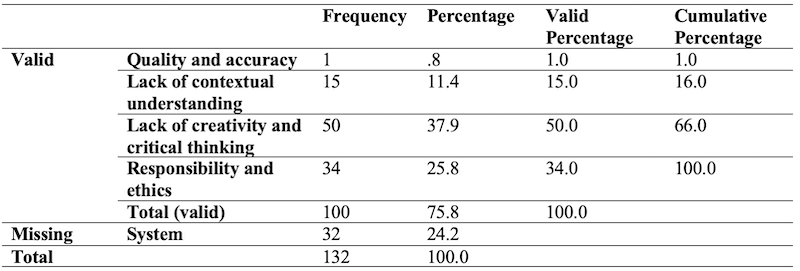
The quantitative findings indicate that difficulties with AI use were common. Seventeen percent of respondents reported no difficulty, 31% reported some difficulties, and 38% reported many difficulties, while 14% indicated that they did not use AI tools (Table 9). The most frequently identified obstacle was lack of creativity and critical thinking, selected by 50% of respondents. This was followed by responsibility and ethics (34%) and lack of contextual understanding (15%). Quality and accuracy was selected by only 1% (Table 10).
The distribution therefore places cognitive and epistemological concerns ahead of technical concerns in respondents’ perceptions of AI-related difficulties.
Table 9: Difficulty Using AI
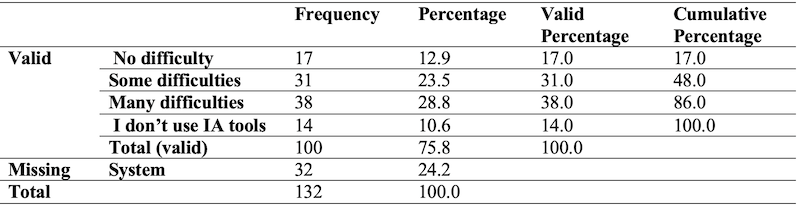
Table 10: Obstacles to Using AI
Qualitative Thematic Findings
The inductive thematic analysis of the open-ended responses identified a dominant concern about the possible consequences of excessive reliance on AI for independent reasoning. This theme complements the quantitative finding that lack of creativity and critical thinking was the most frequently reported obstacle (Table 11).
Table 11: Inductively Derived Qualitative Themes for RQ2
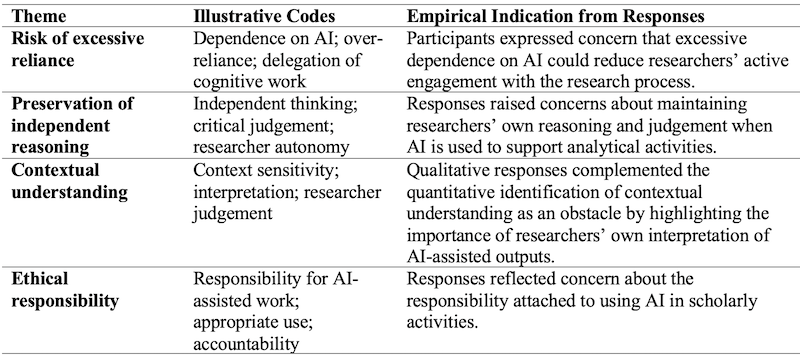
The dominant qualitative pattern was therefore not opposition to AI itself, but concern about how AI is used and the extent to which researchers retain intellectual responsibility for the research process.
Quantitative Findings
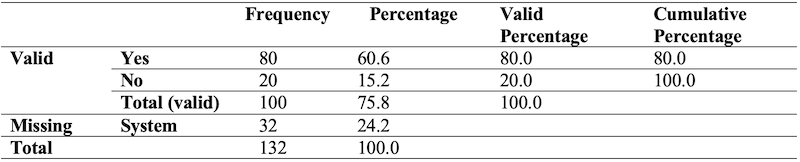
The quantitative results indicate strong support for transparency concerning AI-assisted scholarly work. Eighty percent of respondents agreed that AI-generated information should be adequately referenced in scholarly publications, whereas 20% disagreed (Table 12). This finding should be considered alongside Table 10, where responsibility and ethics was selected by 34% of respondents as an obstacle to AI use. The two results indicate that ethical responsibility was simultaneously recognised as important and perceived as a challenge in AI-assisted research.
Table 12: Referencing of AI Generated Information
Qualitative Thematic Findings
The open-ended responses provide further insight into the ethical dimension of AI adoption. The analysis identified three closely related themes: researcher responsibility and accountability and transparency in AI-assisted scholarly work (Table 13).
Table 13: Inductively Derived Qualitative Themes for RQ3
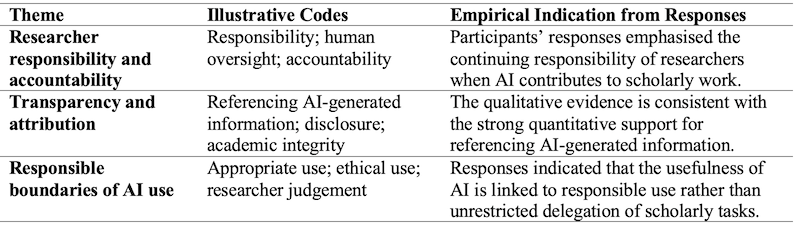
The qualitative findings therefore reinforce the normative orientation observed in the quantitative responses: participants did not appear to regard AI-generated material as independent of scholarly responsibility.
The integrated findings (Table 14) reveal a consistent pattern across the three research questions.
Table 14: Integrated Quantitative-qualitative Findings by Research Question
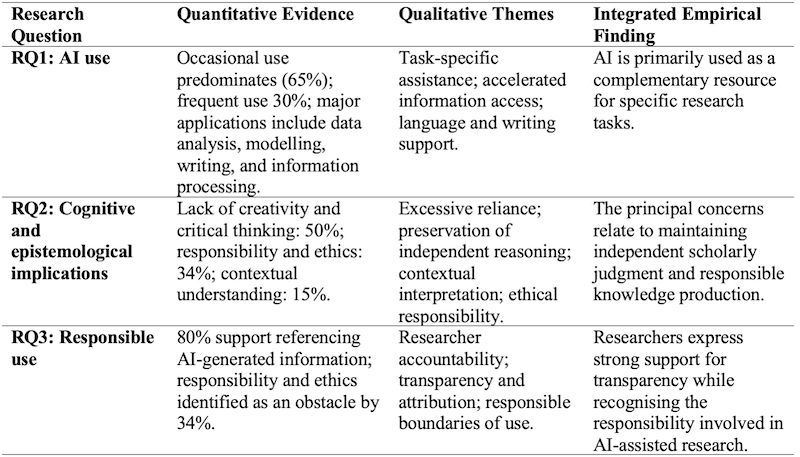
Overall, the mixed-methods integration demonstrates that the numerical patterns and participants’ accounts address complementary dimensions of AI adoption. The quantitative strand establishes the prevalence and distribution of AI use, perceived benefits, challenges, and ethical attitudes. The qualitative strand provides contextual explanations of how researchers experience these issues. The combined evidence portrays AI adoption among the participants as neither wholly transformative nor wholly disruptive: researchers recognised practical benefits while simultaneously seeking to preserve independent reasoning, contextual judgment, and ethical responsibility.
This study examined AI adoption among Tunisian researchers through three complementary lenses — strategic-applicative, philosophical-systemic, and socio-technical-ethical. Three findings stand out: AI adoption was heterogeneous and discipline-shaped rather than uniform; the main concerns researchers reported were epistemic (critical thinking, creativity, contextual judgment) rather than technical; and strong normative support for transparency coexisted with a perceived lack of institutional guidance. Read together, these findings show that technological adoption, epistemic autonomy, and institutional governance are interdependent, not separable, dimensions of AI integration in a Global South research system.
Discipline shapes AI use: engineering and exact-science researchers favour modelling and simulation, while humanities and social-science researchers favour translation, synthesis, and trend identification — confirming AI’s role in research efficiency (Achariya, 2025; Saman et al., 2025), but showing that adoption follows disciplinary epistemologies rather than a single technological pathway. Capacity-building should follow suit: computational fields require training in AI-assisted modelling and verification, humanities and social-science fields in source evaluation, translation accuracy, and generative-AI ethics.
More consequential is the epistemic finding: half of the respondents identified declining creativity and critical thinking as the principal obstacle, echoing cognitive-delegation concerns raised by Selwyn (2019) and Kotsis (2025) — now grounded empirically among researchers rather than students. This carries a Global South inflection: AI can lower linguistic and informational barriers to global scholarship, but greater access does not equate to greater epistemic autonomy, since systems trained predominantly on external data and assumptions may reproduce dependency even as access expands (Kraemer-Mbula et al., 2020; Yang & Peters, 2026). The implication is not to limit AI use but to pair adoption with context-sensitive datasets, multilingual resources, and verification practices that protect local knowledge production.
The findings both confirm and extend the literature reviewed in the Introduction. They corroborate systematic evidence that successful AI integration depends on institutional strategy, ethical governance, and contextual adaptation, not on access alone (Segura Altamirano et al., 2026; Zawacki-Richter et al., 2019). They also move Selwyn’s (2019) concerns about AI’s social and cognitive consequences from an abstract risk to an empirically observed one, since Tunisian researchers themselves identified critical thinking and creativity, not infrastructure, as the central obstacle. Relative to Kraemer-Mbula et al. (2020) and UNESCO (2021), the study’s specific contribution is to show empirically that equitable participation in AI-mediated research requires researchers to retain evaluative and interpretive capacity, not merely consume AI outputs. Finally, against Verboom et al. (2025), the data reveal a measurable asymmetry rarely quantified elsewhere: 80% support referencing AI-generated content, yet 34% cite responsibility and ethics as an obstacle — evidence that normative commitment to transparency currently outpaces the institutional mechanisms available to enact it.
Four priorities follow for Tunisian research policy:
These implications extend to Open and Distance Learning, where AI-mediated access already shapes participation for linguistically or geographically constrained learners (Adewale et al., 2024; Hamidon et al., 2025). The same risk identified among researchers — reduced independent reasoning under excessive reliance — applies to ODL learners, and requires equivalent safeguards: transparent AI-use policies, assessment that rewards reasoning over output, and reflective AI-literacy training (Agersnap et al., 2025; Rugube et al., 2024). As the present data were not collected from ODL populations, this extension is offered as a theoretically grounded inference rather than a direct empirical claim.
The study’s principal contribution is empirical: it integrates AI adoption behaviour, epistemic consequence, and institutional-ethical condition within a single Global South dataset — dimensions the literature typically treats separately — and identifies a behavioural-normative asymmetry (65% cautious use vs. 80% support for transparency) offering a testable basis for future governance research. Priority directions include larger, stratified samples across public and private institutions; longitudinal designs tracking whether AI literacy eases critical-thinking concerns over time; psychometric validation of the instrument; and comparative studies across Maghrebian and African research systems to test whether these patterns are Tunisia-specific or regional. Overall, the evidence reframes the policy question from whether AI should be adopted to under what conditions it strengthens, rather than substitutes, human judgment and local knowledge production.
Our study examined AI adoption, its epistemic implications, and its institutional conditions among Tunisian researchers. Three findings anchor the contribution: AI use is heterogeneous and task-dependent rather than a substitute for expertise; concerns are epistemic rather than technical, with half of respondents citing declining creativity and critical thinking as the main obstacle; and strong support for transparency coexists with a clear demand for institutional guidance.
The core contribution is empirical: access to AI does not by itself translate into research development, since its value depends on researchers’ capacity to evaluate outputs critically and adapt them to local knowledge contexts — a finding with particular relevance for Global South research systems. Read against the study’s limitations (non-probability sample, self-reported data), the central challenge for Tunisia is not whether to adopt AI in research, but how to integrate it so that it strengthens, rather than substitutes for, human judgment and academic integrity.
Achariya, A. (2025). Artificial intelligence as a catalyst for transforming learning in higher education. Perfect Education Fairy, 3(3), 80-87.
Adewale, M.D., Azeta, A., Abayomi-Alli, A., & Sambo-Magaji, A. (2024). Impact of artificial intelligence adoption on students' academic performance in open and distance learning: A systematic literature review. Heliyon, 10(22), e40025. https://doi.org/10.1016/j.heliyon.2024.e40025
African Union. (2024, July). Continental artificial intelligence strategy: Harnessing AI for Africa’s development and prosperity. AU Commission. https://au.int/sites/default/files/documents/44004-doc-EN-_Continental_AI_Strategy_July_2024.pdf
Agersnap, A., Baunvig, K.F., Schmidt, L.W., Eriksen, R.S., Bønding, E.W., Kirkegaard, T.H., & Wierød Borčak, L. (2025). The human touch: Leveraging HITL for quantitative close reading of historical corpora. In DHNB 2025: Programme - Book of Abstracts (pp. 11-13). https://dhnb.eu/wp-content/uploads/2025/03/DHNB-2025_abstracts.pdf
Braun, V., & Clarke, V. (2006). Using thematic analysis in psychology. Qualitative Research in Psychology, 3(2), 77-101. https://doi.org/10.1191/1478088706qp063oa
Connell, R. (2007). Southern theory: The global dynamics of knowledge in social science. Polity Press.
Creswell, J.W., & Plano Clark, V.L. (2018). Designing and conducting mixed methods research (3rd ed.). SAGE.
Eubanks, V. (2018). Automating inequality: How high-tech tools profile, police, and punish the poor. St. Martin’s Press. https://us.macmillan.com/books/9781250074317/automatinginequality
Hamidon, Z., Abdullah, M.L., Yussof, Y., & Ismail, M.N. (2025). Exploring AI-driven personalization in open and distance learning: Learner engagement, inclusivity, and ethical implementation. International Journal of Academic Research in Business and Social Sciences, 15(6), 1-15. https://doi.org/10.6007/IJARBSS/v15-i6/25791
Jellani, A., & Abubakar, S. (2025). Perceived institutional support and its effects on student perceptions of AI learning in higher education: The role of mediating perceived learning outcomes and moderating technology self-efficacy. Frontiers in Education, 10, 1548900. https://doi.org/10.3389/feduc.2025.1548900
Kotsis, K.T. (2025). Artificial intelligence as a catalyst for changes in university-level science education. EIKI Journal of Effective Teaching Methods, 3(3). https://doi.org/10.59652/jetm.v3i3.618
Kraemer-Mbula, E., Tijssen, R.J.W., Wallace, M.L., & McLean, R. (Eds.). (2020). Transforming research excellence: New ideas from the Global South. African Minds. https://www.africanminds.co.za/transforming-research-excellence-new-ideas-from-the-global-south
Mignolo, W.D. (2011). The darker side of Western modernity: Global futures, decolonial options. Duke University Press.
OECD. (2023). State of implementation of the OECD AI principles four years on (Reference No. DSTI/CDEP/AIGO(2023)5/FINAL). OECD Publishing. https://www.oecd.org/en/publications/state-of-implementation-of-the-oecd-ai-principles-four-years-on_7c0b3e85-en.html
Rugube, T., Maphosa, C., Mthethwa-Kunene, K.E., & Dlamini, P. (2024). The role of artificial intelligence (AI) in ODEL provisioning: A systematic literature review. European Journal of Open Education and E-learning Studies, 8(3), 137-157. https://doi.org/10.46827/ejoe.v8i3.5210
Saman, H.M., Noor, S.M., Isa, C.M.M., Lian, O.C., & Narayanan, G. (2025). Embracing artificial intelligence as a catalyst for change in reshaping Malaysian higher education in the digital era: A literature review. In Proceedings of the International Conference on Emerging Technologies and Intelligent Systems (pp. 634-643). Springer. https://doi.org/10.2991/978-94-6463-589-8_59
Segura Altamirano, S.F., Maquen-Niño, G.L.E., Guzmán Roldán, C.M., Pérez Herrera, A., & Castro Cárdenas, D.M.C. (2026). Generative artificial intelligence in higher education: A systematic review of perceptions, implementation and pedagogical transformation. Review of Education, 14, e70152. https://doi.org/10.1002/rev3.70152
Selwyn, N. (2019). Should robots replace teachers? AI and the Future of Education. (1st ed.) Polity Press.
UNESCO. (2021, November). Recommendation on the ethics of artificial intelligence (Document code: SHS/BIO/PI/2021/1). UNESCO Digital Library. https://unesdoc.unesco.org/ark:/48223/pf0000381137
Verboom, A.D.P.R., Pais, L., Zijlstra, F.R.H., Oswald, F.L., & dos Santos, N.R. (2025). Perceptions of artificial intelligence in academic teaching and research: A qualitative study from AI experts and professors' perspectives. International Journal of Educational Technology in Higher Education, 22, 46. https://doi.org/10.1186/s41239-025-00546-w
Williamson, B. (2017). Big data in education: The digital future of learning, policy and practice. SAGE.
Yang, Y., & Peters, M.A. (2026). Artificial intelligence, the Global South, and knowledge socialism. Educational Philosophy and Theory. Advance online publication. https://doi.org/10.1080/00131857.2026.2680902
Zawacki-Richter, O., Marín, V.I., Bond, M., & Gouverneur, F. (2019). Systematic review of research on artificial intelligence applications in higher education — where are the educators? International Journal of Educational Technology in Higher Education, 16, Article 39. https://doi.org/10.1186/s41239-019-0171-0
Zuo, Z., Luo, Y., Yan, S., & Jiang, L. (2025). From perception to practice: Artificial intelligence as a pathway to enhancing digital literacy in higher education teaching. Systems, 13(3), 664. https://doi.org/10.3390/systems13080664
Author Notes
Dr Meriem Harabi is a Tunisian researcher specialising in higher education, science education, educational innovation, and artificial intelligence in education. She holds a PhD in the Didactics of Physical and Technical Sciences. She is affiliated with the LMPE Laboratory at the National School of Engineers of Tunis (ENSIT), University of Tunis, as a researcher. Her research focuses on AI in education, Education 5.0, Green EdTech, teacher professional development, and sustainable educational transformation. Email: harabi.myriem2@gmail.com (https://orcid.org/0009-0000-7706-4975) Email: harabi.myriem2@gmail.com (https://orcid.org/0009-0000-7706-4975)
Dr Hatem Ghrab holds a PhD in Management Sciences with a specialisation in Electronic Document Management. He is affiliated with the Higher Institute of Documentation (ISD) at the University of Manouba in Tunisia, and is a member of the Research Laboratory in Information Systems. His research focuses on digital marketing, e-commerce, digital transformation, and the integration of artificial intelligence into organisational and academic contexts. Email: hatemghrab@gmail.com (https://orcid.org/0000-0001-5706-9728) Email: hatemghrab@gmail.com (https://orcid.org/0000-0001-5706-9728)
Cite as: Harabi, M., & Ghrab, H. (2026). Between promise and peril: Artificial intelligence as a contested catalyst for research development in Tunisia. Journal of Learning for Development, 13(3), 527-540.
DOI: https://doi.org/10.56059/pk3eag72