Satrio Pradono Suryodiningrat, Harjanto Prabowo, Arief Ramadhan and Harry Budi Santoso
2026 VOL. 13, No. 4
Abstract: This study developed SPRADO MIRA, an assessment instrument designed to evaluate mixed reality (MR) learning experiences in vocational education. Drawing on findings from a previously published systematic literature review, three proposed assessment dimensions were identified: engagement, perceived learning effectiveness, and motivation and satisfaction. An initial set of 34 questionnaire statements was refined into 39 statements through expert review. Three psychometric experts subsequently evaluated the revised statements for clarity, importance, and relevance using a five-point rating scale. The aggregated Aiken’s V coefficient was 0.96, providing strong evidence of content validity. Subsequent implementation in Indonesian automotive vocational schools also demonstrated high internal consistency for the separate student and teacher questionnaires, with Cronbach’s alpha coefficients of 0.949 and 0.973, respectively. These findings support SPRADO MIRA as an education-focused instrument for evaluating MR learning experiences, with potential applications in other educational settings.
Keywords: mixed reality, vocational school, vocational education, technical and vocational education, assessment tool, evaluation tool
Vocational education faces many challenges in equipping graduates with appropriate competencies to meet industry’s needs (Ariefianto et al., 2025; Suharno et al., 2020). Immersive learning, and the pedagogy needed to increase engagement, also raise concerns for researchers (Balalle, 2025). Lack of specific and dedicated instruments to measure learning experiences in MR-based education in various educational contexts is one of the problems faced by educators. Based on the experiential learning theory (Kolb, 1984) and constructivist principles (Bödding et al., 2025), this study developed SPRADO MIRA, a 39-item instrument consisting of three parts, namely engagement, perceived learning, and motivation and satisfaction. The name SPRADO MIRA combines the lead author’s name, Satrio Pradono, and Mixed Reality Assessment. Unlike general usability measurement tools, SPRADO MIRA measurement focuses on MR in education for teachers and students. In this study, the proposed measurement dimensions of SPRADO MIRA were identified, the statements of the questionnaire were refined, and content validity through expert ratings was also tested using Aiken’s V.
Vocational education and training (VET) plays an essential role in preparing graduates with competencies relevant to industry requirements. However, mismatches between educational preparation and workplace expectations remain a challenge. Pranita et al. (2025) highlighted the importance of stronger education-industry alignment, while Ariefianto et al. (2025) identified curriculum rigidity, outdated infrastructure, and limited industry collaboration as barriers to effective vocational preparation. The effectiveness of digital technology, however, depends on the degree of readiness of an institution as well as the competencies of its educators. This is reflected in studies by Rahmawati et al. (2025) that listed the barriers that affected the digital competencies of vocational teachers, and by Isbah et al. (2025) who analysed the readiness of schools to tackle emerging economic needs. Mixed reality (MR), which combines real and virtual environments by means of interactive simulations, can support hands-on training. Bödding et al. (2025) analysed 53 studies on MR-based vocational training and concluded that the results showed positive effects on the learners’ behaviour, cognition, and affect.
Evaluating MR experiences is important for understanding learners’ experiences and educational outcomes. To create engaging, knowledge-rich interactive MR experiences for learning, the potential of these new technologies and appropriate pedagogy for their implementation are explored by Balalle (2025), and Díaz-Lauzurica and Moreno-Salinas (2025) identified the relevance of using active learning methods in order to increase students’ interest and engagement in vocational education. Furthermore, learners’ views of and experiences with learning using technology, in terms of their perceived effectiveness, motivation, and satisfaction, are also an important consideration even when outcomes are measured objectively. The importance of technical skills in vocational training has been outlined by Lewis (2025).
SPRADO MIRA is based on the experiential learning theory (Kolb, 1984). There are three assessment dimensions based on this learning theory:
The above dimensions were used for designing the instrument, and these have not yet been confirmed through factor analysis.
While evaluating MR applications in terms of their usability for tasks and user experience is a common practice, many existing usability evaluation instruments are not specifically designed for MR learning environments and may not adequately capture their unique educational characteristics. General usability and user experience instruments, such as the System Usability Scale (SUS) and the User Experience Questionnaire (UEQ), were not specifically developed for these environments and might not fully capture the educational aspects of MR-based learning. Instead, a context-oriented tool is needed that, in addition to standard measures of user experience, also determines users’ engagement, their perception of learning and motivation, and their level of satisfaction in learning. The SPRADO MIRA consists of a 39-item questionnaire based on state-of-the-art literature and has been reviewed in two rounds of expert assessment on psychometric issues. It structures vocational MR learning experiences within the context of the educational dimensions of Engagement, Perceived Learning Effectiveness, and Motivation and Satisfaction.
The purpose of this study was to develop and evaluate SPRADO MIRA for content validity. Three research objectives (ROs) guided this study:
RO1: To identify of relevant conceptual dimensions to evaluate MR learning experiences in vocational and technical education and training.
RO2: To develop and refinement of the items of the questionnaire to measure engagement, learning, motivation and satisfaction.
RO3: To assess of the content validity of the SPRADO MIRA instrument through a psychometric expert evaluation using Aiken’s V.
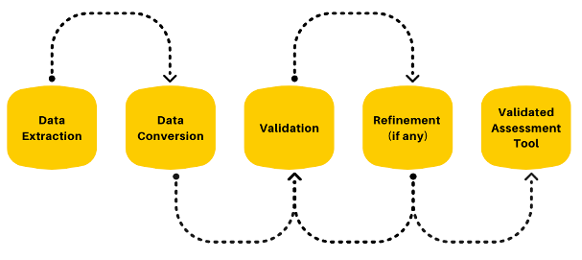
In this study, a quantitative instrument-development approach was used for the development of the SPRADO MIRA assessment tool for MR learning situations in the field of vocational education. This approach mimics the Rapid Application Development (RAD) model (Ruparelia, 2010) and consists of five steps as depicted in Figure 1.
In addressing the three research objectives, the methodology, which comprises five stages (see Figure 1), started with identifying relevant findings from the previous systematic literature review (Suryodiningrat et al., 2021) for developing conceptual dimensions to evaluate MR learning experiences in vocational and technical education and training (RO1). These conceptual dimensions were then transformed into several initial statements of the questionnaire (RO2). The latter set of statements was evaluated by three experts in psychometrics for issues of clarity, importance, and relevance (see Appendix 1). The statements were then refined based on feedback from the experts. Validation and refinement were carried out in several stages (RO2). The resulting instrument was a content-evaluated assessment tool, the content validity of which was measured using Aiken’s V based on the ratings by the experts (RO3).
Three Indonesian psychometric experts, comprising an assistant professor, an associate professor, and a full professor, were selected through purposive sampling based on their expertise in psychometrics and instrument evaluation. According to Aiken (1980), content validity can be statistically evaluated using as few as three expert raters. For three experts using a five-point rating scale, the minimum statistically significant Aiken’s V coefficient was approximately 0.92. The experts participated in two rounds of evaluation.
The SPRADO MIRA instrument for assessing the experiences of students and teachers with MR-based learning in the context of vocational education consisted of a pool of 39 statements covering three assessment dimensions: engagement, learning and motivation/satisfaction. The assessment was conducted by means of a five-point Likert scale for each of the 39 statements (1 = strongly disagree; 2 = disagree; 3 = neutral; 4 = agree; 5 = strongly agree). Three psychometric experts assessed all of the revised statements in terms of their clarity, importance, and relevance using a five-point scale. Aiken’s V (Aiken, 1980) was used to analyse the ratings of the revised statements. The internal consistency of the statements for students and teachers was assessed using Cronbach’s alpha, and the results were reported by Suryodiningrat et al. (2026).
Development of SPRADO MIRA, as well as its evaluation, was conducted through five stages of development (see Figure 1).
In the first stage, findings from a previously conducted systematic literature review of the educational benefits of MR (Suryodiningrat et al., 2021) were systematised to develop several assessment dimensions (RO1). Assessment dimensions were developed from 99 publications that were reviewed in the literature study. After screening for inclusion, exclusion, and quality, 41 publications were selected from the 99 reviewed publications. In the second stage, the study found several educational benefits that the participants experienced when learning using MR, and these were developed into 34 initial questionnaire statements (RO2). The first round of expert evaluation covered Stages 3 and 4. In Stage 3, three psychometric experts reviewed the initial statements and provided feedback on their wording, clarity, and structure. In Stage 4, the statements were refined based on their recommendations, including separating statements containing multiple concepts. This iterative process continued until no further refinements were required, resulting in 39 statements (RO2).
The second round of expert evaluation was conducted in Stage 5. The same three experts assessed the revised statements for clarity, importance, and relevance using a five-point rating scale. Their ratings were analysed using Aiken’s V to evaluate content validity, producing an aggregated coefficient of 0.96 (RO3).
Following the expert evaluation, SPRADO MIRA was subsequently implemented in four automotive vocational schools in Indonesia (Suryodiningrat et al., 2026). The implementation involved separate questionnaires comprising 30 student items and 19 teacher items. Internal consistency was assessed using Cronbach’s alpha, yielding coefficients of 0.949 for students and 0.973 for teachers, respectively.
Ethical approval for the study was given by the Research Ethics Committee of the authors’ institutions. All experts participated voluntarily and gave their informed consent for participation. Participants’ anonymity and data confidentiality were respected.
This literature study outlines three possible dimensions to gauge the effects of MR-supported vocational learning: i) learners’ engagement and interaction, ii) their perception of the learning outcome’s effectiveness, and iii) their motivation and level of satisfaction with the MR learning experience. The three dimensions were used as a basis for the development of SPRADO MIRA. They have not yet been empirically established as distinct factors.
Initially, 34 items were derived from the literature. However, after receiving comments from three psychometric experts on wording, clarity, and form, the number of items was increased to 39 using a five-point Likert scale. See Table 3 for the full instrument used in the questionnaires.
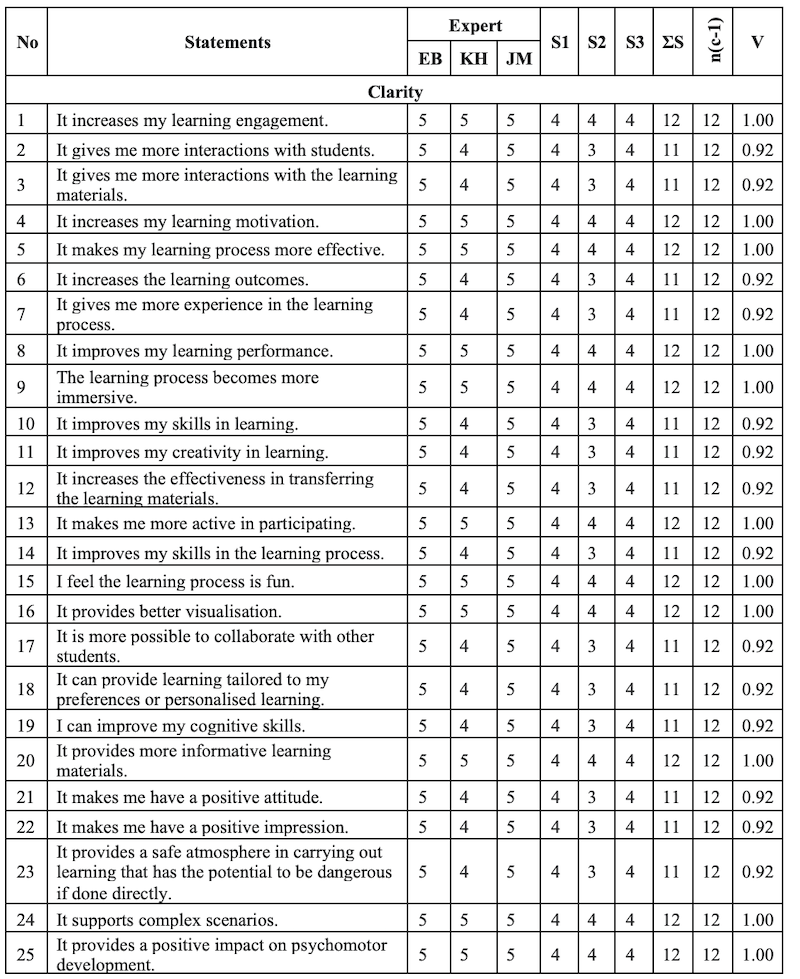
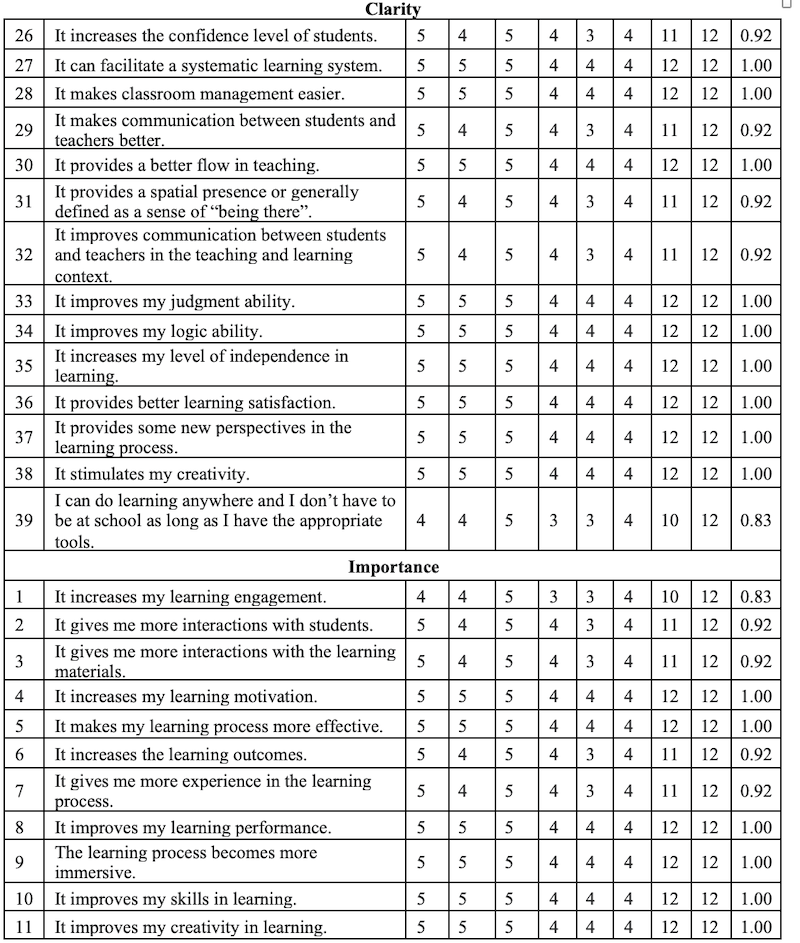
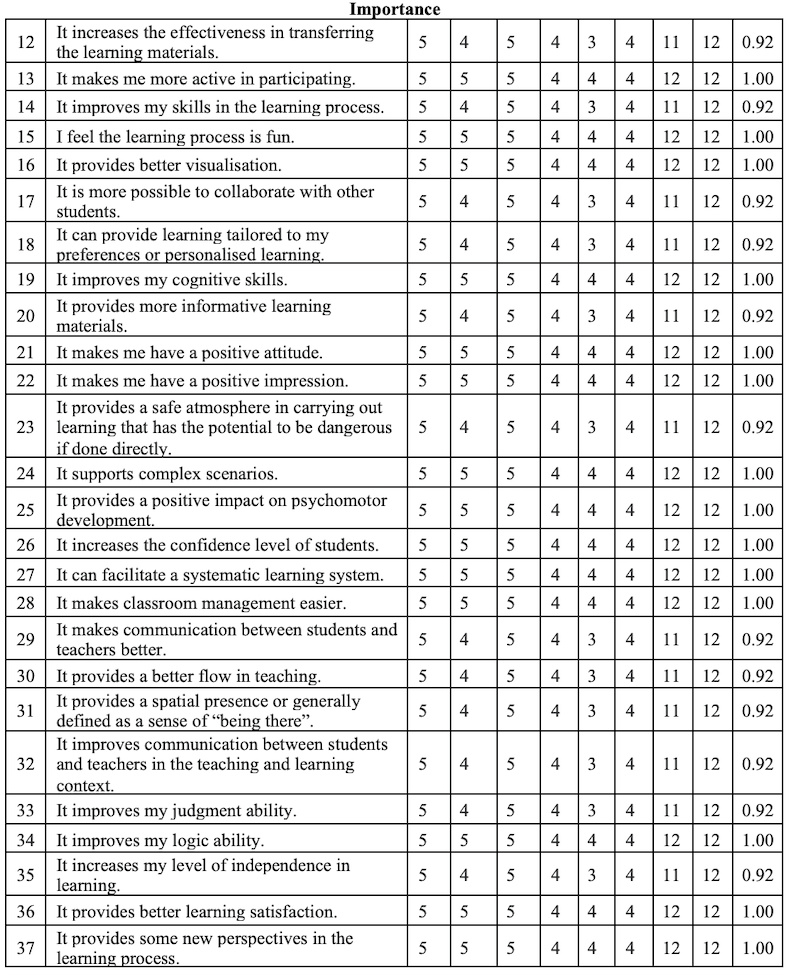
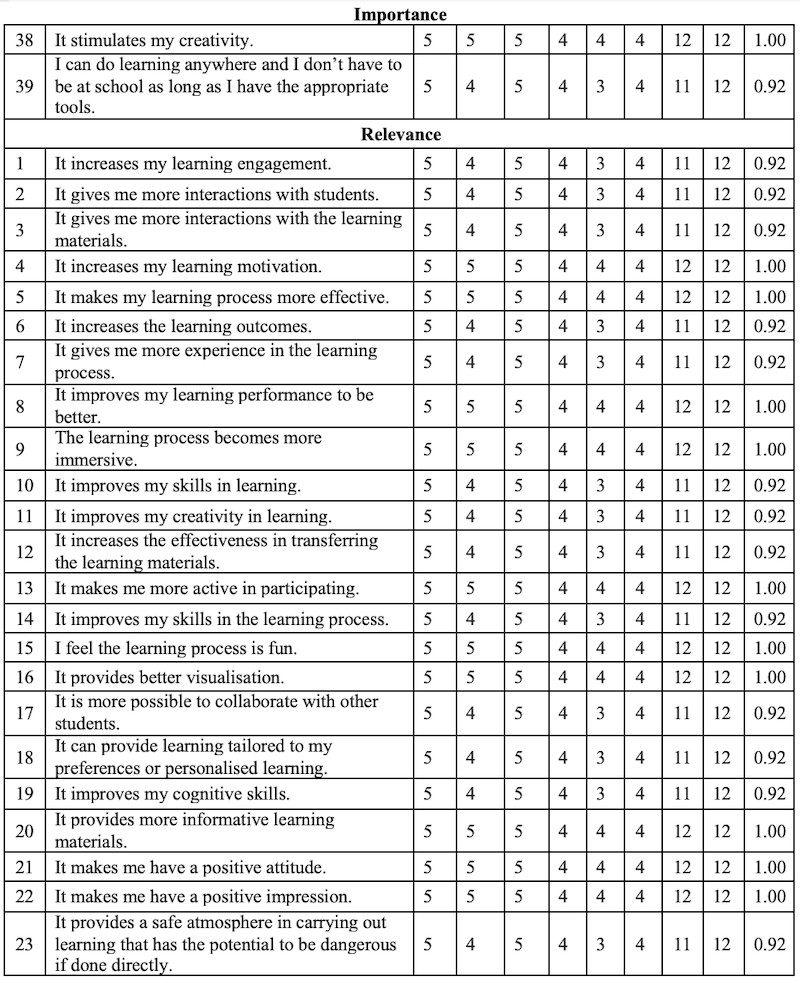
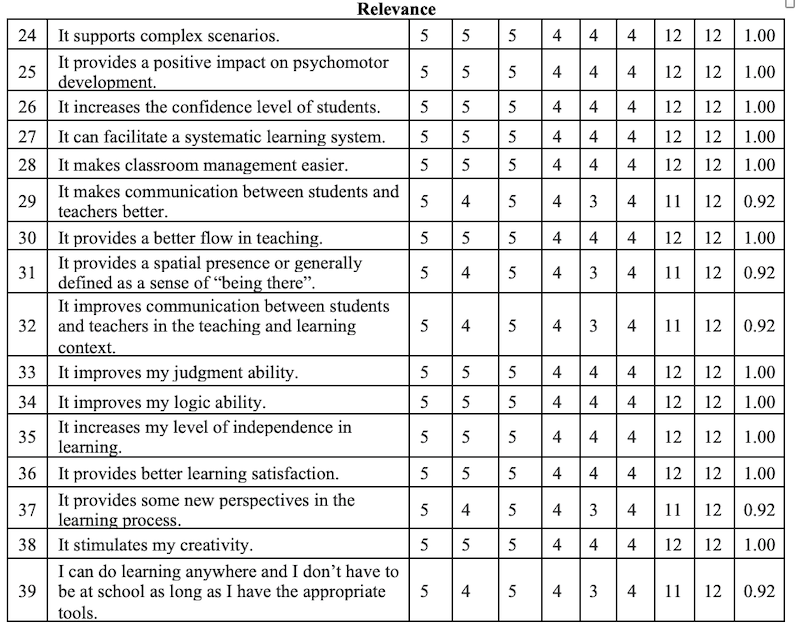
In assessing the refined version of the questionnaire, the same three experts scored on a scale of one to five for clarity, importance, and relevance. The averages are shown in Table 1.
Table 1: Expert Evaluation Results

Feedback from the three experts evaluating the 39 statements for three criteria (clarity, importance, relevance) was extremely positive. The average score for all of the 39 statements across the three criteria (Table 1) was higher than 4.5 (on a five-point Likert scale) and was considered clear, important, and relevant for assessing MR learning experiences. The ratings from the three experts were therefore averaged to calculate the aggregated Aiken’s V coefficient, which is presented in Table 2.
Table 2: Reported Aiken’s V Results

Aiken’s V was calculated by averaging the ratings from three psychometric experts on a five-point scale for each of the 39 statements. The maximum adjusted score for each statement was 12, n(c-1) = 3(5-1). The experts’ ratings were all adjusted by subtracting the minimum rating of one from each rating for each of the statements. The mean sums of the adjusted ratings for the 39 statements were 11.53 for clarity, 11.50 for importance, and 11.56 for relevance. These means, divided by the maximum adjusted score of 12 for each of the three criteria (and all statements combined), resulted in Aiken’s V coefficients of approximately .96 for each of the three criteria as well as for all of the statements combined. This provides strong evidence of content validity at the aggregate level for the high ratings that the experts gave to all of the statements for clarity, importance, and relevance.
The completed SPRADO MIRA questionnaire consists of 39 statements and focuses on perceptions of both students and teachers regarding MR-supported vocational learning. The complete SPRADO MIRA questionnaire is presented in Table 3.
Table 3: Finalised SPRADO MIRA Assessment Tool
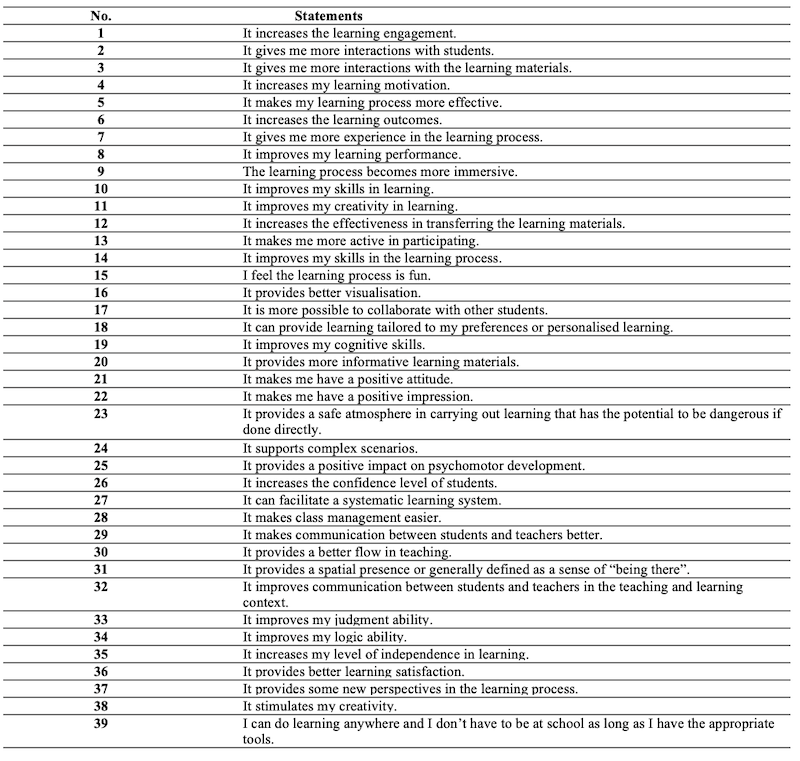
The SPRADO MIRA instrument as developed for teachers and students is shown in Table 3. Expert evaluation for content validity was strong. The tool was subsequently implemented by Suryodiningrat et al. (2026) to assess MR learning experiences in vocational education. Teacher and student questionnaires, each made up of 30 items for students and 19 items for teachers, respectively, showed high internal consistency with Cronbach’s alpha values of .949 for the student questionnaires and .973 for the teacher questionnaires. Our assessment tool can be of use in other educational settings.
Three findings were derived from this study. The first concern was to determine three possible dimensions to measure the learning experiences of MR students, i.e., engagement, perceived learning, and motivation and satisfaction (RO1). The second finding concerned the refining process of 34 statements into 39 items based on the feedback from the experts (RO2). The third finding had to do with the aggregated Aiken’s V value of .96, indicating that the experts rated the item as clear, important, and relevant (RO3). The evidence obtained from these findings, however, did not establish the reliability and the construct validity of the instrument. In practical terms, the result means that the three experts generally agreed that the questionnaire statements were clear, important, and relevant for assessing MR learning experiences.
Three dimensions to assess MR learning experiences can be identified: (1) learners’ engagement during learning, (2) learners’ perception regarding the learning that took place, and (3) learners’ motivation and satisfaction. While several instruments to assess usability and user experience of systems and applications exist, such as the SUS (System Usability Scale) and the UEQ (User Experience Questionnaire), so far no instrument has been specifically designed to assess the educational aspects provided by MR-based learning experiences. The three proposed dimensions of assessment were intended to describe learners’ experiences during their learning process using MR technology.
Research has found that immersive technologies can support learners’ engagement and their behavioural, cognitive and affective learning in various ways (Balalle, 2025; Bödding et al., 2025). Experiential learning theory (Kolb, 1984) states that learning occurs by means of a concrete experience. Research findings have also shown the relationship existing between participants’ classroom participation and interaction, and their degree of engagement in a learning experience in a vocational computer science education setting (Suryodiningrat et al., 2026) (2025). This dimension is, therefore, relevant for the assessment of MR learning experiences.
The three indicators for the experiences of users of MR-based learning offer insight into the users’ attitudes and perceived benefits. However, positive user experiences do not automatically translate into learning outcomes as shown, for example, by including an MR application used in automotive maintenance (Borsci et al., 2015).
By synthesising these three dimensions, SPRADO MIRA contributes to an even more education-oriented assessment of MR learning experiences. On the basis of this conceptual framework, new assessment tools for the technological and educational value of MR can be developed and applied in the scope of vocational education and training as well as in other learning environments.
This contribution developed SPRADO MIRA as an assessment instrument for MR learning experiences by combining literature-based item development with expert evaluation. Refining the 34 items to 39 statements for the questionnaire improved its clarity and structure by separating statements that described several concepts. All assessment dimensions proposed by the researchers could be addressed in the assessment by evaluating single aspects of the MR learning experiences of students and teachers.
The content validity evaluation provided strong support for the revised SPRADO MIRA instrument. Aiken’s V aggregate value for all items was .96, very positive with respect to clarity, importance, and relevance. The item-by-item evaluation revealed that 115 out of 117 ratings (98.3%) reached the threshold of significance of .92. The process of instrument development was supported by systematic expert evaluation, as opposed to solely the views of the researchers who developed the instrument.
For an implementation in automotive vocational education (Suryodiningrat et al., 2026), questionnaires of students and teachers showed high internal consistency. For the student questionnaires, a Cronbach’s alpha of .949 was reached; for the teacher questionnaires, an alpha of .973. These results are in addition to the content validity assessment by experts and offer an empirical basis of reliability for the assessment of MR learning experiences.
Methodologically, SPRADO MIRA contributes to assessing the perceived educational value of MR in educational settings by systematically developing the instrument from the literature, by means of expert content validation, and by subsequently also checking for the reliability of the instrument. The instrument, validated in the setting of vocational education, can also be of value in other educational settings, after possibly being adapted.
In relation to VET, the practical application of SPRADO MIRA has implications in terms of preparing VET graduates with the necessary competencies required by industry (Maruanaya & Hariyanto, 2021; Suharno et al., 2020). The SPRADO MIRA could be implemented to improve the design of the curriculum, training, and learning experiences of MR that are delivered to students through feedback collected (Ariefianto et al., 2025; Pranita et al., 2025).
In addition to identifying aspects of MR learning experiences that require additional support, the results of the findings of SPRADO MIRA can be used by teachers to assess and improve their MR teaching practices. However, in order to implement MR effectively, teachers need support in designing learning experiences, schools need to support learning with necessary facilities, and teachers need to acquire the necessary ICT competencies (Rahmawati et al., 2025).
At the institutional level, SPRADO MIRA can be used as an instrument to evaluate learning with MR technologies and to support evidence-based decision making on their adoption and integration into the curriculum of various vocational disciplines. It complements assessments of students' practical competencies and academic performance, as well as teachers’ perceptions of the MR-based learning experiences, in order to obtain a more complete and comprehensive view of the value of MR for education.
This section highlights the educational value of MR, which should be reflected in the learning experiences. Assessing the learning experiences provided through MR in education in Indonesia within the context of the Centre of Excellence programme (Directorate General of Vocational Education, 2021) to support improving vocational education in the country, could provide valuable information on the extent of learners’ engagement, and the learning experiences’ perceived effectiveness, as well as their motivation and satisfaction in learning.
However, positive learning experiences do not automatically translate into improved practical competencies or preparation for working life. The development of learners’ competencies is determined by a host of factors, including the learning opportunities provided within an educational institution as well as the requirements of the labour market (Béduwé & Giret, 2011; Choi, 2021; Kumar et al., 2019).
Viewing learning for development from the standpoint of MR offers the potential for more practical training where the necessary equipment and facilities to support training are lacking. The more equitable implementation of MR requires affordable technology, adequate and reliable connectivity, prepared teachers, and school capacities (Isbah et al., 2025; Lewis, 2025). SPRADO MIRA’s assessments therefore should supplement existing assessments of learners’ academic performance as well as their practical competencies.
Looking at the matter of learning for development, training in MR can be an alternative means to support practical training, in addition to the availability of physical training equipment and facilities. However, to achieve equitable implementation of MR, in addition to affordable technology and reliable connectivity, teachers and institutions should be ready to implement MR. Another area in which SPRADO MIRA could be evaluated is higher education, blended learning, and open and distance learning (ODL). Such an evaluation in diverse settings would reveal more about the potential and limitations of SPRADO MIRA and support the more equitable adoption of MR technologies.
This research has several main contributions. First, a comprehensive assessment instrument, SPRADO MIRA, for evaluating learning experiences within MR environments was designed and developed. SPRADO MIRA is believed to be the first MR-specific assessment tool designed for educational settings. SPRADO MIRA differs from typical usability questionnaires and focuses on three specified dimensions, namely students’ and teachers’ experiences of engagement, perceived learning and motivation and satisfaction. SPRADO MIRA offers a specific and in-depth means of evaluating their learning experiences within MR-based learning environments. The design of the tool was based on a previously published systematic literature review, and it went through several iterations of expert evaluation to refine the tool to assess the educational value of MR learning experiences.
All item-wise assessments by the three experts reached minimum levels of significance (p < .05). Their agreement on SPRADO MIRA’s content validity was strong (Aiken’s V = .96). After having been developed to assess the application of SPRADO MIRA in several educational settings of Indonesian automotive vocational schools, high internal consistency was found for the assessment of students’ and teachers’ experiences (Suryodiningrat et al., 2026).
The study, nevertheless, has a few limitations. (1) The content validity assessment involved only three experts in psychometrics. (2) The subsequent reliability assessment involved a small number of students and teachers. (3) So far, the three dimensions proposed here have not been tested using a factor analysis. (4) The application of the SPRADO MIRA instrument so far has been restricted to educational settings within automotive vocational education. Future research, with more participants from more diverse backgrounds, could check the instrument’s construct validity, the correct dimensionality, and its reliability in various educational environments. Additional studies might investigate the use of the SPRADO MIRA in various vocational training programmes, higher education, and in blended learning environments, as well as in ODL environments. Such research would increase the empirical basis of SPRADO MIRA and contribute to the development of education-oriented methods for evaluating MR learning experiences.
Acknowledgments: We acknowledge the use of artificial intelligence tools, such as ChatGPT and QuillBot, to enhance the clarity, coherence, and language of the manuscript. However, all ideas, content, and interpretations presented in this work are entirely our own.
Aiken, L.R. (1980). Content validity and reliability of single items or questionnaires. Educational and Psychological Measurement, 40(4), 955–959. https://doi.org/10.1177/001316448004000419
Ariefianto, L., Sartika, R.P., & Parada, N. (2025). Analyzing the link and match gap: A comprehensive review of vocational training outcomes in Indonesia. Journal of Nonformal Education, 12(1), 85–97. https://doi.org/10.15294/jone.v12i1.11597
Balalle, H. (2025). Learning beyond realities: Exploring virtual reality, augmented reality, and mixed reality in higher education—A systematic literature review. Discover Education, 4, Article 151. https://doi.org/10.1007/s44217-025-00559-7
Béduwé, C., & Giret, J.F. (2011). Mismatch of vocational graduates: What penalty on French labour market? Journal of Vocational Behavior, 78(1), 68–79. https://doi.org/10.1016/j.jvb.2010.09.003
Bödding, R., Schriek, S.A., & Maier, G.W. (2025). A systematic review and meta-analysis of mixed reality in vocational education and training: Examining behavioral, cognitive, and affective training outcomes and possible moderators. Virtual Reality, 29(1). https://doi.org/10.1007/s10055-025-01118-z
Borsci, S., Lawson, G., & Broome, S. (2015). Empirical evidence, evaluation criteria and challenges for the effectiveness of virtual and mixed reality tools for training operators of car service maintenance. Computers in Industry, 67, 17–26. https://doi.org/10.1016/j.compind.2014.12.002
Choi, S. (2021). The impact of education levels and paths on labor market outcomes in South Korea: Focusing on vocational high school graduates. Social Sciences and Humanities Open, 4(1). https://doi.org/10.1016/j.ssaho.2021.100152
Díaz-Lauzurica, B., & Moreno-Salinas, D. (2025). Active learning methodologies for increasing the interest and engagement in computer science subjects in vocational education and training. Education Sciences, 15(8). https://doi.org/10.3390/educsci15081017
Directorate General of Vocational Education. (2021, March 18). The governmentfully supports Centre of Excellence Vocational Schools (SMK PK). https://www.kemendikdasmen.go.id/berita/3349-komitmen-para-pemangku-kepentingan-untuk-sukseskan-smk-pusat
Isbah, M.F., Indonesia, A.B.P.E.N., Suwandi, M.A., Rahmawati, D., Fitramadhana, R., Savitri, R., Ariansyah, K., Cahyarini, B.R., Ahad, M.P.Y., Aswin, A., & Listanto, V. (2025). Vocational education and skills development for new economies in Indonesia: Uneasy parallel challenges. Asian Education and Development Studies, 1–14. https://doi.org/10.1108/AEDS-09-2025-0461
Kolb, D.A. (1984). Experiential learning: Experience as the source of learning and development. Prentice-Hall.
Kumar, R., Mandava, S., & Gopanapalli, V.S. (2019). Vocational training in India: Determinants of participation and effect on wages. Empirical Research in Vocational Education and Training, 11(1). https://doi.org/10.1186/s40461-019-0078-y
Lewis, P. (2025). Innovation, technician skills, and vocational education and training: Connecting innovation systems and vocational education and training. Journal of Vocational Education and Training, 77(2), 364–391. https://doi.org/10.1080/13636820.2023.2215749
Maruanaya, R.F., & Hariyanto, D. (2021). Bridging competency gap between vocational school and industry by adopting the German BLok platform. Journal of Physics: Conference Series, 1833(1). https://doi.org/10.1088/1742-6596/1833/1/012020
Pranita, D., Musthofa, B.M., Kusumastuti, H., & Haidlir, B.M. (2025). Transforming vocational higher education on the path toward Golden Indonesia 2045. Vocation, Technology and Education, 2(1). https://doi.org/10.54844/vte.2024.0806
Rahmawati, S., Prestridge, S., Abdullah, A.G., & Widiaty, I. (2025). Unpacking the digital competence challenge in vocational education: A case from Indonesia. Social Sciences and Humanities Open, 12. https://doi.org/10.1016/j.ssaho.2025.101803
Ruparelia, N.B. (2010). Software development lifecycle models. ACM SIGSOFT Software Engineering Notes, 35(3), 8–13. https://doi.org/10.1145/1764810.1764814
Suharno, Pambudi, N.A., & Harjanto, B. (2020). Vocational education in Indonesia: History, development, opportunities, and challenges. Children and Youth Services Review, 115(May), 105092. https://doi.org/10.1016/j.childyouth.2020.105092
Suryodiningrat, S.P., Prabowo, H., Meyliana, & Hidayanto, A.N. (2021). Mixed reality system for teaching and learning: A systematic literature review. 2021 IEEE 5th International Conference on Information Technology, Information Systems and Electrical Engineering (ICITISEE), 387–392. https://doi.org/10.1109/icitisee53823.2021.9655922
Suryodiningrat, S.P., Prabowo, H., Ramadhan, A., & Santoso, H.B. (2026). Mixed reality system for automotive vocational school: Academic performance and experience assessment. Online Learning Journal, 30(1), 246–264. https://doi.org/10.24059/olj.v30i1.4805
Author Notes
Dr Satrio Pradono Suryodiningrat, S.Kom., MTI, is an Associate Professor in the Digital Business Program at BINUS International University, Indonesia. His academic and professional expertise spans Digital Business, Information Systems, Software Engineering, Cybersecurity, and User Experience. His research focuses on emerging technologies, particularly Mixed Reality, Human Computer Interaction, and the application of digital technologies in education. Email: satrio.pradono@binus.ac.id (https://orcid.org/ 0000-0003-1813-8211)
Prof. Dr. Ir. Harjanto Prabowo, M.M., is a Professor of Information Systems Management at BINUS University, Indonesia. He is Vice President of BINUS Higher Education and Professional Services and Director of BINUS Online, with more than three decades of experience in higher education and expertise in Information Systems, Knowledge Management, Strategic Management, Digital Transformation, and Educational Leadership. Email: harprabowo@binus.edu (https://orcid.org/ 0000-0002-9317-2818)
Dr Arief Ramadhan, S.Kom., M.Si., is an Assistant Professor at the School of Computing, Telkom University, Indonesia, and a Senior Member of IEEE. He has a Doctorate in Computer Science from Universitas Indonesia. His academic and research expertise spans Information Systems, Software Engineering, Business Intelligence, Enterprise Architecture, Data Analytics, and Digital Transformation. His research interests focus on emerging technologies, particularly Extended Reality, Metaverse, Gamification, e-Learning, and e-Government. Email: arief.ramadhan@binus.edu (https://orcid.org/ 0000-0001-5501-7457)
Prof. Harry Budi Santoso, S.Kom., M.Kom., PhD, received his B.Sc. and M.Sc. degrees in computer science from Universitas Indonesia, Indonesia, and his Ph.D. in engineering education from Utah State University, USA. He is a Professor of Interaction Systems and Head of the Digital Library and Distance Learning Laboratory at the Faculty of Computer Science, Universitas Indonesia. He also serves as a member of the Central Executive Board of the Association for Higher Education Informatics and Computers (APTIKOM), Indonesia. His research interests include engineering and computer science education, self-regulated learning, human–computer interaction, user experience, and online and distance learning. Email: harrybs@cs.ui.ac.id (https://orcid.org/ 0000-0003-0459-0493)
Cite as: Suryodiningrat, S.P., Prabowo, H., Ramadhan, A., & Santoso, H.B. (2026). SPRADO MIRA: A mixed reality assessment tool for vocational education. Journal of Learning for Development, 13(4), 704-720.
DOI: https://doi.org/10.56059/149ztd42