Margaret Khan, Mehzabul Hoque Nahid and Khandakar Tahurul Islam
2026 VOL. 13, No. 4
Abstract: Teachers increasingly use artificial intelligence (AI) to prepare lesson content, yet little is known about what prepares K–12 teachers in developing countries to do so. This study examined the factors associated with K–12 teachers’ readiness, intention and actual use of AI for educational content development in Bangladesh. A conceptual framework combining diffusion of innovations, the AI device use acceptance model, the unified theory of acceptance, and use of technology and TTF was tested with survey data from 620 teachers in Dhaka, analysed with partial least squares structural equation modelling. Relative Advantage (RA), Compatibility (Comp) and Humanisation (HUM) were positively associated with AI readiness. Performance expectancy, social influence (SI), price value (PV) and task-technology fit (TTF) were positively associated with Behavioural Intention (BI); personal innovativeness (PInv) was not. Readiness and intention were both associated with actual use, and readiness had the larger coefficient. The findings indicate that teacher development should build readiness through practice on real content tasks, supported by peers and affordable access to AI tools.
Keywords: artificial intelligence, K–12 education, teacher readiness, technology adoption, content development, Bangladesh
Artificial intelligence (AI) is reaching school teaching mainly through lesson preparation. A systematic review of 28 studies found that teachers use generative AI chiefly for lesson planning and the design of learning tasks (Wang et al., 2026). Teachers in the United States reported using it for lesson planning, instructional materials and assessment (An & James, 2025), and more for out-of-class duties than for live teaching (Cheah et al., 2025). Content development is therefore where much of teachers’ use of AI takes place, and where their readiness to use it matters.
That readiness cannot be assumed. Knowledge of AI among K–12 teachers is uneven (Yue et al., 2024), and technical training alone does not carry AI into practice (Aravantinos et al., 2026). The difficulty is greater in Bangladesh, which has one of the largest education systems in the world and where the first small-scale assessment of primary teachers’ AI needs was reported only in 2024 (Kong et al., 2024). The research problem addressed here is that school leaders and policy makers in such settings have little evidence about which factors are associated with teachers’ readiness and intention to use AI for content development, or whether readiness and intention are in turn associated with actual use.
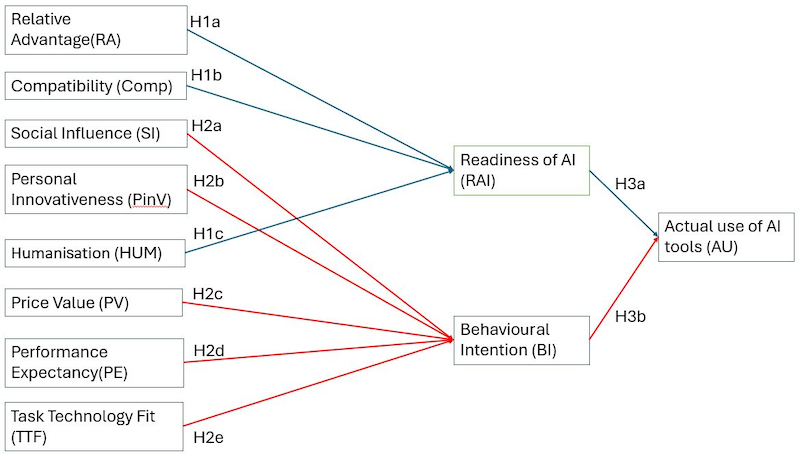
The study has eleven variables. The outcome variable is the actual use of AI tools for content development (AU). Two intermediate variables are expected to relate to it. AI Readiness (RAI) is a teacher’s felt preparedness to use AI in content work, and Behavioural Intention (BI) is a teacher’s plan to do so. Eight predictor variables are taken from established models of technology acceptance, each of which explains a part of the problem that the others leave out.
Diffusion of innovations theory (Rogers, 2003) supplies Relative Advantage (RA), the belief that AI is better than current ways of preparing content, and Compatibility (Comp), the fit of AI with a teacher’s existing practices and values (Karahanna et al., 2006). The AI device use acceptance model (AIDUA) (Gursoy et al., 2019) supplies Humanisation (HUM), the degree to which a teacher perceives human-like qualities in an AI tool. These three variables describe how a teacher sees the technology and are modelled as correlates of readiness. The unified theory of acceptance and use of technology (UTAUT) (Venkatesh et al., 2003, 2012) supplies Performance Expectancy (PE), Social Influence (SI) and Price Value (PV). Personal Innovativeness (PInv) (Agarwal & Prasad, 1998) and Task-Technology Fit (TTF) (Goodhue & Thompson, 1995) are added because content development is a specific task and AI is still new to many teachers. These five variables describe a teacher’s motives and circumstances and are modelled as correlates of intention. Figure 1 shows the framework. Each arrow is one hypothesis, each group of arrows answers one research question, and the same grouping organises the analysis, the Results and the Discussion.
Research on AI in K–12 schooling has grown quickly but has concentrated on teaching AI as a subject and on student outcomes (Lee & Kwon, 2024). Studies of what teachers do with AI are more recent. In Türkiye, Filiz et al. (2025) found that 66 teachers in one private school valued AI for lesson planning but had difficulty adapting AI-generated content to the local context and curriculum. Cheah et al. (2025) reported that fewer than half of 89 teachers in the United States had brought generative AI into their work. Wang et al. (2026) concluded that teachers treat AI as an assistant or content generator and that context-sensitive models of this work are lacking. These studies are qualitative or descriptive. None of them tested which teacher beliefs were associated with using AI for content.
Teachers’ AI readiness has been conceptualised as cognition, ability, vision and ethics, and has been related to teachers’ innovation and job satisfaction but not to their use of AI (Wang et al., 2023). Estonian teachers saw AI as a support for their practice while reporting limited knowledge of it (Chounta et al., 2022). Evidence from developing countries is thin and points to social conditions more than to attitudes. In Kenya, teachers’ confidence, AI ethics and subjective norms were associated with their readiness, while their attitude towards AI was not (Fundi et al., 2024). In Indonesia, most of the 28 secondary teachers in a case study reached only a moderate understanding of AI, and building their competence required support from several stakeholders (Ubaidillah et al., 2026). A review of 43 studies concluded that readiness depends on pedagogical knowledge, organisational support and continuous training together (Aravantinos et al., 2026). This literature describes and measures readiness. It has not modelled how readiness relates to teachers’ perceptions of the technology, and it has seldom linked readiness to actual use.
Acceptance studies present a mixed picture. Performance expectancy, or perceived usefulness, is usually the strongest correlate of teachers’ intention to use AI (Hao et al., 2026; Yang, 2026). It was not significant, however, among 563 Chinese pre-service teachers, for whom social influence mattered and PV did not (Hu et al., 2025). Colleagues’ use of AI and school policy were associated with AI use among teachers in Azerbaijan, whereas PInv was not (Bakhadirov et al., 2024), and the same null result appeared among pre-service teachers in the United States (Liu et al., 2025). RA is a consistent correlate of adoption. Comp was significant for academics in Poland (Singh & Strzelecki, 2026) but not for K–12 teachers in the United Arab Emirates (Al Murshidi et al., 2025). TTF and anthropomorphism have been related to AI acceptance among university students (Al-Mamary et al., 2024; Polyportis & Pachos-Fokialis, 2025), and TTF to the adoption of educational technology in a developing country (Faqih & Jaradat, 2021). Neither appears to have been tested with school teachers.
Three gaps follow from this review. First, quantitative evidence on teachers and AI comes largely from East Asia, the United States, Europe and the Gulf states. South Asian school teachers are almost absent, and we found no published structural model of teachers’ AI use in Bangladesh. Second, readiness and intention have been studied in separate literatures, so it is not known how each relates to what teachers do. Third, earlier models address AI in teaching in general and omit variables that matter for content work in a low-income setting: the fit between AI and the task, the price of the tools and their human-like character. The present study addresses these gaps. It does not ask again whether teachers accept AI in general. It tests, in one model and with Bangladeshi K–12 teachers, how readiness and intention each relate to the actual use of AI for one task, content development.
The objective of the study was to identify the factors associated with K–12 teachers’ readiness, intention and actual use of AI for educational content development in Bangladesh. Three research questions follow from the conceptual framework, and each is answered through its own set of hypotheses. Because the design is a cross-sectional survey, the hypotheses state associations and make no claim of causal impact.
Research Question 1 (RQ1)
To what extent are RA, Comp and HUM associated with K–12 teachers’ readiness to use AI for content development?
Hypothesis 1a (H1a): Relative Advantage (RA) is positively associated with AI Readiness (RAI).
Hypothesis 1b (H1b): Compatibility (Comp) is positively associated with AI Readiness (RAI).
Hypothesis 1c (H1c): Humanisation (HUM) is positively associated with AI Readiness (RAI).
Research Question 2 (RQ2)
To what extent are social influence, personal innovativeness, price value, performance expectancy and task-technology fit associated with K-12 teachers’ BI to use AI for content development?
Hypothesis 2a (H2a): Social Influence (SI) is positively associated with Behavioural Intention (BI).
Hypothesis 2b (H2b): Personal Innovativeness (PInv) is positively associated with Behavioural Intention (BI).
Hypothesis 2c (H2c): Price Value (PV) is positively associated with Behavioural Intention (BI).
Hypothesis 2d (H2d): Performance Expectancy (PE) is positively associated with Behavioural Intention (BI).
Hypothesis 2e (H2e): Task-Technology Fit (TTF) is positively associated with Behavioural Intention (BI).
Research Question 3 (RQ3)
To what extent are AI readiness and behavioural intention associated with K-12 teachers’ actual use of AI for content development?
Hypothesis 3a (H3a): AI Readiness (RAI) is positively associated with the Actual Use of AI tools (AU).
Hypothesis 3b (H3b): Behavioural Intention (BI) is positively associated with the Actual Use of AI tools (AU).
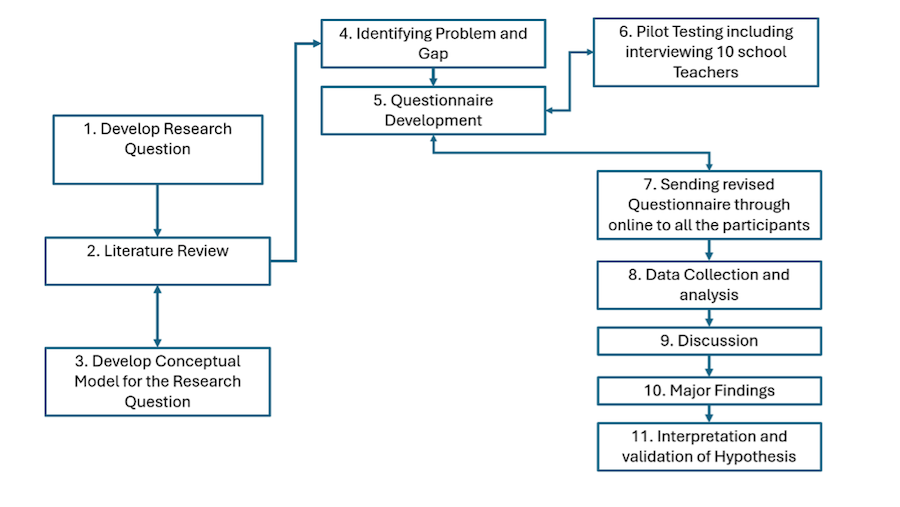
The study used a quantitative, cross-sectional survey design. The approach was deductive. Hypotheses were derived from the conceptual framework and tested with data collected from teachers at one point in time. This design suits the research questions, which concern the strength of the associations among teachers’ perceptions, readiness, intention and reported use. It does not permit causal inference. Figure 2 shows the steps of the study.
The population was K–12 teachers in public and private schools and junior colleges in Dhaka, Bangladesh, who had used AI in their work. No list of such teachers exists, so the size of the population is unknown and probability sampling was not possible. Purposive sampling was used in two steps. Institutions were first selected based on four criteria: digital infrastructure (internet connectivity and devices), technology-integrated teaching practices, earlier participation in digital learning initiatives, and administrative openness to new educational technology. Within these institutions, teachers of the Millennial and Generation Z age groups were approached because of their higher technological literacy, and they were eligible if they knew about AI and had used it for content development or other educational tasks. A total of 620 eligible teachers took part. Sample adequacy was checked with G*Power (Faul et al., 2009). For a medium effect size (f² = 0.15; Cohen, 1988), α = 0.05, power of 0.80 and five predictors, the largest number pointing at any one construct in the model, the minimum sample is 92. The sample exceeded this number.
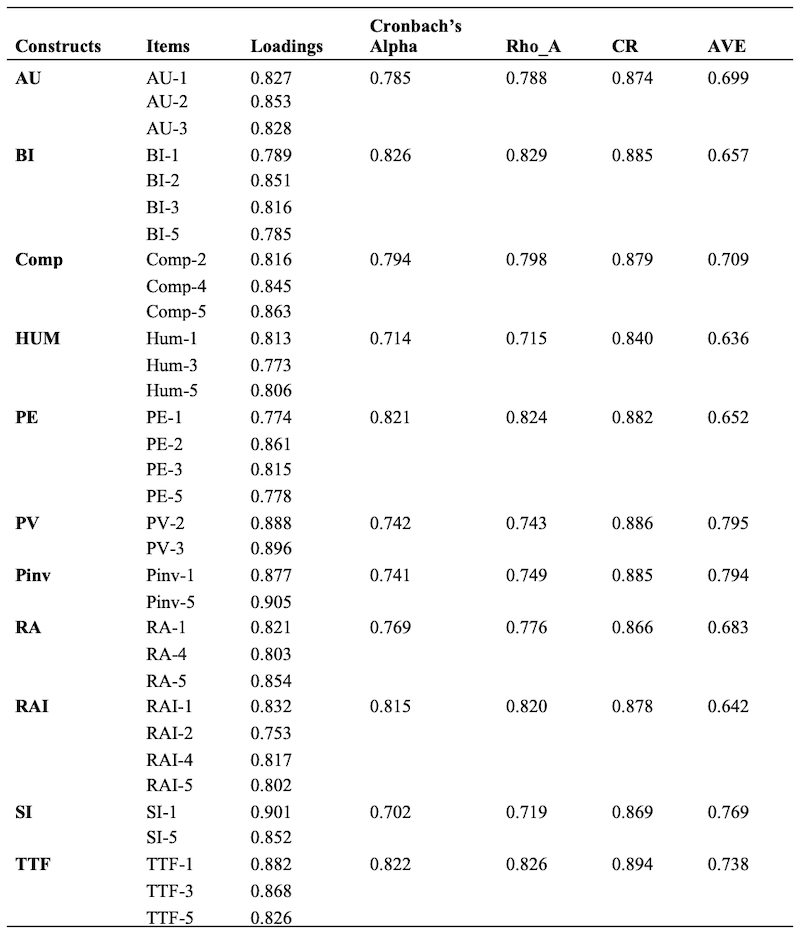
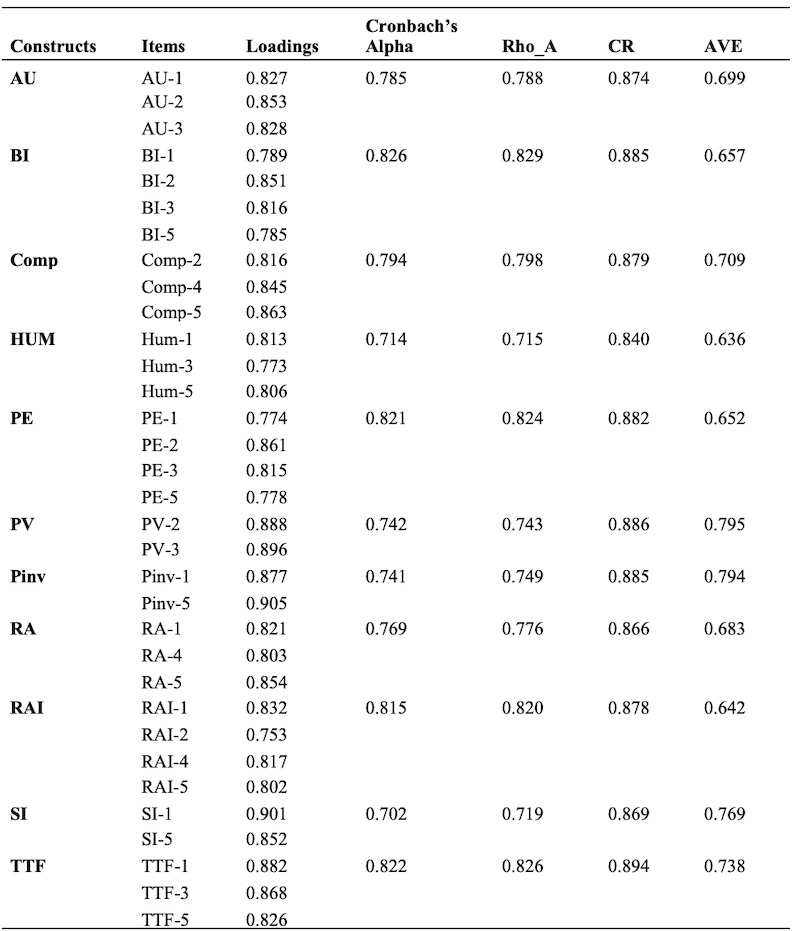
Data were collected with a structured questionnaire developed by the authors. It measured the eleven constructs of the conceptual framework with multiple items rated on a seven-point Likert scale. Content validity was established in two ways. The draft was reviewed by experts, and it was then piloted in face-to-face interviews with 10 school teachers who were knowledgeable about AI. Their comments led to clearer wording and to additional items. Table 1 reports the reliability and convergent validity of the 33 items retained in the final measurement model. All outer loadings were above 0.70 (0.753 to 0.905). Cronbach’s alpha ranged from 0.702 to 0.826, rho_A from 0.715 to 0.829 and composite reliability (CR) from 0.840 to 0.894, all above the 0.70 threshold. The average variance extracted (AVE) ranged from 0.636 to 0.795, above the 0.50 threshold (Hair et al., 2019). The instrument is therefore reliable and has convergent validity.
Table 1: Construct Reliability and Validity
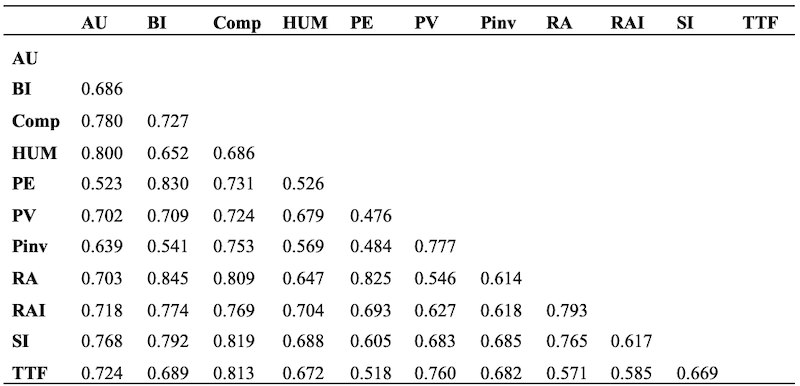
Discriminant validity was assessed with the heterotrait-monotrait ratio (HTMT). As Table 2 shows, every value was below the 0.85 threshold (Henseler et al., 2015). The highest was 0.845, between RA and BI. The constructs are therefore empirically distinct.
Table 2: Heterotrait-monotrait Ratio (HTMT) — Matrix
Data were collected between December 2024 and September 2025. After the pilot, the final questionnaire was distributed online to the participating teachers. Participation was voluntary and anonymous, and informed consent was obtained from every participant. The responses were compiled and analysed with partial least squares structural equation modelling (PLS-SEM) in SmartPLS, a method suited to models with many constructs and to prediction-oriented research (Hair et al., 2019). The analysis had two stages. The measurement model was assessed first, with the results reported above. The structural model was then estimated, and each hypothesis was tested with its path coefficient (β) and the bootstrapped t-statistic and p-value at the 0.05 level. RQ1 was answered with the paths from RA, compatibility and HUM to AI readiness (H1a to H1c). RQ2 was answered with the paths from the five predictors to BI (H2a to H2e). RQ3 was answered with the paths from readiness and intention to actual use (H3a and H3b). The coefficient of determination (R²) was used to judge how much of each outcome variable the model explains.
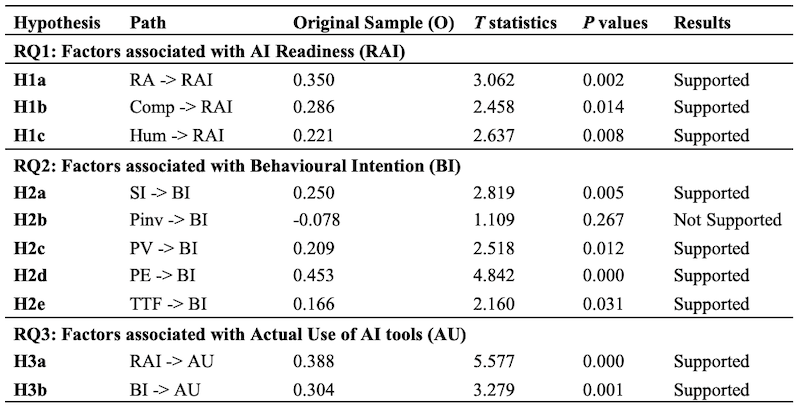
The results are presented by research question. Figure 3 shows the estimated structural model, and Table 3 gives the test of each hypothesis.
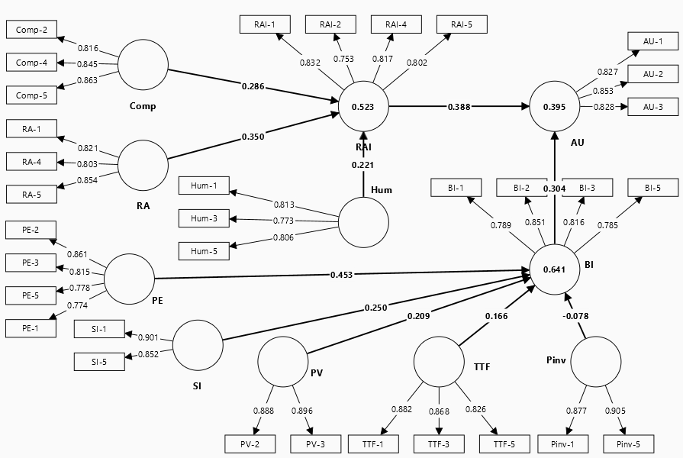
Table 3: Partial Least Squares-Structural Equation Modelling (PLS-SEM) Results by Research Question
RQ1 asked to what extent RA, compatibility and HUM are associated with teachers’ AI readiness. All three associations were positive and statistically significant. RA had the largest coefficient (β = 0.350, t = 3.062, p = 0.002), followed by compatibility (β = 0.286, t = 2.458, p = 0.014) and HUM (β = 0.221, t = 2.637, p = 0.008). H1a, H1b and H1c were supported. In simple terms, teachers who saw AI as better than their present methods, as fitting their way of working and as human-like in character reported being more ready to use it for content development.
RQ2 asked to what extent five factors are associated with (BI). Performance expectancy had the strongest association (β = 0.453, t = 4.842, p < 0.001), followed by SI (β = 0.250, t = 2.819, p = 0.005), PV (β = 0.209, t = 2.518, p = 0.012) and TTF (β = 0.166, t = 2.160, p = 0.031). H2a, H2c, H2d and H2e were supported. PInv was not associated with intention (β = -0.078, t = 1.109, p = 0.267), so H2b was not supported. Put plainly, teachers intended to use AI when they expected it to improve their work, when the people around them approved, when it was worth its cost and when it suited their content tasks. Whether they saw themselves as innovative made no difference.
RQ3 asked to what extent readiness and intention are associated with actual use. Both associations were positive and statistically significant, for AI readiness (β = 0.388, t = 5.577, p < 0.001) and for BI (β = 0.304, t = 3.279, p = 0.001). H3a and H3b were supported. Teachers who felt ready and who intended to use AI reported using it more for content development, and the coefficient for readiness was the larger of the two.
Table 4 gives the coefficient of determination for the three outcome variables. Against the benchmarks of 0.25 (weak), 0.50 (moderate) and 0.75 (substantial) (Hair et al., 2019), the model explained a moderate share of the variance in BI (R² = 0.641) and AI readiness (R² = 0.523), and a weak to moderate share in actual use (R² = 0.395). In total, nine of the ten hypotheses were supported.
Table 4: Coefficient of Determination
The study produced three discoveries. First, teachers felt more ready to use AI for preparing content when they saw it as better than their current methods, as fitting the way they already worked and as having a human-like, approachable character. Second, teachers intended to use AI when they expected it to improve their work, when colleagues and superiors approved of it, when it seemed worth its cost and when it suited the content tasks they performed. A personal liking for new technology was unrelated to intention. Third, both readiness and intention were related to how much teachers used AI, and readiness had the larger coefficient. The model accounted for about half of the variance in readiness, nearly two thirds in intention and about two fifths in actual use.
For Bangladesh, the results describe teachers whose use of AI depends less on individual enthusiasm than on practical value and the approval of others. The teachers surveyed worked in urban institutions in Dhaka that already had digital infrastructure, so the model shows what is associated with AI use once basic access is in place. Cost still mattered under those conditions. PV was related to intention, so affordability remains a condition of adoption even in better-equipped urban schools. SI was the second largest correlate of intention. The views of head teachers and colleagues evidently carried weight in these schools. Readiness accompanied actual use as closely as intention did. Teachers who felt prepared were the ones using AI for content, and preparing them is something a school system can act on directly.
The findings agree with earlier research on three points. RA was the largest correlate of readiness, in line with its position as the strongest predictor of adoption among K–12 teachers in the United Arab Emirates (Al Murshidi et al., 2025) and its significant association with intention among academics in Poland (Singh & Strzelecki, 2026). The strong association between performance expectancy and intention matches results for K–12 teachers in Taiwan (Yang, 2026) and for preschool teachers (Hao et al., 2026). It differs from the null result among Chinese pre-service teachers (Hu et al., 2025), probably because practising teachers judge AI against a real workload. The association with SI is consistent with the role of colleagues and school policy reported by Bakhadirov et al. (2024) and of subjective norms reported by Fundi et al. (2024).
The study also extends earlier research. PV was not significant in China (Hu et al., 2025) but was significant in Bangladesh, so cost may be a boundary condition that distinguishes lower-income school systems. Compatibility was unrelated to adoption among teachers in the United Arab Emirates (Al Murshidi et al., 2025) but was related to AI readiness in Bangladesh. Fit with existing practice may matter more for a concrete task such as content development than for AI in general. HUM, known from research on students’ attitudes to chatbots (Polyportis & Pachos-Fokialis, 2025), was related to teachers’ readiness, and TTF, also known from student samples (Al-Mamary et al., 2024), was related to teachers’ intention. PInv was not significant, as in Azerbaijan and the United States (Bakhadirov et al., 2024; Liu et al., 2025). A plausible reading is that general-purpose AI tools demand little technical skill, so usefulness and the approval of peers have replaced innovativeness as the route to adoption. Using AI for content is no longer confined to early adopters.
For theory, the results suggest that acceptance models built around intention leave out part of what accompanies use. Earlier work treats readiness as an outcome to be described (Wang et al., 2023; Yue et al., 2024). Here readiness, explained by the innovation attributes and by HUM, had its own association with actual use next to that of intention. Models of teachers’ AI use should therefore include both.
The findings have implications for policy and practice in Bangladesh and in comparable school systems. Professional development should build readiness through supervised practice on real content tasks such as lesson plans, worksheets and question banks, because readiness and TTF were both related to use and because technical training alone has been found insufficient (Aravantinos et al., 2026). Schools should encourage peer support, as social influence was a stronger correlate of intention than personal innovativeness. Education authorities should treat affordability as part of AI policy, for instance through institutional licences or support for free tools, because PV was related to intention. Training should also reach beyond teachers who are already keen on technology. For teacher educators and school leaders in other countries, the model offers a simple diagnostic. Where teachers make little use of AI for content, the questions to ask are whether they see an advantage over their present methods, whether the tools fit their tasks, whether colleagues endorse them and whether teachers can afford them. Because teachers report difficulty adapting AI-generated content to local contexts (Filiz et al., 2025), guidance on checking and adapting such content should accompany this support.
These implications should be read within the limits of the design. The sample was purposive and drawn from digitally equipped urban institutions in Dhaka, so the findings cannot be generalised to rural schools or to teachers who have not used AI. The data are cross-sectional and self-reported, which rules out causal claims and may inflate associations through common method variance. Three constructs were measured with two items each, and several HTMT values lay between 0.80 and 0.85, close to the threshold.
Longitudinal studies should follow teachers over a school year to establish whether readiness precedes use. The model should be tested in rural and less well-equipped schools in Bangladesh and compared across South Asian countries. Self-reports of use should be checked against the content that teachers produce with AI. Studies should add variables that this model omits, in particular institutional support, AI literacy, trust and ethical concerns, and should test whether age, subject and type of school moderate the associations. Qualitative work should explain why teachers who are not personally innovative still take up AI, and how HUM affects their trust in AI-generated content.
All procedures involving human participants were conducted in accordance with institutional ethical standards. Informed consent was obtained from all participants, and participation was voluntary and anonymous.
Agarwal, R., & Prasad, J. (1998). A conceptual and operational definition of personal innovativeness in the domain of information technology. Information Systems Research, 9(2), 204–215. https://doi.org/10.1287/isre.9.2.204
Al-Mamary, Y.H., Alfalah, A.A., Alshammari, M.M., & Abubakar, A.A. (2024). Exploring factors influencing university students’ intentions to use ChatGPT: Analysing task-technology fit theory to enhance behavioural intentions in higher education. Future Business Journal, 10, Article 119. https://doi.org/10.1186/s43093-024-00406-5
Al Murshidi, G., ElSayary, A., Ragab, K., & Al Zaabi, A. (2025). Understanding teachers’ adoption of AI: Insights from innovation diffusion and social cognitive theories. Journal of Information Technology Education: Research, 24, Article 35. https://doi.org/10.28945/5643
An, Y., & James, S. (2025). Generative AI integration in K-12 settings: Teachers’ perceptions and levels of integration. TechTrends, 69(6), 1304–1317. https://doi.org/10.1007/s11528-025-01114-9
Aravantinos, S., Lavidas, K., Komis, V., Karalis, T., & Papadakis, S. (2026). Artificial intelligence in K-12 education: A systematic review of teachers’ professional development needs for AI integration. Computers, 15(1), Article 49. https://doi.org/10.3390/computers15010049
Bakhadirov, M., Alasgarova, R., & Rzayev, J. (2024). Factors influencing teachers’ use of artificial intelligence for instructional purposes. IAFOR Journal of Education, 12(2), 9–32. https://doi.org/10.22492/ije.12.2.01
Cheah, Y.H., Lu, J., & Kim, J. (2025). Integrating generative artificial intelligence in K-12 education: Examining teachers’ preparedness, practices, and barriers. Computers and Education: Artificial Intelligence, 8, Article 100363. https://doi.org/10.1016/j.caeai.2025.100363
Chounta, I.A., Bardone, E., Raudsep, A., & Pedaste, M. (2022). Exploring teachers’ perceptions of artificial intelligence as a tool to support their practice in Estonian K-12 education. International Journal of Artificial Intelligence in Education, 32(3), 725–755. https://doi.org/10.1007/s40593-021-00243-5
Cohen, J. (1988). Statistical power analysis for the behavioral sciences (2nd ed.). Lawrence Erlbaum Associates.
Faqih, K.M.S., & Jaradat, M.I.R.M. (2021). Integrating TTF and UTAUT2 theories to investigate the adoption of augmented reality technology in education: Perspective from a developing country. Technology in Society, 67. https://doi.org/10.1016/j.techsoc.2021.101787
Faul, F., Erdfelder, E., Buchner, A., & Lang, A-G. (2009). Statistical power analyses using G*Power 3.1: Tests for correlation and regression analyses. Behavior Research Methods, 41(4), 1149–1160. https://doi.org/10.3758/BRM.41.4.1149
Filiz, O., Kaya, M.H., & Adiguzel, T. (2025). Teachers and AI: Understanding the factors influencing AI integration in K–12 education. Education and Information Technologies, 30(13), 17931–17967. https://doi.org/10.1007/s10639-025-13463-2
Fundi, M., Sanusi, I.T., Oyelere, S.S., & Ayere, M. (2024). Advancing AI education: Assessing Kenyan in-service teachers’ preparedness for integrating artificial intelligence in competence-based curriculum. Computers in Human Behavior Reports, 14, Article 100412. https://doi.org/10.1016/j.chbr.2024.100412
Goodhue, D.L., & Thompson, R.L. (1995). Task-technology fit and individual performance. MIS Quarterly, 19(2), 213–236. https://doi.org/10.2307/249689
Gursoy, D., Chi, O.H., Lu, L., & Nunkoo, R. (2019). Consumers acceptance of artificially intelligent (AI) device use in service delivery. International Journal of Information Management, 49, 157–169. https://doi.org/10.1016/j.ijinfomgt.2019.03.008
Hair, J.F., Risher, J.J., Sarstedt, M., & Ringle, C.M. (2019). When to use and how to report the results of PLS-SEM. European Business Review, 31(1), 2–24. https://doi.org/10.1108/EBR-11-2018-0203
Hao, C., Wang, Z., & Wang, P. (2026). Preschool teachers’ intentions to use GenAI: Extending UTAUT. Behavioral Sciences, 16(6), Article 840. https://doi.org/10.3390/bs16060840
Henseler, J., Ringle, C.M., & Sarstedt, M. (2015). A new criterion for assessing discriminant validity in variance-based structural equation modeling. Journal of the Academy of Marketing Science, 43(1), 115–135. https://doi.org/10.1007/s11747-014-0403-8
Hu, L., Wang, H., & Xin, Y. (2025). Factors influencing Chinese pre-service teachers’ adoption of generative AI in teaching: An empirical study based on UTAUT2 and PLS-SEM. Education and Information Technologies, 30(9), 12609–12631. https://doi.org/10.1007/s10639-025-13353-7
Karahanna, E., Agarwal, R., & Angst, C.M. (2006). Reconceptualizing compatibility beliefs in technology acceptance research. MIS Quarterly, 30(4), 781–804. https://doi.org/10.2307/25148754
Kong, B., Li, Z., Ratner, S., Hemberg, E., & Haque, S. (2024). Artificial intelligence for education in Bangladesh: Insights from the first small-scale artificial intelligence needs assessment and training for primary education teachers. ADB Sustainable Development Working Paper Series No. 101. Asian Development Bank. https://doi.org/10.22617/WPS240575-2
Lee, S.J., & Kwon, K. (2024). A systematic review of AI education in K-12 classrooms from 2018 to 2023: Topics, strategies, and learning outcomes. Computers and Education: Artificial Intelligence, 6. https://doi.org/10.1016/j.caeai.2024.100211
Liu, Y., Wang, Q., & Lei, J. (2025). Adopting generative AI in future classrooms: A study of preservice teachers’ intentions and influencing factors. Behavioral Sciences, 15(8), Article 1040. https://doi.org/10.3390/bs15081040
Polyportis, A., & Pachos-Fokialis, N. (2025). Understanding students’ adoption of the ChatGPT chatbot in higher education: The role of anthropomorphism, trust, design novelty and institutional policy. Behaviour & Information Technology, 44(2), 315–336. https://doi.org/10.1080/0144929X.2024.2317364
Rogers, E.M. (2003). Diffusion of innovations (5th ed.). Free Press.
Singh, S., & Strzelecki, A. (2026). Academics as adopters of generative AI: An application of diffusion of innovations theory. Education and Information Technologies, 31(2), 621–645. https://doi.org/10.1007/s10639-025-13835-8
Ubaidillah, A.F., Citriadin, Y., Sakdiyyah, D.A., & Fitriasari, F. (2026). Pentahelix collaboration for building secondary school teachers’ AI-enabled digital competence: A case study. Journal of Learning for Development, 13(3), 512–526. https://doi.org/10.56059/9wxmjq57
Venkatesh, V., Morris, M.G., Davis, G.B., & Davis, F.D. (2003). User acceptance of information technology: Toward a unified view. MIS Quarterly, 27(3), 425–478. https://doi.org/10.2307/30036540
Venkatesh, V., Thong, J.Y.L., & Xu, X. (2012). Consumer acceptance and use of information technology: Extending the unified theory of acceptance and use of technology. MIS Quarterly, 36(1), 157–178. https://doi.org/10.2307/41410412
Wang, X., Li, L., Tan, S.C., Yang, L., & Lei, J. (2023). Preparing for AI-enhanced education: Conceptualizing and empirically examining teachers’ AI readiness. Computers in Human Behavior, 146, Article 107798. https://doi.org/10.1016/j.chb.2023.107798
Wang, Z., Liu, M., & Islam, A.Y.M.A. (2026). Reimagining teacher-AI co-design in learning task design: Trends and perspectives. Humanities and Social Sciences Communications, 13, Article 757. https://doi.org/10.1057/s41599-026-06981-y
Yang, F-C. (2026). Factors influencing K–12 teachers’ intention to adopt AI tools in teaching: Extending TAM with AI tool competence and school support. Education and Information Technologies, 31,(14), 6149–6183. https://doi.org/10.1007/s10639-026-14040-x
Yue, M., Jong, M.S.Y., & Ng, D.T.K. (2024). Understanding K–12 teachers’ technological pedagogical content knowledge readiness and attitudes toward artificial intelligence education. Education and Information Technologies, 19505–19536. https://doi.org/10.1007/s10639-024-12621-2
Author Notes
Margaret Khan is a graduate of the American International University-Bangladesh (AIUB), where she earned her Bachelor of Business Administration, majoring in Marketing with a minor in Management Information Systems (MIS). She completed both her O-Levels and A-Levels at Academia, Bangladesh. Her academic and professional interests include artificial intelligence, educational technology, digital transformation, and marketing. Email: 21-45630-3@student.aiub.edu (https://orcid.org/0009-0009-8360-9498)
Mehzabul Hoque Nahid is a Senior Assistant Professor in the Department of Management Information System in the Faculty of Business Administration at the American International University-Bangladesh where he has been a faculty member since 2015. He received his Master’s degree in Information Technology from Swinburne University of Technology- Australia. His research interests lie in Contemporary technology adoption in Business, ranging from theory to design to utilisation. He is the author of 21 Scopus-indexed scholarly articles. He teaches Enterprise Resource Planning, Blockchain technologies in Business, E-governance, Management Information Systems, Computing and Business Applications, Special Topic in MIS and Contemporary development in MIS. Email: mehzab.nahid@aiub.edu (https://orcid.org/0000-0002-0994-4353)
Khandakar Tahurul Islam is a Lecturer in Management Information Systems at American International University-Bangladesh. He uses PLS-SEM to study technology adoption and digital transformation in Bangladesh, with nine Scopus-indexed publications to date. He holds a BBA from American International University-Bangladesh (2017) and an MSc from Høgskolen i Molde (2022). Email: tahurul.islam@aiub.edu (https://orcid.org/0009-0003-3617-5144)
Cite as: Khan, M., Nahid, M.H., & Islam, K.T. (2026). K–12 school teachers’ readiness to integrate artificial intelligence (AI) into their educational content development practices. Journal of Learning for Development, 13(4), 649-662.
DOI: https://doi.org/10.56059/6h7avv84