John Nyambe
2025 VOL. 12, No. 2
Abstract: This study investigated factors that constituted the digital and online learning environment at the University of Namibia during the Covid-19 pandemic; how these factors constrained or enabled the scaffolding of epistemological access and university students’ success; and their implications for digital and online learning. A mixed research orientation with a case study design, and the Community of Inquiry framework were used. The sample was comprised of 245 higher education students. The survey findings revealed a myriad of barriers in the online learning space, which hampered the institution’s role of scaffolding epistemological access and university students’ success. The study recommends adoption and implementation of effective digital and online learning through the Community of Inquiry framework as a sustainable strategy for thwarting any major disruptions to higher education learning and teaching during crisis periods.
Keywords: digital and online learning, Community of Inquiry, Covid-19, crisis periods, scaffolding
Higher education institutions (HEIs) worldwide are increasingly witnessing unprecedented crises that radically disrupt learning and teaching. These crises include protracted wars, natural disasters, civil unrest, and health pandemics. An illustrative case in point is the crisis caused by the recent Covid-19 pandemic. Overnight, learning and teaching at HEIs came to a standstill as the face-to-face teaching mode could no longer be continued due to the dangers it posed in terms of spreading the virus. To salvage learning and teaching, many HEIs were forced to shift to digital and online modes of learning and teaching (Aluko et al., 2022; Cao, 2025; Wong et al., 2025). Apart from health pandemics, such as Covid-19, HEIs have also witnessed protracted wars of an unprecedented disruptive nature (Galynska & Bilous, 2022). These crises have raised crucial questions about the ability of HEIs to withstand major disruptions and still achieve their intended objectives of offering learning and teaching.
These crises, particularly the health pandemics, have consequently invoked the World Health Organisation (WHO) to conceptualise the concept of Disease X as a framework for remaining vigilant in all spheres of life about future crises:
Disease X represents not a specific illness but a placeholder for the unexpected, a potential future pandemic that could surpass known diseases in impact… this hypothetical pathogen symbolises the unpredictable nature of health threats in a globally connected world. It is a stark reminder of the ever-present need for vigilance, research, and preparedness in the face of unknown adversaries (WHO, 2024, p. 1).
This study extends the WHO’s concept of Disease X to the concept of Crisis X as a way of underscoring the need to remain prepared in the face of any disruptive crisis that might befall HEIs. Framed within the pragmatic mixed research orientation, and adopting a case study design, this research investigated the scaffolding of epistemological access and university students’ success through digital and online learning in five selected programmes at the University of Namibia during the Covid-19 pandemic, and drew implications for digital and online learning as a sustainable strategy for countering future disruptions to learning and teaching at the institution. The study used the term digital and online learning to refer to learning that takes place over the internet and is supported by digital technologies (Cao, 2025). The study contributes to the growing body of literature intended to improve practice in digital and online learning.
The study site was the University of Namibia (UNAM), which is a large public university with a population of about 30,000 students drawn from different parts of the world. The government policy of increased access to higher education has provided impetus for the growth of the institution over the years since its establishment in 1992. At the time of the study, the institution was spread over twelve campuses across the country, with an academic structure consisting of four faculties and seventeen schools. At UNAM, the unexpected beak-out of Covid-19 resulted in a temporary closure, and, subsequently, an unplanned and forced migration to digital and online learning and teaching.
The study was guided by the following research questions:
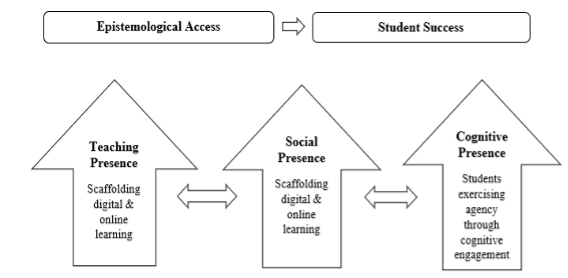
To gain a deeper understanding of the phenomenon under investigation, the study used the Community of Inquiry (COI) framework (Garrison et al., 2001; 2010), a framework used to inform research and practice in digital and online learning. The COI framework views students and lecturers as a social community engaged in online inquiry. The framework is constituted by three interrelated presences, which are a precondition for effective digital and online learning. These presences are: teaching presence, social presence, and cognitive presence (Garrison et al., 2010; Nurhikmah, 2024; Wong et al., 2025). According to Garrison et al. (2001), the COI framework is conceptually grounded in the Vygotskian social constructivist theories of learning and teaching. This study uses the concepts of scaffolding, epistemological access and student success to highlight the social constructivist aspects of the COI framework. The construct of scaffolding is used in the study to refer to Puntambekar’s (2022) distributed scaffolding, which views scaffolding as a shared responsibility in a broader support system, or a scaffolding support structure, that includes scaffolding tools such as digital and technological tools in addition to the human aspect provided by lecturers and fellow students. Various forms of scaffolding can be identified. However, the present study focuses on epistemic scaffolding, a form of scaffolding support provided to students, “enabling them to attain higher levels of epistemic sophistication which would be impossible without support” (Lin & Puntambekar, 2025, p. 770). In a digital and online learning context, both distributed scaffolding and epistemic scaffolding lead to student success or student epistemic growth, which refers to a deeper understanding of the learning task. Scaffolding entails provision of hints and asking questions, or provision of any guidance to support student learning. The scaffolding support gradually diminishes as students gain more confidence on the task. Figure 1 below illustrates the adapted COI Framework.
Teaching presence positions human mediation at the centre of learning. In the present study, teaching presence entails the lecturer’s ability to use digital tools and technology as scaffolds to support student learning. It entails the ability to design both asynchronous online facilitation, where lecturers and students attend the digital learning space at different times, and synchronous facilitation — live sessions where lecturers and students concurrently attend the digital learning space, for instance, using Zoom (West et al., 2024).
Social presence entails creation of a digital learning space that is collaborative, enabling students to interact with their lecturers (student-lecturer interaction), their peers (student-peer interaction), and the learning content (student-content interaction) (Getenet et al., 2024; West et al., 2024). Social presence is associated with the Vygotskian concept of the zone of proximal development (ZPD), which highlights students’ individual abilities and their capabilities with assistance (Lin & Puntambekar, 2025; Puntambekar, 2022; Zuo, 2023).
Cognitive presence underscores the role of student active participation in online learning, student self-regulation and motivation to engage with online course material (Wong et al., 2025). It further entails attainment of epistemic growth as a result of students’ own agency by interacting with the online course material in a reflective manner (Lin & Puntambekar, 2025). Morrow (2009, p. 77) used the concept of “epistemological access” to distinguish between mere “physical access” to higher education and “access to knowledge”. Morrow (2009) also argued that mere access to higher education does not guarantee access to knowledge or epistemological access. Epistemological access in digital and online learning requires student agency or student epistemic engagement.
The study was framed within the pragmatic mixed-research methodology. This methodology was deemed appropriate as it afforded the researcher the benefits of complementarity of methodologies, including elaboration, clarification, and a clearer illustration of the phenomenon under investigation (Johnson & Christensen, 2014).
The study adopted a qualitatively driven, concurrent QUAL + quant case study research design, with the qualitative component (QUAL) apportioned more weight than the quantitative component. The case study design provided opportunities for a focused, in-depth investigation, affording the researcher a deeper understanding of the phenomenon under investigation.
The unit of analysis comprised the lived experiences of students regarding digital and online learning during the Covid-19 crisis period in five selected programmes at UNAM. The participants in this study were 245 students who were conveniently and purposively sampled from the 2021 registered students across the five selected programmes, namely: Bachelor of Education (BEd), Bachelor of Business Administration (BBA), Bachelor of Science (BSc), Bachelor of Accounting (BAcc), and Bachelor of Laws (LLB). Programmes were selected across disciplines to ensure diversity in student experiences about digital and online learning during the Covid-19 pandemic. Availability was established through each participant’s ability to complete and return the questionnaire.
A questionnaire consisting of 13 questions — five (5) closed and eight (8) open-ended questions — was sent online to generate responses to participants’ experiences of digital and online learning during the Covid-19 pandemic. Closed-ended questions structured the participants’ responses while open-ended questions allowed the participants room to provide thick narratives.
A mixed data analysis approach was adopted, combining quantitative and qualitative techniques. This was deemed appropriate as it strengthened the study in terms of complementarity and clarity of the phenomenon being investigated. A thematic qualitative data analysis technique (Miles & Huberman, 1994), which entailed reading and re-reading the narratives, data reduction, as well as grouping the data and establishing codes, and generating themes and sub-themes, was used to analyse qualitative data. A descriptive statistical technique, on the other hand, was used to illuminate the prevalence of the themes identified through the qualitative thematic analysis technique. The mixed analysis was important as it strengthened the study through corroboration and validation of the findings (Johnson & Christensen, 2014). The COI framework for digital and online learning was used to make sense of the data.. Ethical clearance was obtained from the UNAM’s Ethical Clearance Committee prior to the commencement of the study. To protect and ensure safety, the participants were instructed not to use their personal names and were anonymised throughout the study. Consequently, the participants are only referred to as BSc Student, BEd Student, BBA Student, BAcc Student or LLB Student, without using any personal identifiers.
The study investigated: i) factors that constituted the digital and online learning environment at UNAM during the Covid-19 pandemic; ii) how these factors enabled or constrained the online scaffolding of epistemological access and university students’ success; and iii) implications for digital and online learning as a sustainability strategy for countering and thwarting major disruptions to higher education learning and teaching during crisis periods. Tables 1 and 2 summarise the factors that constituted the digital and online learning environment at UNAM during the Covid-19 pandemic as well as their degrees of prevalence.
Table 1: Themes and Sub-themes Generated through Qualitative Thematic Data Analysis
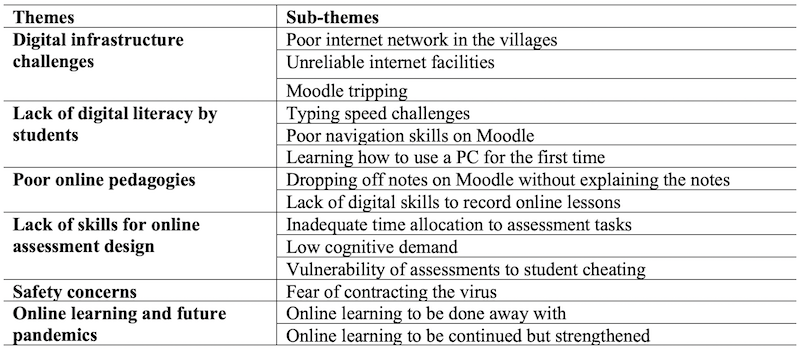
Table 2 outlines the degree of prevalence of the factors in the data based on the themes presented in Table 1.
Table 2: Prevalence of Themes
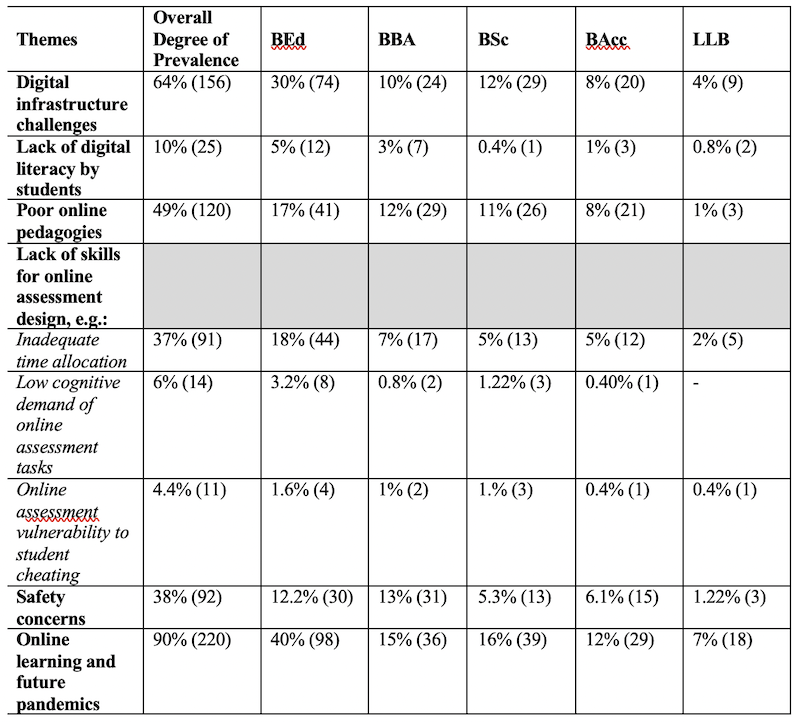
A robust digital infrastructure is one of the key requirements for effective digital and online learning. Despite this requirement, more than half of the participants (64%) across the five selected programmes narrated their frustrations due to internet connectivity challenges, which resulted in their failure to connect to, and to access, classes. The prevalence of frustrations due to internet connectivity challenges was highest among the BEd Students (30%), followed by the BSc (12%), the BBA (10%), the BAcc (8%), and the LLB (45) students. This finding can be interpreted in the sense that the BEd, BSc and BBA programmes were offered at the University’s rural campuses while the LLB was offered at the main campus in the capital city. In addition, the LLB students had a history of being offered online courses prior to the pandemic. This finding further highlights issues of digital disparity in access to technology and reliable internet connectivity among students from different geographical locations of the institution.
As seen in Table 1, digital infrastructure challenges were manifested in the data through “poor network coverage in the villages” (BSc Student), “unreliable Internet facilities” (BEd Student), and the ever “tripping Moodle ” (BEd Student). Connectivity was experienced as being “very poor” (BSc Student), “horrible” (BEd Student), and the “biggest challenge”, which led to students missing “schoolwork”, “classes”, “tests”, or "tutorials” (BBA student).
The Moodle digital space, which constituted the virtual learning environment of the University during the pandemic, constituted yet another major source of student frustration. Some students lamented their disappointment with Moodle, which kept tripping when they needed it the most to access their online classes and assessments. Apart from tripping, Moodle was very slow in loading questions during online assessments. One student highlighted that the system was very slow and that it could “load questions for about 5 minutes each”, or that “it kept loading forever” (BEd Student), and, as a result, the student “never got to complete answering all examination questions” (BEd Student).
Also to be noted is that while, at the time of the study, the University made efforts to distribute pocket Wifi devices to its students countrywide, such devices were not useful enough as the internet network in some parts of the country was too weak to allow connectivity. In addition, some students complained about the low monthly data provided on the devices by the institution. Lack of Digital Literacy by Students
In addition to a robust digital infrastructure, students need to possess technological competence and digital literacy to effectively benefit from online learning (Wong et al., 2025; Rafiq, 2024). Yet, the virtual online learning space for the University during the pandemic was characterised by lack of technological and digital competence among students, and 8.16% of participants across the selected programmes bemoaned their inability to meaningfully benefit from the online learning environment due to their lack of basic computer skills. Three sub-themes emerged in this regard, namely: typing speed challenges, poor navigation skills on Moodle, and learning how to use the PC for the first time during Covid-19. Regarding typing speed challenges, one participant indicated that he was “very slow in typing” (BBA Student), while another participant felt that “typing is something else of a challenge"" (BEd Student). Due to poor typing speed, some participants indicated that they could not complete their assignments on time.
Typing speed challenges, compounded by lack of familiarity with the keyboard, was further aggravated by poor digital navigation skills among some students in navigating the Moodle digital space. Moodle constituted the virtual learning environment where teaching, learning and assessment were taking place during the pandemic at the institution. It was therefore essential for students to know how to navigate their way in this virtual space to access learning. However, with poor digital navigation skills, some students became lost in the virtual space and were unable to access learning. Without proper navigation skills on online learning platforms, students were unable to access online learning resources and participate fully in online learning activities. In addition, some students had to endure the frustrations of the digital learning space while at the same time learning how to use a computer for the first time: “As a first-year student, I hardly know anything about computers. It is tough to type every assignment since I am just learning how to use my PC” (BAcc Student).
To ensure effective online learning, lecturers needed to facilitate synchronous interactive and collaborative constructivist learning in addition to the asynchronous delivery. Asynchronous facilitation entailed both staff and students participating in the digital learning space at different times while synchronous learning entailed live teaching sessions with staff and students concurrently present and interacting in the digital learning space (Garrison et al., 2001; West et al., 2024; Cao, 2025). Yet, close to half of the participants (49%) bemoaned what they perceived as poor online pedagogies by their lecturers. For instance, in the BEd programme, 17% of the participants expressed dissatisfaction with their lecturers’ online teaching approaches. In the BBA, 12% of the participants shared similar experiences as those in the BEd programme while 11% in the BSc programme had similar experiences. In the BAcc programme, 9% of the participants had similar experiences, while in the LLB programme, the prevalence rate of such an experience stood at 1%. As stated earlier, the LLB programme had been offered online prior to the pandemic. It could be that the lecturers in the LLB programme had gained competence in effective online pedagogies over time.
Poor online pedagogies were manifested in the data by two sub-themes, namely: the “dropping off of notes on Moodle without explaining the notes to students”; and the lack of digital skills for “some lecturers to record and avail the recordings to students”. Thus, far from creating a collaborative and interactive online learning environment that was student-centred and synchronous, some lecturers resorted to the pedagogical practice of simply dropping off notes on Moodle without explaining and engaging students with the notes. This practice suggests that some lecturers lacked the necessary skills for interactive-constructivist online pedagogy.
Advocating for interactive-constructivist online pedagogy, one student insisted that “lecturers must explain the content instead of just dropping notes on Moodle and keep quiet…I think some lecturers lack the necessary skills to teach online” (BBA Student). Regarding the recording of online lessons, and posting them on the virtual space for asynchronous delivery, one student bemoaned, “some lecturers’ recordings are not available on Moodle. So, if you miss a class due to health issues, there is no way you can catch up” (BEd Student). To this effect, another BEd student suggested, “I think lecturers should get training on how to assess or teach online either using Zoom or Big Blue Button because, from my experience, I have seen some lecturers struggling even to just record a single lesson whereby students had to step in to assist the lecturer” (BEd Student). While there is nothing wrong with students taking up the responsibility of recording lessons, it is concerning when the activity is performed by a student mainly because a lecturer lacks proficiency with online tools. Equally, failure to record online lessons and avail such recordings to students defeats one of the key benefits of online classes, which is that students who missed classes can still catch up by reviewing the recorded lessons at their own convenience.
Poor online pedagogies were further manifested in student complaints about “feeling isolated, learning alone” (BEd Student), “no group discussions with friends” (BEd Student), and “absence of lecturers to ask when something does not make sense” (BBA Student). These experiences further pointed to some lecturers’ inability to create collaborative and interactive-constructivist virtual classrooms.
The principle of designing meaningful learning and assessment activities is central to online facilitation (Garrison et al., 2010). However, as seen in Table 1, some participants suggested that their lecturers lacked skills for online assessment design. Poor online learning design skills were manifested in the research participants who complained about poor time allocation in online assessment tasks, over-reliance on the multiple choice question type, which led to low cognitive demand on students, and the vulnerability of online assessment to student cheating.
While, as a quality assurance measure, online assessment tasks should be timed, and should log out students automatically when the time expires, the majority of participants across the five programmes (37%) bemoaned the time allocation, which they felt was insufficient for them to engage meaningfully with the online assessment tasks. One student noted that “Time is too low. We were only given around 50 minutes to an hour. Normally exams last for 2 or 3 hours” (BEd Student). As seen in the preceding sections, the issue of inadequate time allocation could have been compounded by other factors such as the lack of basic technological skills exhibited through low typing skills, learning to use the computer for the first time, and the lack of skills to navigate the Moodle platform.
Some participants felt that the online assessment relied heavily on multiple choice questions such as “true or false” (BEd Student) questions, which limited students in expressing their views and opinions and were seen to promote guesswork. Some participants felt that multiple choice tasks were too easy to complete and subjected students to lower cognitive demands than face-to-face examinations: “I am used to giving my own opinions on exam questions rather than the true or false answer styles where I will end up guessing. It does not test my knowledge in a manner that requires me to explain and analyse” (BEd Student). For some students, online assessment tasks were easier to cheat on and were “tempting into copying” (BSc Student).
Another factor constituting the learning environment at UNAM during the Covid-19 pandemic was the issue of prioritising safety. To this effect, 38% of the participants across the five programmes indicated that safety was a top priority for them above everything else. Safety concerns were more prevalent among participants from the BBA programme (13%) followed by the BEd (12.2%), and the BSc programmes (5%). The degree of prevalence among the BAcc and the LLB was 6.1% and 1.22%, respectively. Some participants indicated that they cared more about their health during the pandemic than academic performance, and that it was “better to be safe than sorry” (BSc Student). For these participants, a safer environment mattered more in terms of their learning than an environment where they were likely to contract the virus. Research participants felt that online learning offered this safe environment.
While in the foregoing presentation the participants narrated several factors that hindered meaningful online learning during the Covid-19 pandemic, it is interesting to note that only 10% of the participants across the programmes expressed views that online learning and teaching should be done away with. The majority of the participants (90%) argued that online learning should be maintained to be prepared for future pandemics. However, the participants identified areas that should be improved to ensure effective digital and online learning. One of the reasons for the overwhelming support for online learning could be the safety it offers in terms of its geographical and temporal flexibility in terms of learning anywhere, anytime. As seen in the foregoing presentation, 38% of the participants prioritised safety during the pandemic.
The participants pointed out several areas to be strengthened, such as: “improving the Internet network coverage” (BEd Student), “proper maintenance of the e-learning system” (BEd Student); provision of “improved Internet devices” (BBA Student); and “improvement of the Moodle platform to avoid system problems such as tripping” (BSc Student).
The findings are discussed in the context of the three core elements that constitute the COI framework for effective digital and online learning.
Teaching presence entails the lecturer’s possession of digital skills and adeptness with technology to design and facilitate collaborative-interactive-constructivist online learning experiences for students by optmising the use of digital tools such as online discussion forums, blogs, social media, and gamification. This study argues that contextual factors existing in the institution’s digital learning space during the Covid-19 pandemic militated against the teaching presence as a core element of the COI framework. For instance, the poor online pedagogies, where some lecturers resorted to simply dropping off notes on Moodle without engaging students in an interactive co-construction of knowledge, acted as a barrier to effective online teaching. Due to the use of poor online pedagogies, lecturers could not fulfill their facilitative role of scaffolding epistemological access and student success. They could not serve as scaffolding support for online learning.
Another barrier to teaching presence was the poor digital proficiency among some lecturers who were unable to record their online lessons. Consequently, some lecturers could not even facilitate online learning asynchronously: “some lecturers’ recordings are not available on Moodle, so if you miss a class due to health issues there is no way you can catch up” (BEd Student). It is therefore evident that contextual factors attributed to lecturers, such as their own lack of digital proficiency, constrained rather than enabled the scaffolding of epistemological access and student success. Due to poor digital proficiency, lecturers were unable to design and implement novel digital pedagogies. Instead, they engaged in transmission-oriented pedagogies where they simply dropped off notes on Moodle without engaging students. The findings align with a study by Ngololo et al. (2023) on teachers’ experiences with online teaching during Covid-19 in Kenya and Namibia that highlighted the need for continuing professional development of teachers to acquire digital competence as well as effective online pedagogies. The findings further align with a study by Rafiq et al. (2024) which investigated the impact of digital tools and online learning on higher education outcomes in Lahore, Pakistan. The study found that the lack of digital literacy among both educators and students acted as a barrier to effective online learning and teaching. Similarly, a study by Wong et al. (2025, p. 4) observed that teachers’ lack of “proficiency with online tools and their effectiveness in adapting pedagogical methods to the online environment” acted as barrier to effective digital and online learning. The lack of proficiency among lecturers was also demonstrated by their inability to design appropriate online assessments, particularly in terms of time allocation to assessment tasks. Most students complained about insufficient time allocation for online assessment tasks. Other studies, for example, du Preez and le Grange (2020); Galynska and Bilous (2022) also highlighted the lack of digital competence among students and lecturers as a barrier that impeded effective online learning during the pandemic.
To ensure effective digital and online learning, social presence requires a collaborative, interactive-constructivist digital learning space that fosters student-to-student interaction, and student-to-lecturer interaction. Social learning spaces can be created during synchronous teaching, which West et al. (2024) described as live teaching sessions where both students and staff concurrently attend a digital learning space. Interactive learning experiences can be organised and facilitated through digital discussion forums, blogs, and social media (Rafiq et al., 2024). In the present study, the lack of social presence constituted a major barrier to the creation of an online community of learners. Students could not call upon the Zone of Proximal Development as a space for enhancing their learning. Thus, far from existing as an online community of learners engaged in inquiry (Garrison et al., 2010), participants in the study felt isolated as if learning alone, and had no group discussions with peers, a situation which highlighted the lack of student-to-student interaction during online learning. Student-to-lecturer interaction was equally limited to the extent that students felt there was no one to ask when something was not clear with their studies. This finding concurs with Cao’s (2025) study with Chinese students during remote emergency online teaching, which found that lack of opportunities to interact with lecturers and peers was a significant barrier to successful online teaching. Poor social presence deprived students of the rich peer communication they needed to enhance their online learning experiences. This finding further resonates with West et al. (2024) who observed that physical isolation from campus and their peers was the main challenge students faced during the 2020 to 2021 academic year when they studied through online learning. The limited social presence was a major hindrance to the establishment of communities of inquiry needed for effective digital and online learning.
Garrison et al. (2001) argued that cognitive presence involves critical reflective learning through critical analysis of subject matter, questioning, and challenging of assumptions. Cognitive presence entails student agency through meaningful reflection and co-construction of knowledge within an online community of learners. It can be argued that students in the present study could not exercise meaningful cognitive presence such as the one described by Garrison et al. (2001) due to several barriers that existed in the institution’s digital learning space. For instance, some students lacked the digital literacy needed to navigate the institution’s digital learning platform, Moodle. It can be argued that given the inability to find their way around the online learning platform, some students could not engage in critical reflective learning. In addition, several challenges posed by the poor digital infrastructure, particularly for rural areas, militated against student cognitive presence. The lack of cognitive presence was further compounded by what students perceived as low-order, multiple choice questions that they were being subjected to during online assessment.
The findings of the present study are consistent with prior studies at UNAM. For instance, a study by Nepembe et al. (2023) on undergraduate nursing students during Covid-19 highlighted similar barriers to student cognitive presence, namely: “insufficient time allocation for students to complete online assessments”, “slow and often Moodle leading to students being kicked out in the middle of an assessment” as well as, “lectures posting notes on Moodle without engaging students” (p. 43). Similarly, Tomas et al. (2024) alluded to the low cognitive engagement of assessments during online learning. Another study by Hamakali and Josua (2023) also highlighted the need for improved digital connectivity and accessibility, as well as the need for both lecturers and students to acquire the digital literacy skills needed to navigate Moodle.
Despite the barriers highlighted in the preceding paragraphs, the research participants did not propose abandonment of digital and online learning. Instead, an overwhelming majority of 90% (as seen in Table 2) argued that digital and online learning should be continued going forward but including required improvements to several areas, as elaborated in the next paragraphs. There were a few voices (about 10%), however, that advocated for a return to face-to-face instruction and doing away with online learning given the challenges it posed. The research participants advocated for digital and online learning due to the safety it offered during the pandemic as well as its geographical and temporal flexibility. The views of the research participants were consistent with a study by Galynska and Bilous (2022) in Ukraine who argued that digital and online learning is capable of delivering the goals of higher education even in contexts wracked by war. The present study argues for adoption of digital and online learning as a sustainable strategy for countering or thwarting disruptions to higher education learning and teaching during crisis periods at UNAM.
To ensure that the University is able to counteract any major disruption, and still meet its obligations of learning and teaching despite that disruption, digital and online learning should be overhauled as follows:
This study has revealed the vulnerability of learning and teaching at the University of Namibia in terms of promoting epistemological access and student success in the face of major disruptive crises, such as health pandemics, protracted wars, natural disasters, and civil unrest. The study concludes that adoption and implementation of effective digital and online learning through the COI framework could serve as a sustainable strategy for countering or thwarting any such major disruption and still continue with normal learning and teaching. To reap the benefits of digital and online learning, the study recommends strengthening the COI framework and the entire digital and technological ecosystem within which the framework is operationalised.
Despite its boundedness as a case study of the five selected programmes at the University of Namibia, the study provides insights that could inform policy and practice in other higher education contexts. The study could be extended to include a larger sample of programmes and students.
Aluko, F.R., & Ooko, M. (2022). Enhancing the digital literacy of teachers to bolster learning in the 21st century. Journal of Learning for Development, 9(3), 420-435.
Cao, Y. (2025). Understanding Chinese students’ online learning experiences with emergency remote teaching: A case study. Asia Pacific Journal of Education, 45(1), 1-19, https://doi.org/10.1080/02188791.2023.2206548
du Preez, P., & le Grange, L. (2020). The Covid-19 pandemic, online teaching/learning, the digital divide, and epistemological access. In L. Ramrathan, N. Ndimande-Hlongwa, N. Mkhize, & J.A. Smit (Eds.), Re-thinking the humanities curriculum in the time of Covid-19, 90-106. CSSAL Publishers, https://doi.org/10.29086/978-0-9869936-1-9/2020/AASBS01
Galynska, O., & Bilous, S. (2022). Remote online learning during the war: Challenges for higher education in Ukraine. International Science Journal of Education & linguistics, 1(5), 1-6. https://isg-journal.com/isjel/doi:10.46299/j.isjel.202220105.01
Garrison, D.R., Anderson, T., & Archer, W. (2001). Critical thinking, cognitive presence, and computer conferencing in distance education. The American Journal of Distance Education, 15(1), 7-23. https://doi.org/10.1080/08923640109527071
Garrison, D.R, Anderson, T., & Archer, W. (2010). The first decade of the Community of Inquiry framework: A retrospective. Internet and Higher Education, 13, 5-9. doi:10.1016/j.iheduc.2009.10.003
Getenet, S., Cantle, R., Redmond, P. & Albion, P. (2024). Students’ digital technology attitude, literacy and self-efficacy and their effect on online learning engagement. International Journal of Educational Technology in Higher Education, 21(3), 1-20. https://doi.org/10.1186/s41239-023-00437-y
Hamakali, H.P.S., & Josua, L.K. (2023). Engendering technology-assisted pedagogy for effective instructional strategy in the University of Namibia Language Centre. Research in Educational Policy and Management, 5(1). 18-32. https://repamjournal.org
Johnson, R.B., & Christensen., L. (2014). Educational research: Quantitative, qualitative and mixed approaches (5th ed). Sage.
Lin, F., & Puntambekar, S. (2025). Epistemic scaffolding: Understanding and designing support for epistemic growth in science. International Journal of Science Education, 47(6), 769-793. https://doi.org/10.1080/09500693.2024.2349973
Miles, M., & Huberman, A.M. (1994). Qualitative data analysis. SAGE.
Morrow, W. (2009). Bounds of democracy: Epistemological access in higher education. Human Science Research Council Press.
Nepembe, N.N., Amakali-Nauiseb, T., & Emvula, O. (2023). Perceptions of undergraduate student nurses on e-learning at University of Namibia Main Campus, Windhoek: A lesson learnt from COVID-19 pandemic. International Journal of Community Medicine and Public Health, 10(11), 4396-4400. https://dx.doi.org/10.18203/2394-6040.ijcmph20233484
Ngololo, E.N., Nekongo-Nielsen, H., & Odhiambo, J. (2023). Teachers’ experiences with online teaching during COVID-19 in Kenya and Namibia. Studies in Learning and Teaching (SiLeT), 4(2), 216-228. https://scie-journals.com/index.php/SiLeT
Nurhikmah, H., Ramli, A.M., Sujarwo, I., Bena, B.A., Arawdi, F., Syawaluddin, A., & Nur, I.D.M. (2024). Teachers’ readiness in online learning: Digital literacy-self-efficacy, pedagogical competence, attitude, infrastructure, and management support. Electronic Journal of e-Learning, 22(8), 93-105. https://doi.org/10.34190/ejel.22.8.3358
Puntambekar, S. (2022). Distributed scaffolding: Scaffolding students in classroom environments. Educational Psychology Review, 34, 451-472. https://doi.org/10.1007/s106s48-021-09636-3
Rafiq, S., Iqbal, S., & Afzal, A. (2024). The impact of digital tools and online learning platforms on higher education learning outcomes. Al-Mahdi Research Journal, 5(4), 359-369. https://ojs.mrj.com.pk/index.php/MRJ/issue/view/14
Tomas, N., Munangatire, T., & Haita, L. (2024). Nursing students’ learning engagement experiences during the COVID-19 pandemic in Namibia: Implications for nursing education. SAGE Open Nursing, 10, 1-11. https://journals.sagepub.com/doi/pdf/10.1177/23779608241228494
West, H., Hill, J., Abzhaparova, A., Cox, W., & Alexander, A. (2024). Pandemic pedagogies: Reflecting on online learning using the Community of Inquiry framework. Journal of Geography in Higher Education, 48(2), 157-176. https://doi.org/10.1080/03098265.2023.2190962
Wong, J.M.S., Tang, W.K.W., & Li, K.C. (2025). Digital transformation in higher education: Tertiary students’ perspectives on online learning and its implications for the future. International Journal of Innovation and Learning. https://www.inderscience.com/ijil
World Health Organisation. (2024). Disease X: The next pandemic? https://www.MSN.com/en-xl/health/other/disease-x-the-next-pandemic/
Author Notes
John Nyambe is currently Associate Dean of the School of Education at the University of Namibia. He previously served as director of the Centre for Professional Development, Teaching and Learning Improvement at the same University. His research interests are in teacher education and higher education studies. Email: jnyambe@unam.na (https://orcid.org/0000-0003-0134-270X)
Cite as: Nyambe, J. (2025). Scaffolding epistemological access and university students’ success during crisis periods: Implications for digital and online learning. Journal of Learning for Development, 12(2), 372-385.