2024 VOL. 11, No. 3
Abstract: In elementary education, virtual reality (VR) has been the subject of much-increased research over the last ten years, with developed and developing nations making significant contributions. This research used a bibliometric approach to examine all publications published between 1994 and 2023, depending on this information. This study uses the VOS viewer tool and the Scopus database to analyse 365 articles. The results show that developed nations significantly contributed to publications and citations, especially in research and development, whereas developing nations were more interested in using technology in education. Journals in computer science and education now receive the most citations, which indicates the current focus on Virtual Reality in Elementary Education. The trend of greater collaboration among authors may be attributed to several variables, including, but not limited to, enhanced financing, higher author competency, and the rise of transdisciplinary studies. This collaborative effort facilitates the exchange of many viewpoints, expands the scope of insights in articles, and improves the editing and revising process. The terms "child," "reality," "technology," "approach," "intervention," "teaching," "augmented reality," "difference," "patient," and "process" are the top 10 keywords linked to virtual reality in elementary school research. Research relevance, influence, and acknowledgment within the scientific community may be ensured by matching research to keyword trends. The findings of this study could help future investigators choose research topics and pinpoint areas of interest.
Keywords: VR, elementary education, review, scientometric
Virtual Reality (VR) is utilised in education at all levels to produce interactive simulations, virtual field excursions, and immersive learning experiences (Marougkas et al., 2023; Zhao et al., 2023). It improves retention of information and involvement in K-12 schooling (Jensen & Konradsen, 2018; Merchant et al., 2014). VR in higher education, makes learning across disciplines easier and helps with remote learning (Marks & Thomas, 2022). It also offers realistic settings for practice and skill improvement in professional training (Renganayagalu et al., 2021). However, although expenses, technological specifications, and obstacles to access might restrict its implementation (Kulkov et al., 2023), this tool is predicted to grow as technology develops, providing everyone with immersive and engaging learning opportunities.
However, obstacles to overcome when integrating VR in elementary school settings include cost, accessibility, and age-appropriateness (Osuna et al., 2019; Rosa et al., 2023). It is imperative to guarantee the safety and proper development of Virtual Reality experiences for younger students and, to ensure that VR technology is widely used, it is necessary to grant equal access to it in various educational contexts. According to studies, immersive VR experiences have been linked to better information retention, greater spatial awareness, and higher student motivation (Di Natale et al., 2020; Makransky et al., 2019; Papanastasiou et al., 2019). Further research is required to fully understand Virtual Reality's possible effects, difficulties, and possibilities in primary education.
VR integration in elementary school has several applications in scientometrics, the quantitative analysis of science, and research. This method enables scholars to evaluate the effects of VR applications by examining publication frequency, citation trends, and other indicators (Borgohain et al., 2022). In order to make sure that teaching methods keep up with the latest developments and student preferences, it also assists in identifying new trends in VR applications. Using scientometrics, educators may compare and benchmark data to make well-informed decisions about which technologies will best support their unique learning goals (Kaur & Bhatia, 2021). Assessing the rigor and dependability of studies enhances the credibility of VR-based treatments in elementary schools and adds to quality assurance in VR educational research. Comprehending the state of scientometrics facilitates the efficient allocation of resources by educational institutions and policymakers, enabling them to discover noteworthy research and successful VR implementations. It provides a data-driven foundation for informed decision-making about integrating VR into elementary education.
The evaluation of research activities and the provision of insights into information transmission, scholarly influence, and research trends are critical functions of scientometrics. The increasing use of Virtual Reality in education makes conducting regular measurements of its impact and progress imperative. A systematic way for assessing the spread, impact, and cross-disciplinary relationships of VR in education research is provided by scientometric techniques. The diffusion of VR-related educational innovations, significant research hubs, and subject clusters are just a few of the trends and patterns that may be found in the VR literature using scientometric analysis. This method can highlight new ideas, cross-disciplinary relationships, and the development of the academic debate on Virtual Reality in education. A few advantages of adopting a scientometric method to study VR's influence in educational research are better knowledge of VR's revolutionary potential, curriculum creation, and evidence-based decision-making. Although, based on the authors' review, there has not been any research similar to this study in reliable scientific databases, several articles with similar methods and topics were noted.
These papers examined Virtual Reality (VR) and Augmented Reality (AR) in science, math, physical education, and online learning. They examine productivity, and develop research trends using bibliometric mapping and analysis. The advantages of using AR and VR in tablet-based anatomy instruction, research trends in VR in higher education, the rise of AR and VR in physical education, fundamental subjects in the development of education research, the influence of game-based learning in science and math education, the suitability of AR and VR in online learning, and citation relationships among current VR education research were some of the critical findings. These papers are a great way to learn about the status of research on AR and VR in education.
This review tackles the following research questions:
RQ1. How is the publication trend in the period under review?
RQ2. Which countries and affiliations contributed the most publications on Virtual Reality in elementary education over the last few years?
RQ3. Who are the most prolific authors on Virtual Reality in Elementary Education?
RQ4. What are the influential journals concerning producing research papers in this area?
RQ5. How are the authors' keywords co-occurrence networks?
RQ6. How are the co-authors visualisation networks?
Through immersion and presence, multisensory integration, neuroplasticity and memory formation, experiential learning and simulation, cognitive load management, transfer of learning, personalised and adaptive learning, and neural network activation (Lasaponara et al., 2021; Mitsea et al., 2022) VR has been scientifically shown to improve learning experiences in elementary education (Pellas et al., 2019). VR produces immersive environments that improve focus and attention spans, use multiple senses for better understanding, stimulate brain areas related to memory and spatial cognition (Maciej Serda et al., 2013; Spence & Feng, 2010), allow for hands-on experiential learning, simplify complex concepts, make learning transfer easier, enable customisation and adaptation, and activate neural networks linked to higher-order cognitive abilities.
VR presents a viable educational tool for primary school students, providing them with immersive and hands-on learning opportunities (Au & Lee, 2017; Oh & Nussli, 2014) and may take pupils beyond traditional learning techniques by imitating real-world surroundings, and encouraging curiosity and inquiry (Georgiou et al., 2021). Also, it provides unmatched engagement by allowing students to actively engage with three-dimensional objects, participate in virtual worlds, and investigate abstract ideas (Murala & Panda, 2023). It makes experiential learning more accessible by letting students explore historical moments, natural phenomena, and specific places.
Arici et al. (2019) discussed research trends in the use of augmented reality in science education; Rashid et al. (2021a) explored the use of Virtual Reality in higher education and also touch upon Virtual Reality for online education; Calabuig-Moreno et al. (2020) focused on the integration of Virtual and Augmented Reality in physical education; Cheng et al. (2022) covered topics in education research and contemporary Virtual Reality education research; Chen et al. (2022) specifically delved into mathematics education; Rashid et al. (2021a) discussed virtual reality for online education and virtual and augmented reality in physical education; and Calabuig-Moreno et al. (2020) conducted bibliometric research.
In elementary education, VR offers advantages as well as possible disadvantages. It allows experiential learning, fosters skills development, improves comprehension and retention, and delivers immersive and captivating learning experiences (Pintado et al., 2023; Vats & Joshi, 2024). Extended VR usage, however, can cause health problems like motion sickness and eye strain, and the immersive nature of virtual worlds may restrict social contact. In addition, problems with equity and access to the technology may occur. Adoption must be done responsibly and with consideration for fairness, access, and student well-being to reduce these possible adverse effects.
A branch of science called ‘scientometrics’ uses quantitative analysis of research results to assess how far science has come (Mingers & Leydesdorff, 2015). According to Ivancheva (2008) and Yao et al. (2014), it offers perceptions of effectiveness, influence, and research trends.
Using scientometrics to explore safety signs research could help to improve the understanding of experts, scholars and the general public on the development traits, research status and significance of safety signs, and deepen researchers’ understanding of their internal development rules, so as to promote the sustainable development of safety signs research (Gao et al., 2021). Scientometrics analysis is being used increasingly in various scientific fields to obtain quantitative insights into the development of research in certain areas of scientific investigation. Scientometric mapping enables researchers to acquire insights into various elements of a domain by displaying metrics that incorporate quantitative information (Li et al., 2021). The benefits of scientometrics include assessing research performance, monitoring scientific trends, creating knowledge network maps, and determining the effect of research. It may be used in bibliometric investigations, partnerships and collaborations, research financing and policy, assessment, and ranking. When it comes to comprehending and influencing the direction of science, scientometrics is a vital resource for scholars, decision-makers, funding organisations, and establishments.
A document search using the Scopus database with query (TITLE-ABS-KEY (virtual AND reality) AND TITLE-ABS-KEY (primary AND school) OR TITLE-ABS-KEY (elementary AND school)) AND (LIMIT-TO (SRCTYPE, “j”) on December 25, 2023, managed to find 355 documents consisting of 327 articles, 16 reviews, five conference papers, three notes, and the rest a book chapter, editorial, letter, and short survey. The documents were analysed on the Scopus database to obtain data on number of publications, citations, Cite Score, h-index, SJR, SNIP, Journal Quartile, publisher, authors, journal, affiliation, and country. Next, the document was exported in the RIS format to be analysed in the VOS viewer.
Bibliometric analysis is a popular and rigorous method for exploring and analysing large volumes of scientific data. It enables us to unpack the evolutionary nuances of a specific field, while shedding light on the emerging areas in that field by making sense of large volumes of unstructured data in rigorous ways (Donthu et al., 2021). VOS viewer is a software which enables academics to view and examine bibliometric data (Martins et al., 2022; van Eck & Waltman, 2009). By offering network visualisation, density visualisation, and grouping and mapping, it sheds light on academic literature's conceptual and structural relationships (Oladinrin et al., 2023; Zyoud & Zyoud, 2021). Additionally, VOS viewer allows users to customise their visualisations to meet the unique requirements of their study. Also, it computes and displays a range of bibliometric indicators that make quantitative analysis and data interpretation easier. Research mapping, cooperation analysis, literature reviews, and strategic decision-making may all benefit from using VOS viewer (Ding & Yang, 2022; Rahmati & Karimi, 2022). It supports a study field's intellectual framework by assisting researchers in locating themes, prominent writers, and emerging trends in academic literature (Rossetto et al., 2018). Giving researchers visual summaries of articles also facilitates the process of conducting literature reviews by making it easier for them to sift through enormous amounts of material and find pertinent research clusters (Chanthiran et al., 2022). To sum up, VOS viewer is an invaluable resource for academics and researchers, providing extensive insights into the dynamics and structure of scholarly communication networks, interactive exploration, and sophisticated visualisation capabilities.
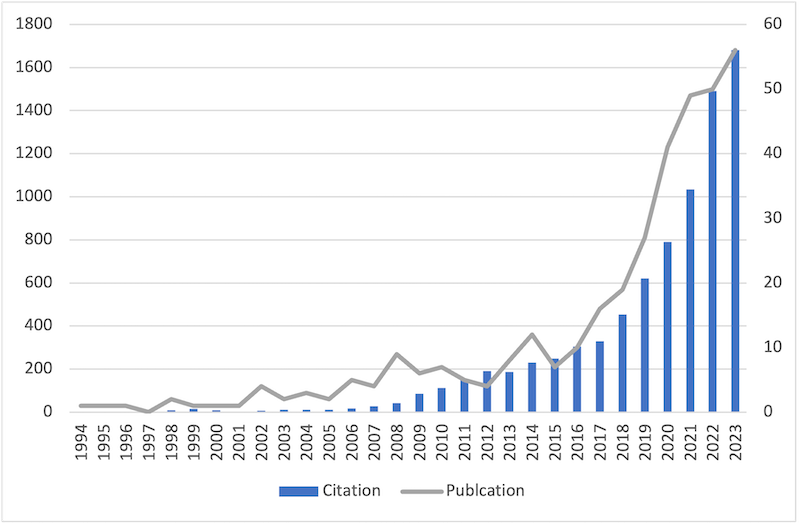
The data presented in Figure 1 shows the total number of publications and citations related to using VR in elementary school. It seems clear that this field has been growing since 2007. The first decade (1994-2007) showed little progress, since the first publications appeared in 1994. There are no citations for 1997, as no publications were cited for that year. There were 14 publications in the first decade, with 65 citations. This trend has continued to rise, especially from 2015 to the time of writing, with 2023 being the most productive year for VR in elementary school, with 56 publications and 1,682 citations. The year with the lowest number of publications was 1997 (0 publications), while the years with the least number of citations were 1994 and 1995 with 0 citations.
Table 1 shows the top 10 countries and affiliates that published the most significant number of VR papers, along with the total number of publications (TP), total citations (TC), and citation impact (CI). CI is the average number of citations a particular publication receives. The number of citations was divided by the total number of publications to obtain a CI for this research. The range of publications was between 68 (maximum) and 14 (minimum). The United States emerged as the leading country in this field, producing the most significant number of publications (68), achieving the highest number of citations (2,272), and showing a high citation impact (33.41). China followed the United States with 43 publications, 502 citations, and the highest citation impact (11.67), followed by Taiwan, The United Kingdom, Spain, and South Korea with 41, 26, 20, and 18 publications, respectively. Greece, Italy, Turkey, and Australia were in the bottom half with 17, 17, 15, and 14 publications, respectively.
Table 1: Top Ten Countries and Affiliates
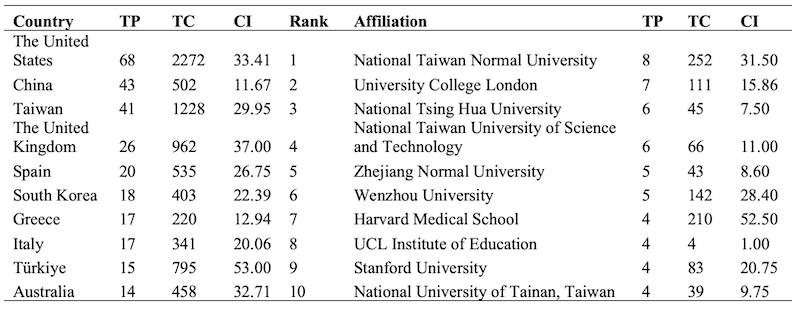
The top five for total citations were the United States, Taiwan, the UK, Türkiye, and Spain. The lowest five were China, Australia, South Korea, Italy, and Greece. The top five for citation impact were Türkiye, the UK, the United States, Australia, and Taiwan. The lowest five were Spain, South Korea, Italy, Greece, and China. As far as the leading organisation is concerned, the National Taiwan Normal University ranked first with eight publications, 252 citations, and a quotation impact of 31.50. Harvard Medical School had only four publications but its position was very high, 210, and its highest impact was 52.50.
Table 2 presents the ten most influential authors in VR scientific literature over the years. Half the authors were from Taiwan, three from China, one from Türkiye, and one from the United Kingdom. In first place with five publications were: Y.T. Chen, from Zhejiang Normal University, China; G.J. Hwang, from the National Taiwan University of Science and Technology, Taiwan; and W. Tarng, of National Tsing Hua University, Taiwan. However, G.J Hwang was a very productive author with an H-index of 75. The highest position was obtained by K.H Cheng, of National Chung Hsing University, Taiwan, with 134 positions and a position impact of 33.50.
Table 2: Most Prolific Authors
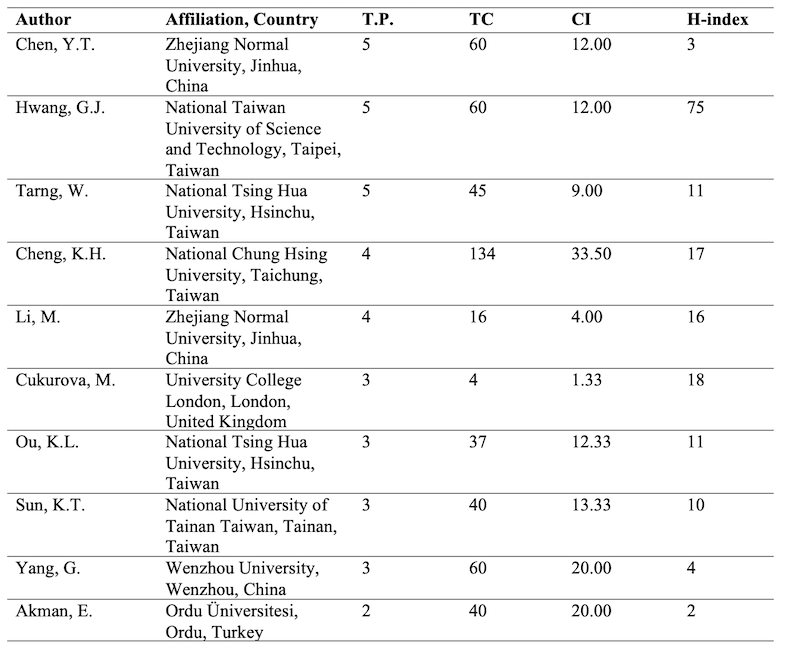
Table 3 shows the top ten journals that produced literature about VR. These top ten journals published 76 papers (1994-2023), and all have a good reputation in their field (Q1 and Q2). The top five journals produced 46 publications with 2,137 citations. The journal Computers and Education (CiteScore = 23.8, SJR = 3.687, SNIP = 5.03, Q1) was at the top of the list, having 18 publications and the highest number of quotations (1,506), followed by the journal Interactive Learning Environments (SJR = 11.11, SNIP = 1.17, SNIP = 1.69, and Q1) with eight publications, and 280 quotations. The Virtual Reality journal was in the lowest order, with five publications and 567 quotations. Half the magazines were from the UK, and the others were from the United States, Taiwan, Austria, and Switzerland. Computer and Education had the highest CiteScore (23.8).
Table 3: Top 10 Journals that Produce Publications Related to this Research
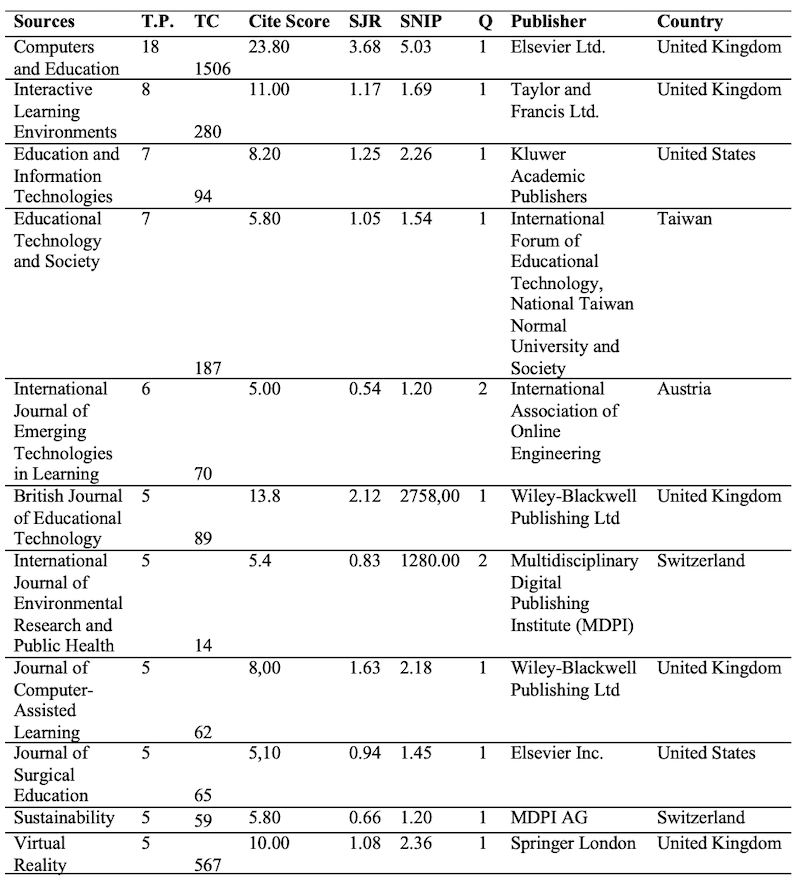
Figure 2 shows 14 clusters. One cluster is in line and considered close by the application. Cluster 1 (red) consists of keywords: ability, achievement, activity, addition, analysis, application, attention, attitude, augmented reality, challenge, classroom, concept, content, context, development, engagement, evaluation, experience, experiment, experimental group, game, grade, immersion, implementation, implication, instruction, interaction, interest, knowledge, learning process, mathematics, motivation, opportunity, perception, performance, potential, practice, problem, process, project, pupil, reality, science, significant difference, skill, spherical video, svvr, system, teacher, technology, tool, training, understanding, virtual environment, way, and writing. Cluster 2 (green) consists of keywords adolescent, age, anxiety, change, control, difference, e-cigarette use, effectiveness, efficacy, evidence, feasibility, improvement, intervention, management, measure, outcome, pain, patient, primary result, satisfaction, score, secondary output, session, systematic review, trial, and VR group. Small clusters (blue, yellow, purple, and other colours) consist of one to three keywords that are merged into creativity, influence, internet, role, assemblage, assessment, case, expert, field, future, metaverse, new technology, computer, parent, video, immersive virtual reality, IVR, serious game, simulation, pandemic, virtual reality technology, benefit, complex, experimental study, usability, and gender.

Figure 2 displays research topics related to the keyword search; the closer the connection, the stronger it is (McAllister et al., 2022; Samadbeik et al., 2023). Figure 2 shows what topics were at the center of attention. The more detailed the discussion of the topic is the redder it displays. Less intense discussions display as blue.
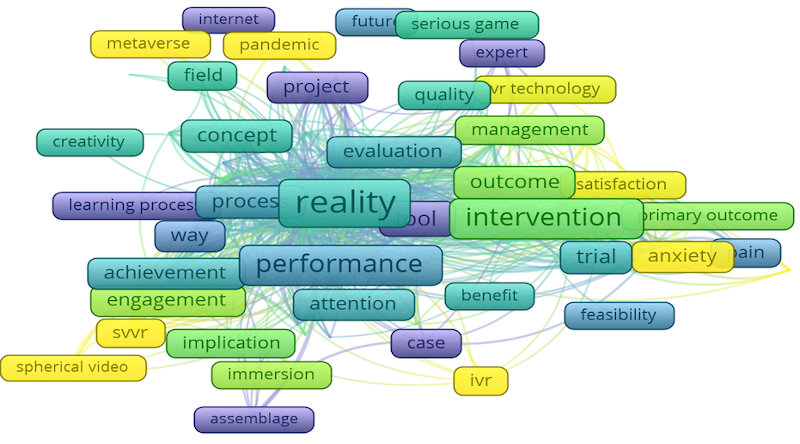
The overlay display in Figure 3 shows that the brighter the colour, the newer the publication. Researchers who want to develop VR in elementary school can link it to metaverse variables, anxiety, SVVR (Spherical Video-Based Virtual Reality), and Immersive virtual reality (IVR). These three keywords appear in the latest research.
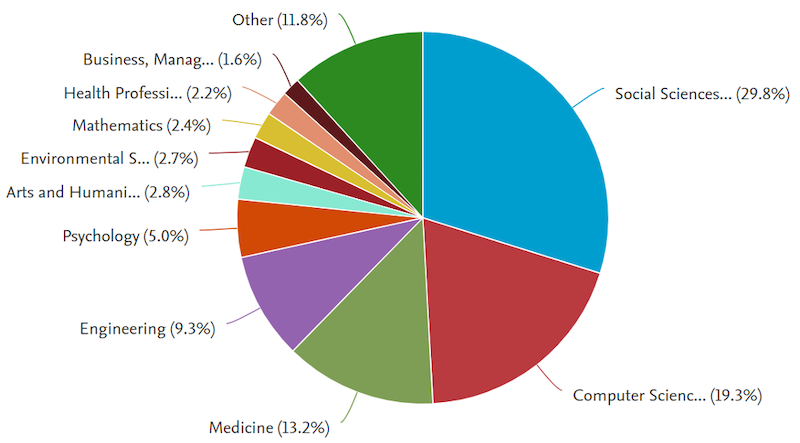
Figure 4 shows that VR research trends are very varied. The fields of education (social science) occupied the highest volume (29.8%), followed by computer science, medicine, engineering, psychology, arts and humanities, environment, mathematics, health professionals, business management, and others. VR has broad field coverage and possible collaboration for all these areas.
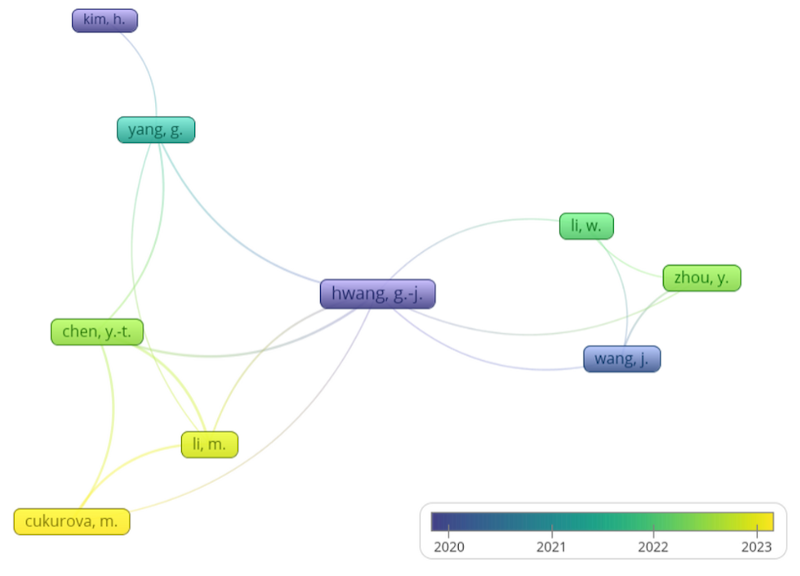
Figure 5 shows the author's relationship with the research on a given topic. There are three clusters of collaboration for the authors, namely Cluster 1 collaboration between Hwang, G.J. – Li, W. – Wang, J. – and Zhou, Y., which appears to be a productive collaboration between 2000- 2022. Cluster 2 is a collaboration among Chen, Y.T. – Cukurova, M. – Li, M., who were productive cooperating in 2022-2023. Finally, Cluster 3 is a collaboration between Kim, H. – Yang, G., who were productive in 2020-2021.
In the last decade, VR research in elementary schools has shown a sharp increase (Rashid et al., 2021). This is evident by the significant increase in the number of publications and quotations since 2012 to date. The main findings of this study reveal that developed countries contribute a large number of publications and citations, mainly research and development themes, which can be seen in data from researchers, affiliates, journals, and leading countries in VR research at elementary schools. Intense collaboration also comes from developed countries. Developing countries contribute publications in the context of technology applications (Thapa & Sæbø, 2014). This shows that developing countries are adopting state-of-the-art technology in education (Baig et al., 2019). Developed countries have adopted digital advancements more quickly. The research also found that VR research was not limited to education but occured in various other fields such as computer science, medicine, engineering, psychology, the arts and humanities, environmental science, mathematics, health professionals, business management, and others. Although the results of VR are multidisciplinary, the highest number of quotations in research currently come from journals in computer science and education. This is probably due to the current focus on VR research in education.
The results also showed an increase in collaboration between two or more authors, which could imply increased funding from organisations (Coburn & Penuel, 2016), improved author competence (Williams & Beam, 2019), and the emergence of new multidisciplinary studies (Chen et al., 2019). Each writer brought a different perspective (Schot et al., 2020). Collaboration can enrich an article with a broader and more diverse perspective. Collaboration enables the combination of different expertise and knowledge from each author (Muhammad et al., 2023). It can produce a richer and more comprehensive article because everyone contributes uniquely. Through collaboration, new ideas and creative approaches can emerge. Discussions between authors can trigger innovative thinking and better solutions (Micheli et al., 2019). By involving several authors, the article has a greater chance of going through a deep revision and editing process. It can improve the quality of the writing and reduce the likelihood of errors. Each writer can focus on his or her expertise, thereby, increasing efficiency and productivity. Collaboration allows articles to reach a wider audience as they may involve readers of each author.
In the keyword perspective of VR in elementary schools, the top 10 keywords were: child, reality, technology, approach, intervention, teaching, augmented reality, difference, patient, and process. Keyword trends reflect the interest and focus of research in society and science. Researchers who choose keywords relevant to trends can ensure that their research is more relevant and can contribute to current issues. Adapting research to keyword trends could improve research visibility and impact (Akhavan et al., 2016; Jun et al., 2018). Popular keywords can make research more straightforward to find by peers, the media, and the general public. Keyword trends can affect the selection of research topics. Researchers may be more interested in investigating topics that match trends and demands in society or a particular discipline (Sun & Yin, 2017). Researchers who can follow keyword trends and contribute to growing research fields should gain greater recognition in the scientific community (Rosario & Wa-Mbaleka, 2022; Sun & Yin, 2017), which could contribute to their academic career growth (Bozkurt et al., 2015). Keyword trends can affect the selection of research methods (Nuti et al., 2014). Researchers may need to adapt their research methods to include the latest approaches or technologies associated with the trend. Research that matches keyword trends may make it easier to get financial support and access to research resources (Nuti et al., 2014). Research relevant to recognised issues often gets greater attention and support. Keyword trends reflect the direction of knowledge growth in a field (Nuti et al., 2014). Research that follows such trends can help broaden understanding and contribute to the field.
This research contributed to analysing VR research trends in elementary schools for productivity aspects, journal reputation, authors, organisations, and leading countries, quotation impact, keyword trends, and collaboration during 1994-2023. It supports authors in examining the trends and patterns of research and publication in order to be able to decide where to publish their work. The increase in the number of publications is very significant from year to year, and this also has an impact on the research. VR was also studied from a multidisciplinary point of view, so its applications can be seen to span computers, medicine, pharmacy, economics, psychology, and, of course, education. This research was limited to the use of the Scopus database, so we suggest that future researchers extend the database from ScienceDirect, Web of Science, ERIC, Google Scholar, and EBSCO. This research was also restricted to studying the application of VR in elementary schools, so at other educational levels, the opportunity for similar studies is very open.
Akhavan, P., Ebrahim, N.A., Fetrati, M.A., & Pezeshkan, A. (2016). Major trends in knowledge management research: A bibliometric study. Scientometrics, 107(3), 1249-1264. https://doi.org/10.1007/s11192-016-1938-x
Au, E.H., & Lee, J.J. (2017). Virtual reality in education: A tool for learning in the experience age. International Journal of Innovation in Education, 4(4), 215. https://doi.org/10.1504/IJIIE.2017.091481
Baig, M.I., Shuib, L., & Yadegaridehkordi, E. (2019). Big data adoption: State of the art and research challenges. Information Processing & Management, 56(6), 102095. https://doi.org/https://doi.org/10.1016/j.ipm.2019.102095
Borgohain, D.J., Bhanage, D.A., Verma, M.K., & Pawar, A.V. (2022). Global research trends in augmented reality: Scientometric mapping based on Scopus database. Information Discovery and Delivery, 50(4), 387-403. https://doi.org/10.1108/IDD-08-2021-0081/FULL/XML
Bozkurt, A., Akgun-Ozbek, E., Yilmazel, S., Erdogdu, E., Ucar, H., Guler, E., Sezgin, S., Karadeniz, A., Sen-Ersoy, N., Goksel-Canbek, N., Dincer, G.D., Ari, S., & Aydin, C.H. (2015). Trends in distance education research: A content analysis of journals 2009-2013. International Review of Research in Open and Distributed Learning, 16(1), 330–363. https://doi.org/https://doi.org/10.19173/irrodl.v16i1.1953
Calabuig-Moreno, F., González-Serrano, M.H., Fombona, J., & García-Tascón, M. (2020). The emergence of technology in physical education: A general bibliometric analysis with a focus on Virtual and Augmented Reality. Sustainability 2020, 12(7), 2728. https://doi.org/10.3390/SU12072728
Chanthiran, M., Hishamuddin, M., Ibrahim, A.B., & Mariappan, P. (2022). A systematic literature review with bibliometric meta-analysis of text visualization in education. Proceedings of the UR International Conference on Educational Sciences, 0(0), 19-22.
Chen, K., Zhang, Y., & Fu, X. (2019). International research collaboration: An emerging domain of innovation studies? Research Policy, 48(1), 149-168. https://doi.org/https://doi.org/10.1016/j.respol.2018.08.005
Cheng, D., Hou, Q., Li, Y., Zhang, T., Li, D., Huang, Y., Liu, Y., Wang, Q., Hou, W., Yang, T., Feng, Z., & Wang, Y. (2022). Optical design and pupil swim analysis of a compact, large EPD and immersive VR head mounted display. Optics Express, 30(5), 6584-6602. https://doi.org/10.1364/OE.452747
Coburn, C.E., & Penuel, W.R. (2016). Research-practice partnerships in education: Outcomes, dynamics, and open questions. Educational Researcher, 45(1), 48-54. https://doi.org/10.3102/0013189X16631750
Di Natale, A.F., Repetto, C., Riva, G., & Villani, D. (2020). Immersive virtual reality in K-12 and higher education: A 10-year systematic review of empirical research. British Journal of Educational Technology, 51(6), 2006-2033. https://doi.org/10.1111/BJET.13030
Ding, X., & Yang, Z. (2022). Knowledge mapping of platform research: A visual analysis using VOSviewer and CiteSpace. Electronic Commerce Research, 22(3), 787-809. https://doi.org/10.1007/S10660-020-09410-7/METRICS
Donthu, N., Kumar, S., Mukherjee, D., Pandey, N., & Lim, W.M. (2021). How to conduct a bibliometric analysis: An overview and guidelines. Journal of Business Research, 133, 285-296. https://doi.org/https://doi.org/10.1016/j.jbusres.2021.04.070
Gao, J., Wu, X., Luo, X., & Guan, S. (2021). Scientometric analysis of safety sign research: 1990-2019. International Journal of Environmental Research and Public Health, 18(1). https://doi.org/10.3390/ijerph18010273
Georgiou, Y., Tsivitanidou, O., & Ioannou, A. (2021). Learning experience design with immersive virtual reality in physics education. Educational Technology Research and Development, 69(6), 3051-3080. https://doi.org/10.1007/S11423-021-10055-Y/MEtrics
Ivancheva, L. (2008). scientometrics today: A methodological overview. Collnet Journal of Scientometrics and Information Management, 2(2), 47-56. https://doi.org/10.1080/09737766.2008.10700853
Jensen, L., & Konradsen, F. (2018). A review of the use of virtual reality head-mounted displays in education and training. Education and Information Technologies, 23(4), 1515-1529. https://doi.org/10.1007/S10639-017-9676-0/METRICS
Jun, S.-P., Yoo, H.S., & Choi, S. (2018). Ten years of research change using Google Trends: From the perspective of big data utilizations and applications. Technological Forecasting and Social Change, 130, 69-87. https://doi.org/https://doi.org/10.1016/j.techfore.2017.11.009
Kaur, A., & Bhatia, M. (2021). Scientometric analysis of smart learning. IEEE Transactions on Engineering Management, 71, 400-413. https://doi.org/10.1109/TEM.2021.3124977
Kulkov, I., Tsvetkova, A., & Ivanova-Gongne, M. (2023). Identifying institutional barriers when implementing new technologies in the healthcare industry. European Journal of Innovation Management, 26(4), 909-932. https://doi.org/10.1108/EJIM-02-2021-0093/FULL/XML
Lasaponara, S., Marson, F., Doricchi, F., & Cavallo, M. (2021). A scoping review of cognitive training in neurodegenerative diseases via computerized and Virtual Reality tools: What we know so far. Brain Sciences 2021, 11(5), 528. https://doi.org/10.3390/BRAINSCI11050528
Li, J., Goerlandt, F., & Reniers, G. (2021). An overview of scientometric mapping for the safety science community: Methods, tools, and framework. Safety Science, 134, 105093. https://doi.org/https://doi.org/10.1016/j.ssci.2020.105093
Maciej Serda, Becker, F.G., Cleary, M., Team, R.M., Holtermann, H., The, D., Agenda, N., Science, P., Sk, S.K., Hinnebusch, R., Hinnebusch A., R., Rabinovich, I., Olmert, Y., Uld, D. Q. G. L. Q., Ri, W. K. H. U., Lq, V., Frxqwu, W.K.H., Zklfk, E., Edvhg, L.V., … فاطمی, ح. 2013). Synteza i aktywność biologiczna nowych analogów tiosemikarbazonowych chelatorów żelaza. Uniwersytet Śląski, 7(1), 343-354. https://doi.org/10.2/JQUERY.MIN.JS
Makransky, G., Borre-Gude, S., & Mayer, R.E. (2019). Motivational and cognitive benefits of training in immersive virtual reality based on multiple assessments. Journal of Computer Assisted Learning, 35(6), 691-707. https://doi.org/10.1111/JCAL.12375
Marks, B., & Thomas, J. (2022). Adoption of virtual reality technology in higher education: An evaluation of five teaching semesters in a purpose-designed laboratory. Education and Information Technologies, 27(1), 1287-1305. https://doi.org/10.1007/S10639-021-10653-6/TABLES/5
Marougkas, A., Troussas, C., Krouska, A., & Sgouropoulou, C. (2023). Virtual Reality in education: A review of learning theories, approaches and methodologies for the last decade. Electronics 2023, 12(13), 2832. https://doi.org/10.3390/ELECTRONICS12132832
Martins, J., Gonçalves, R., & Branco, F. (2022). A bibliometric analysis and visualization of e-learning adoption using VOSviewer. Universal Access in the Information Society, 1-15. https://doi.org/10.1007/S10209-022-00953-0/TABLES/3
McAllister, J.T., Lennertz, L., & Atencio Mojica, Z. (2022). Mapping a discipline: A guide to using VOSviewer for bibliometric and visual analysis. Science & Technology Libraries, 41(3), 319-348. https://doi.org/10.1080/0194262X.2021.1991547
Merchant, Z., Goetz, E.T., Cifuentes, L., Keeney-Kennicutt, W., & Davis, T.J. (2014). Effectiveness of virtual reality-based instruction on students’ learning outcomes in K-12 and higher education: A meta-analysis. Computers & Education, 70, 29-40. https://doi.org/10.1016/J.COMPEDU.2013.07.033
Micheli, P., Wilner, S.J.S., Bhatti, S.H., Mura, M., & Beverland, M.B. (2019). Doing design thinking: Conceptual review, synthesis, and research agenda. Journal of Product Innovation Management, 36(2), 124-148. https://doi.org/https://doi.org/10.1111/jpim.12466
Mingers, J., & Leydesdorff, L. (2015). A review of theory and practice in scientometrics. European Journal of Operational Research, 246(1), 1-19. https://doi.org/10.1016/J.EJOR.2015.04.002
Mitsea, E., Drigas, A., & Skianis, C. (2022). ICTs and speed learning in special education: High-consciousness training strategies for high-capacity learners through metacognition lens. Technium Social Sciences Journal, 27.
Muhammad, I., Himmawan, D.F., Mardliyah, S., & Dasari, D. (2023). Analisis bibliometrik: Fokus penelitian critical thinking dalam pembelajaran matematika (2017-2022). JPMI (Jurnal Pembelajaran Matematika Inovatif), 6(1), 19-32. https://doi.org/10.22460/JPMI.V6I1.14759
Murala, D.K., & Panda, S.K. (2023). Metaverse. Metaverse and immersive technologies: An introduction to industrial, business and social applications, 1-41. https://doi.org/10.1002/9781394177165.CH1
Nuti, S.V, Wayda, B., Ranasinghe, I., Wang, S., Dreyer, R.P., Chen, S. I., & Murugiah, K. (2014). The use of Google trends in health care research: A systematic review. PLOS ONE, 9(10), e109583. https://doi.org/10.1371/journal.pone.0109583
Oh, K., & Nussli, N. (2014). Teacher training in the use of a three-dimensional immersive virtual world: Building understanding through first-hand experiences. Journal of Teaching and Learning with Technology, 3(1), 33-58. https://doi.org/10.14434/JOTLT.V3N1.3956
Oladinrin, O.T., Arif, M., Rana, M.Q., & Gyoh, L. (2023). Interrelations between construction ethics and innovation: A bibliometric analysis using VOSviewer. Construction Innovation, 23(3), 505-523. https://doi.org/10.1108/CI-07-2021-0130/FULL/XML
Osuna, J.B., Osuna, J.B., Gutiérrez-Castillo, J., Llorente-Cejudo, M., & Ortiz, R.V. (2019). Difficulties in the incorporation of Augmented Reality in university. Journal of New Approaches in Educational Research (NAER Journal), 8(2), 126-141.
Papanastasiou, G., Drigas, A., Skianis, C., Lytras, M., & Papanastasiou, E. (2019). Virtual and augmented reality effects on K-12, higher and tertiary education students’ twenty-first century skills. Virtual Reality, 23(4), 425-436. https://doi.org/10.1007/S10055-018-0363-2/METRICS
Pellas, N., Fotaris, P., Kazanidis, I., & Wells, D. (2019). Augmenting the learning experience in primary and secondary school education: A systematic review of recent trends in augmented reality game-based learning. Virtual Reality, 23(4), 329-346. https://doi.org/10.1007/S10055-018-0347-2/TABLES/11
Pintado, P., Pregowska, A., Leonski, W., Proniewska, K., Marougkas, A., Troussas, C., Krouska, A., & Sgouropoulou, C. (2023). Virtual Reality in education: A review of learning theories, approaches and methodologies for the last decade. Electronics 2023, 12(13), 2832. https://doi.org/10.3390/ELECTRONICS12132832
Rahmati, R., & Karimi, A. (2022). Scientometric mapping of educational technology (1999-2022). Quarterly ofIranian Distance Education Journal, 4(1), 98-110. https://doi.org/10.30473/IDEJ.2022.65389.1121
Rashid, S., Khattak, A., Ashiq, M., Ur Rehman, S., & Rashid Rasool, M. (2021). Educational landscape of Virtual Reality in higher education: Bibliometric evidences of publishing patterns and emerging trends. Publications, 9(2). https://doi.org/10.3390/publications9020017
Renganayagalu, S. kumar, Mallam, S.C., & Nazir, S. (2021). Effectiveness of VR head mounted displays in professional training: A systematic review. Technology, Knowledge and Learning, 26(4), 999-1041. https://doi.org/10.1007/S10758-020-09489-9/FIGURES/7
Rosa, A., Pujia, A.M., Docimo, R., & Arcuri, C. (2023). Managing Dental phobia in children with the use of Virtual Reality: A systematic review of the current literature. Children 2023, 10(11), 1763. https://doi.org/10.3390/CHILDREN10111763
Rosario, A., & Wa-Mbaleka, S. (2022). The SAGE Handbook of Qualitative Research in the Asian Context. SAGE Publications Ltd. http://digital.casalini.it/9781529783711
Rossetto, D.E., Bernardes, R.C., Borini, F.M., & Gattaz, C.C. (2018). Structure and evolution of innovation research in the last 60 years: Review and future trends in the field of business through the citations and co-citations analysis. Scientometrics, 115(3), 1329-1363. https://doi.org/10.1007/S11192-018-2709-7/METRICS
Samadbeik, M., Bastani, P., & Fatehi, F. (2023). Bibliometric analysis of COVID-19 publications shows the importance of telemedicine and equitable access to the internet during the pandemic and beyond. Health Information & Libraries Journal, 40(4), 390-399. https://doi.org/https://doi.org/10.1111/hir.12465
Schot, E., Tummers, L., & Noordegraaf, M. (2020). Working on working together. A systematic review on how healthcare professionals contribute to interprofessional collaboration. Journal of Interprofessional Care, 34(3), 332-342. https://doi.org/10.1080/13561820.2019.1636007
Spence, I., & Feng, J. (2010). Video games and spatial cognition. Review of General Psychology, 14(2), 92-104. https://doi.org/10.1037/A0019491
Sun, L., & Yin, Y. (2017). Discovering themes and trends in transportation research using topic modeling. Transportation Research Part C: Emerging Technologies, 77, 49-66. https://doi.org/https://doi.org/10.1016/j.trc.2017.01.013
Thapa, D., & Sæbø, Ø. (2014). Exploring the link between ICT and development in the context of developing countries: A literature review. The Electronic Journal of Information Systems in Developing Countries, 64(1), 1-15. https://doi.org/https://doi.org/10.1002/j.1681-4835.2014.tb00454.x
van Eck, N.J., & Waltman, L. (2009). Software survey: VOSviewer, a computer program for bibliometric mapping. Scientometrics, 84(2), 523-538. https://doi.org/10.1007/S11192-009-0146-3
Vats, S., & Joshi, R. (2024). The impact of Virtual Reality in education: A comprehensive research study. International Working Conference on Transfer and Diffusion of IT, 699, 126-136. https://doi.org/10.1007/978-3-031-50204-0_11
Williams, C., & Beam, S. (2019). Technology and writing: Review of research. Computers & Education, 128, 227-242. https://doi.org/https://doi.org/10.1016/j.compedu.2018.09.024
Yao Q, Chen K, Yao, L., Lyu P.H, Yang, T.A, Luo F., Chen, S.Q, He L.Y., & Liu, Z.Y. (2014). Scientometric trends and knowledge maps of global health systems research. Health Research Policy and Systems, 12(1), 1-20. https://doi.org/10.1186/1478-4505-12-26/FIGURES/7
Zhao, X., Ren, Y., & Cheah, K.S.L. (2023). Leading Virtual Reality (VR) and Augmented Reality (AR) in education: Bibliometric and content analysis from the web of science (2018-2022). SAGE Open, 13(3). https://doi.org/10.1177/21582440231190821/ASSET/IMAGES/LARGE/10.1177_21582440231190821-FIG19.JPEG
Zyoud, S.H., & Zyoud, A.H. (2021). Coronavirus disease-19 in environmental fields: A bibliometric and visualization mapping analysis. Environment, Development and Sustainability, 23(6), 8895-8923. https://doi.org/10.1007/S10668-020-01004-5/FIGURES/.
Author Notes
Ika Maryani is an is an Assistant Professor in the Department of elementary school teacher education at the Universitas Ahmad Dahlan, Yogyakarta, Indonesia. Her research focuses on student interaction, classroom management, science learning, digital learning, and differentiated learning. She holds a doctorate in science educational studies and has published widely as a sole author and co-author with colleagues and students in science education. Email: ika.maryani@pgsd.uad.ac.id (http://orcid.org/0000-0002-7154-2902)
Amir Karimi is a Research Lecturer in the department of history education at Farhangian University, Alborz, Iran. His research focuses on history teaching, teacher training, usage of gamification, VR, AR, Metaverse in education, and bibliometric. He is completing his academic studies at Tabriz University in Iran and has published articles in SJR journals. Email: Amirkarimi1401@ms.tabrizu.ac.ir (https://orcid.org/0000-0003-2709-7298)
Kourosh Fathi is an Assistant Professor, Department of History, Farhangian University, Alborz, Iran. Email: k.fathi@cfu.ac.ir (http://orcid.org/6097-6519-0002-0000)
Cite as: Maryani, I., Karimi, A., & Fathi, K. (2024). Virtual Reality in elementary education: A scientometric review. Journal of Learning for Development, 11(3), 430-446.